

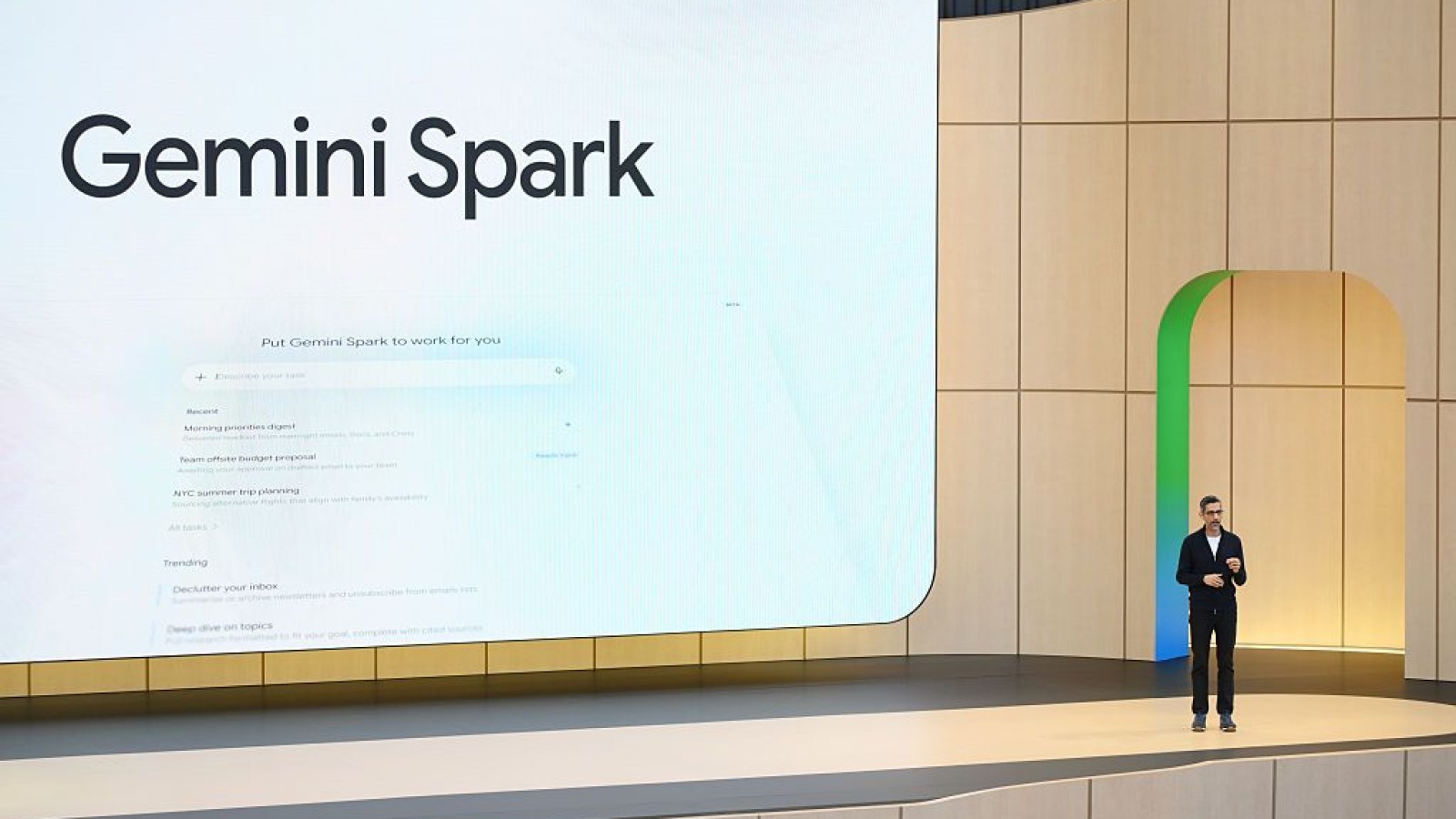
Google Gemini is facing a branding challenge that reflects a broader issue across the AI industry. In a recent announcement introducing new Gemini Live voice features, Google stated that users “shouldn’t have to guess whether a task requires Spark, a Daily Brief, or a quick inbox search.” The message is meant as a promise that the updated app can handle varied tasks through voice commands. Yet the company has given nearly every Gemini AI feature its own distinct branding, which works against that goal.
Inside the Gemini app, users can switch between chat, Spark, and Daily Brief. Each is a separate feature with its own icon and its own place in the app’s navigation. That structure clutters what could be a more straightforward consumer experience, and it suggests Gemini is still searching for a defining feature that stands out.
What Spark and Daily Brief Actually Do
Daily Brief functions as an AI-enabled agenda that delivers “proactive, personalized updates” by pulling data from Google apps such as Gmail and Calendar. In practice, the feature struggles to separate urgent or actionable information from unsolicited nudges. It may prompt users to continue research they began in the chatbot or resurface prior Google searches, which can feel intrusive rather than helpful.
Spark presents the opposite issue. It ranks among the more useful parts of the Gemini app because it acts as an AI agent that can take action on a user’s behalf. Google, however, has packaged it as a standalone brand. A mainstream user should not have to decide which “side” of the app to open for a given task. Ideally, a person types a request and the AI determines how to handle it, spinning up an agent when the task calls for one.
An Industry-Wide Pattern
The problem extends well beyond Gemini. Much of the AI industry exposes its internal architecture directly to consumers instead of hiding it behind a simpler interface. Users of Anthropic’s Claude must decide whether to “chat” or “Cowork,” and until recently those two modes did not share memory of past conversations. ChatGPT follows a similar pattern, asking users to switch between “Chat” and “Work.” This engineering-minded design forces people to learn brand names for what are essentially interaction modes powered by the same underlying model.
By contrast, Apple’s more understated approach to Siri may resonate with consumers. iPhone and Apple device owners do not need to change existing behavior to benefit from it. Apple makes familiar tools smarter, including Spotlight Search, the Photos app, the iPhone Camera, and Siri voice requests, without asking users to adopt a new interface. That principle keeps the experience closer to how people already use their devices.
Source
Image: techcrunch.com