
Lunar traffic control is moving from science fiction to engineering reality. As NASA prepares for a sustained human presence on the moon, teams from Texas A&M, Purdue and NASA’s Johnson Space Center have developed a system to manage the growing number of spacecraft expected to operate near the moon at the same time.
For decades, missions to the moon have traveled one at a time, effectively owning the entire route. That approach no longer works once multiple vehicles need to share the same paths. The new framework, detailed in a recent study, addresses that shift by outlining how spacecraft can coordinate their movements safely and efficiently.
Why the Moon Needs Air Traffic Rules
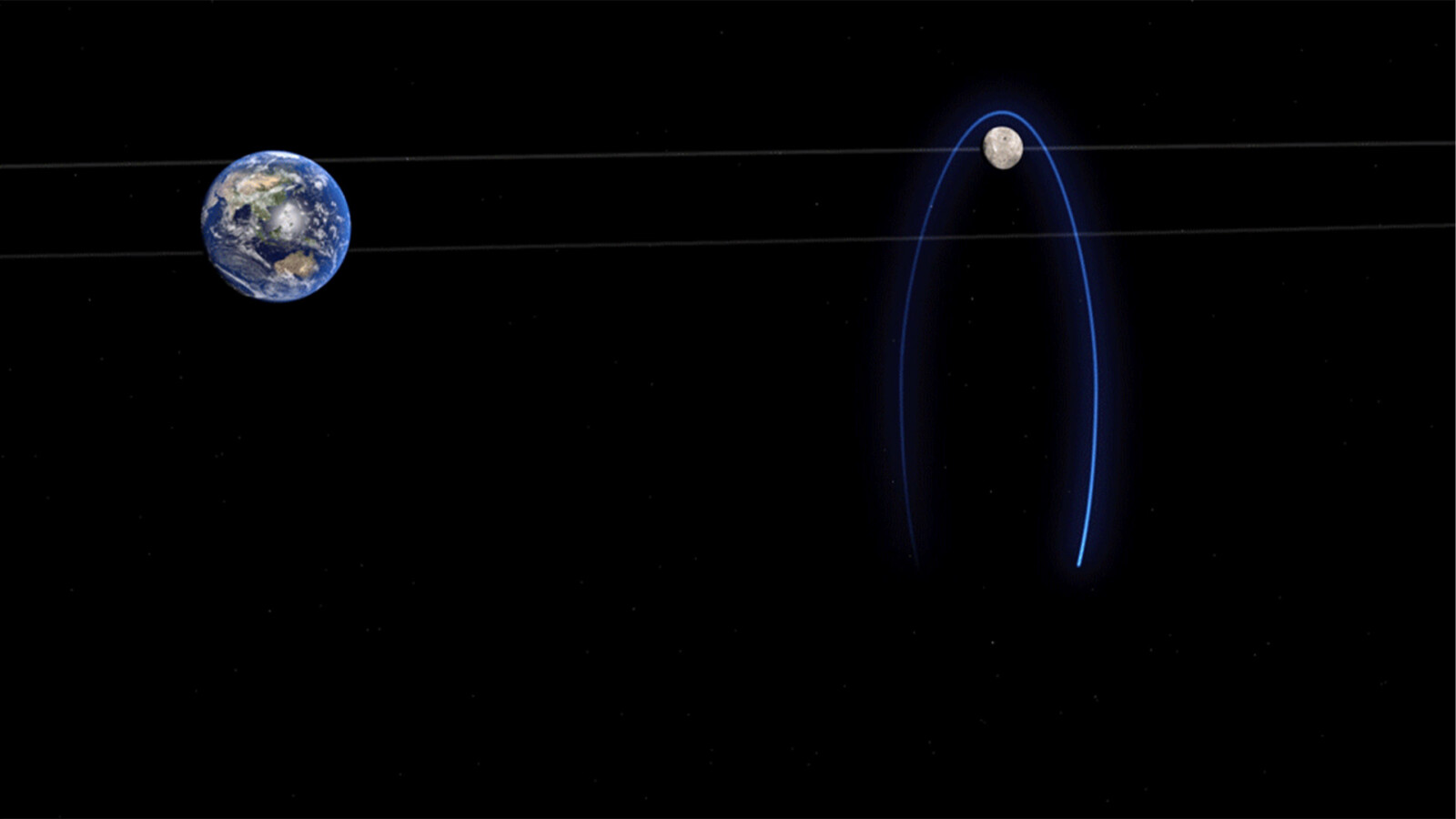
Vehicles orbiting the moon are expected to use the near-rectilinear halo orbit (NRHO), an egg-shaped path shaped by gravity from the moon, Earth and deep space. The orbit carries spacecraft around both lunar poles. Managing a single station in that orbit is straightforward, but the picture changes quickly with the Orion crew capsule, uncrewed cargo ships and lunar landers all sharing the same track.
That congestion is what drives the need for a system comparable to airport air traffic control on Earth. On the ground, controllers manage holding patterns, assign runways and keep the airspace clear for takeoffs and landings. The lunar version performs a similar role, guiding spacecraft that may be heading to the surface or waiting in orbit for their return window to Earth.
“Collisions and serious damages could happen. To ensure crew safety and mission success, effective traffic management in the NRHO is crucial,” said Diane Davis, associate professor of space engineering at Texas A&M and an author of the study. “The future of lunar explorations depends as much on the traffic management as it does on the rocket science.”
Fuel Efficiency Is Part of the Equation
Beyond avoiding collisions, the system is built to conserve propellant, a key factor in keeping mission costs down. Large orbits suitable for staging an Orion mission and a lander to the surface can take many hours or days to complete a single revolution around the moon. According to Davis, there are specific points along the orbit where it is most efficient to leave a loiter station and specific points where a spacecraft wants to arrive, so timing and positioning matter as much as trajectory.
The Gateway space station was the original design case for the control system and represents the type of vehicle expected to be parked in the NRHO. It is one of many spacecraft that could eventually share that orbit.
NASA announced its lunar base plans in March, aiming to establish a lasting human presence on the moon. The three-phase program begins by delivering equipment to the surface, then building a base powered by nuclear energy and other new technology, and finally staffing it with crews rotating in and out. The effort is expected to take most of the coming decade to complete.