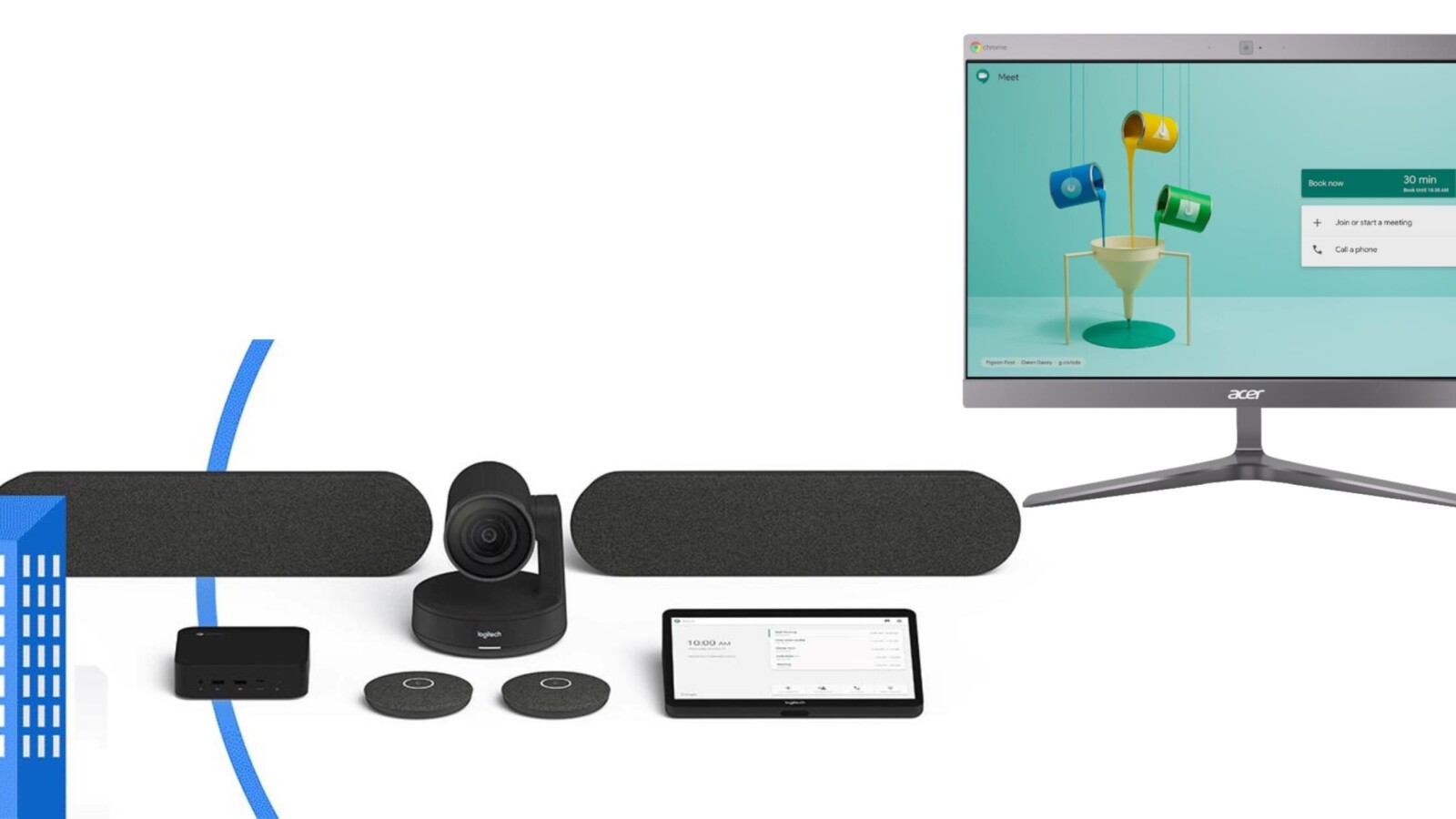
Google Meet hardware is shifting away from ChromeOS in favor of Android, the company confirmed. Google said it is transitioning its entire Google Meet hardware portfolio from ChromeOS to Android going forward, marking a significant change for enterprise conference room setups.
Current Google Meet hardware includes touchscreen controllers, cameras, microphones, speakers, and a Chromebox-style compute unit that runs scheduling software and the video conferencing suite. That underlying operating system is now being replaced with Android across the lineup.
Existing ChromeOS Devices Stay Supported
Businesses that already invested in ChromeOS-based systems will not be left behind. Google stated that existing investments in ChromeOS devices are protected, with full software support continuing. The company plans to keep delivering security patches, stability updates, and ChromeOS releases for all Google Meet hardware running the platform.
There are no changes to current support timelines. Recent models will continue to function until 2030. Customers looking to expand their current ChromeOS fleets, especially for large event spaces, are encouraged to buy devices soon, as availability will wind down.
Hardware partners including Logitech, CTL, and Asus will gradually end manufacturing and sales of ChromeOS-based hardware. The Logitech and CTL Google Meet Compute System will reach end of sales in February 2027, while the Asus Google Meet Compute System follows in April 2027.
Why Google Is Choosing Android
Google outlined several benefits of moving Google Meet hardware to Android. The company pointed to greater device variety, noting that Android-based room hardware supports a broader range of form factors. These include compact all-in-one devices, video bars, and integrated room solutions suited to focus rooms, huddle spaces, and boardrooms.
Google also emphasized enterprise stability, saying Android devices deliver the performance, responsiveness, and reliability that customers expect from ChromeOS. Hardware flexibility is another factor, as certified AOSP devices can run multiple video conferencing solutions. That allows organizations to repurpose rooms without replacing equipment.
The company added that devices certified for Google Meet are engineered for long lifecycles, with long-term reliability and predictable software support.
New Android Devices Planned for 2027
Google teased several new Android devices designed for large-format spaces, with plans to introduce them in 2027. The move aligns Google Meet room hardware with Android as the company continues to consolidate its device platforms.
For now, ChromeOS-based Google Meet hardware remains fully operational, with support and updates confirmed through 2030 for recent models.
Source
Image: 9to5google.com