

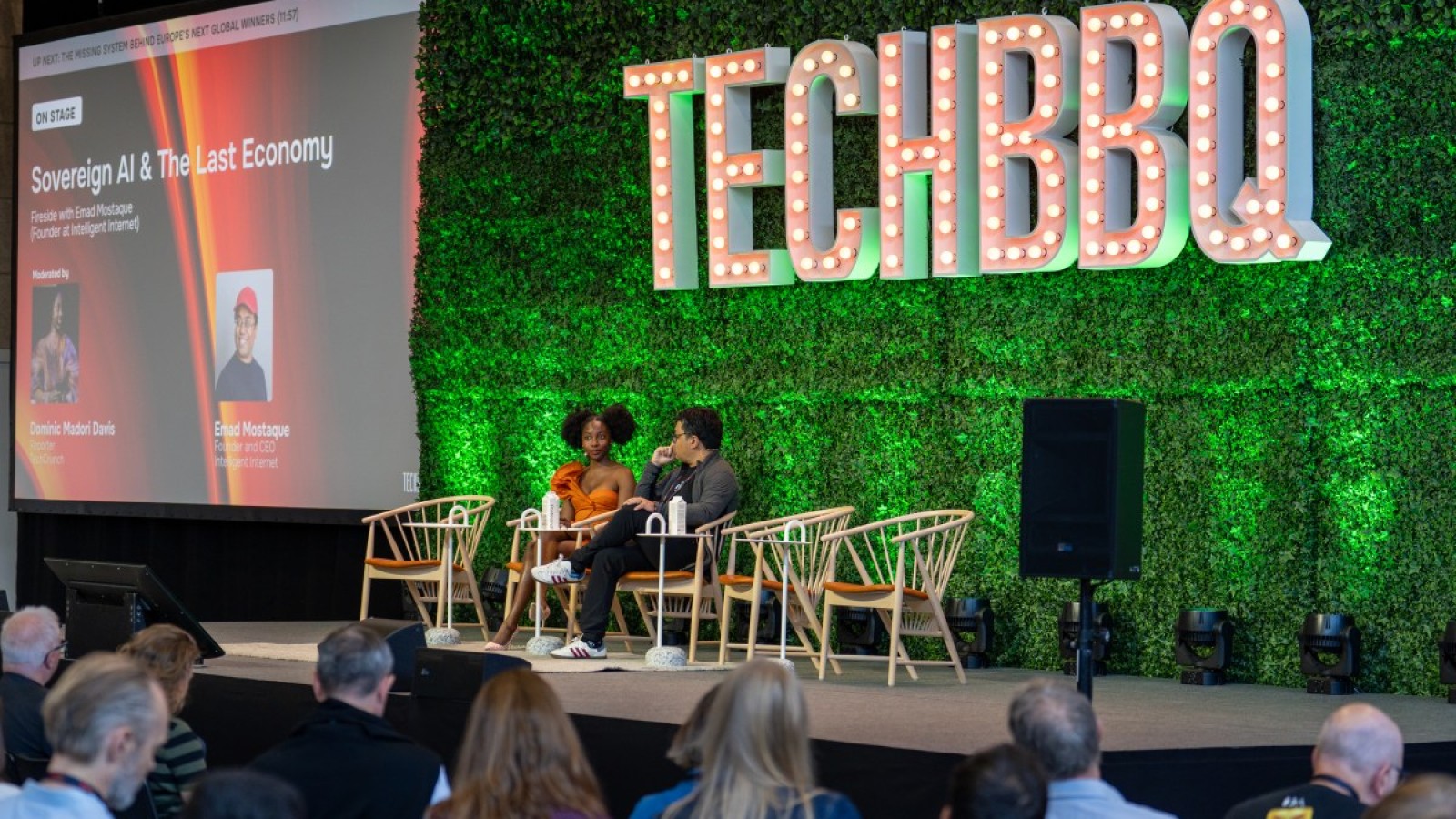
At TechBBQ in Copenhagen, Europe’s leading investors, founders, and operators gathered for the annual Nordic conference, where the dominant thread wasn’t just what to build with AI, but who should control it. From the main stage to cocktail hours and after-parties, the conversation kept circling back to how Europe can secure greater control over the technology powering artificial intelligence.
That focus on sovereignty aligned neatly with this year’s conference theme, “Emerging from Agency.” It also arrived at a pointed moment: Anthropic’s AI models Mythos and Fable became unavailable to users outside Europe earlier this year, a disruption that pushed the European ecosystem to weigh what it means to own the models and infrastructure behind the current AI wave rather than renting that capacity from the United States and China.
Ownership Versus Renting AI Power
Reactions to the Mythos and Fable outage varied. One startup executive said the incident seriously disrupted his software team, while another downplayed it. Relying on two other geopolitical powers for AI might eventually cause Europe severe problems, that executive acknowledged, but for now the situation remains largely manageable.
“TechBBQ’s theme of agency felt particularly timely this year as the conversation shifted from what AI can do to what we’re actually willing to let it do,” said Ellen de Brever, an angel investor and head of partnerships at the Novo Nordisk Foundation Cellerator, at the conference, which concluded August 27.
The program spanned panels on the future of women’s health, a summit on collaboration between the Nordic and African ecosystems on innovation and investment, and discussions on channeling more growth capital into Europe. AI ran through many of these sessions as an underlying theme. As de Brever put it, “the debates weren’t about smarter machines, but about human judgment and who gets to stay in the driver’s seat.”
“The age of AI agents isn’t really a story about machines gaining agency,” she added. “It’s a story about humans deciding what to give up.”
Privacy, Data, and Concentrated Control
One widely praised session featured Signal President Meredith Whittaker on whether privacy and AI can coexist. Whittaker spoke against integrating AI assistants and agents into operating systems, pointing to efforts like ChatGPT’s integration with iMessage. She argued this AI era is creating a “data collection apparatus” and that AI labs use clever marketing to make people forget “about the collateral consequences” of acquiring so much data.
“There is still a huge market need for privacy,” Whittaker said. “And particularly with the sovereignty concerns, we will have customers here.”
Emad Mostaque, co-founder of Stability AI and Intelligent Internet, joined a panel on how an agentic workforce will affect the economy and what that means for personal sovereignty. “Sovereignty is the ability to resist power being exerted over you,” Mostaque said. Warning about the concentration of power among a handful of AI labs, he predicted, “Inevitably, every country will be run by AI,” adding that “the person that controls the AI controls the country.”
Mia Negru, advocacy and engagement director for the nonprofit Life With Artificials, was among the panel participants who continued the exchange after the session concluded.
Source
Image: techcrunch.com