

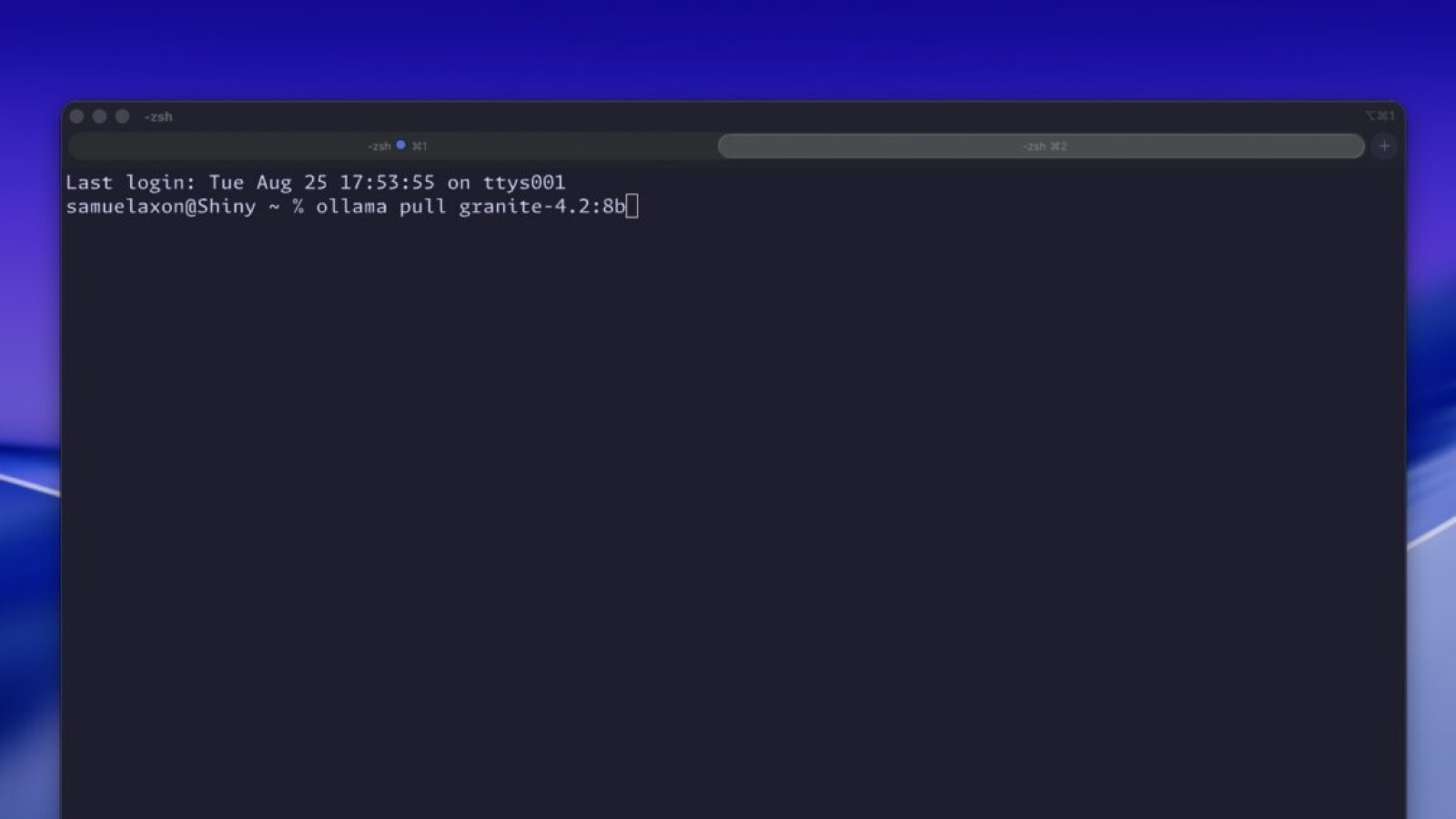
IBM Granite 4.2 is the latest addition to the company’s family of open-weight large language models built to be downloaded and self-hosted. The new release arrives in 3B, 8B, and 30B parameter variants, giving developers and enterprises flexibility in how they deploy the technology on their own hardware.
As with earlier versions, IBM stays with a decoder-only architecture. Each of the new models offers a 128,000-token context window natively, providing ample room for long documents and extended conversations. The most significant change this time is the emphasis on reasoning, which IBM describes as the reasoning-focused release of the Granite language-model family.
What Reasoning Means in Granite 4.2
When developers describe a model as capable of reasoning, they are not referring to conscious understanding the way people reason. Instead, they mean functional reasoning, often delivered through chain-of-thought processing that carries intermediate results forward across multiple steps. For users, this can translate into more rigorous and accurate answers in certain cases, though it frequently comes with slower response times and higher compute demands.
The 8B and 30B variants go a step further, passing through an agentic reinforcement-learning stage. That training expands their capabilities to include using the terminal, searching the web, and calling external tools. The 3B model also supports tools, but it does not receive the same level of specialized training as its larger siblings.
Local LLMs and the Push for Predictable Deployments
IBM’s Granite lineup rarely tops headlines for raw speed or aggressive innovation. Compared with rivals in the local enterprise space, such as Nvidia’s Nemotron, the emphasis leans toward predictable deployments, a priority that fits IBM’s current strategy.
The launch lands amid growing debate over the cost and compute crunch surrounding frontier cloud models from companies like Anthropic and OpenAI. Across many domains, individual developers and large organizations alike have been evaluating local models as more affordable alternatives.
That shift has also fueled interest in model routers, AI tools designed to interpret prompts, tasks, or projects and direct them to appropriately scoped models. The goal is to balance performance, speed, and cost by matching each request to the right model.
Self-hosted models like Granite 4.2 are popular with hobbyists, AI researchers, and independent developers as well, since they can be experimented with on local hardware without incurring per-token API fees. With the 3B, 8B, and 30B options now available for download, IBM adds three more choices to a market increasingly focused on running large language models locally.
Source
Image: arstechnica.com