

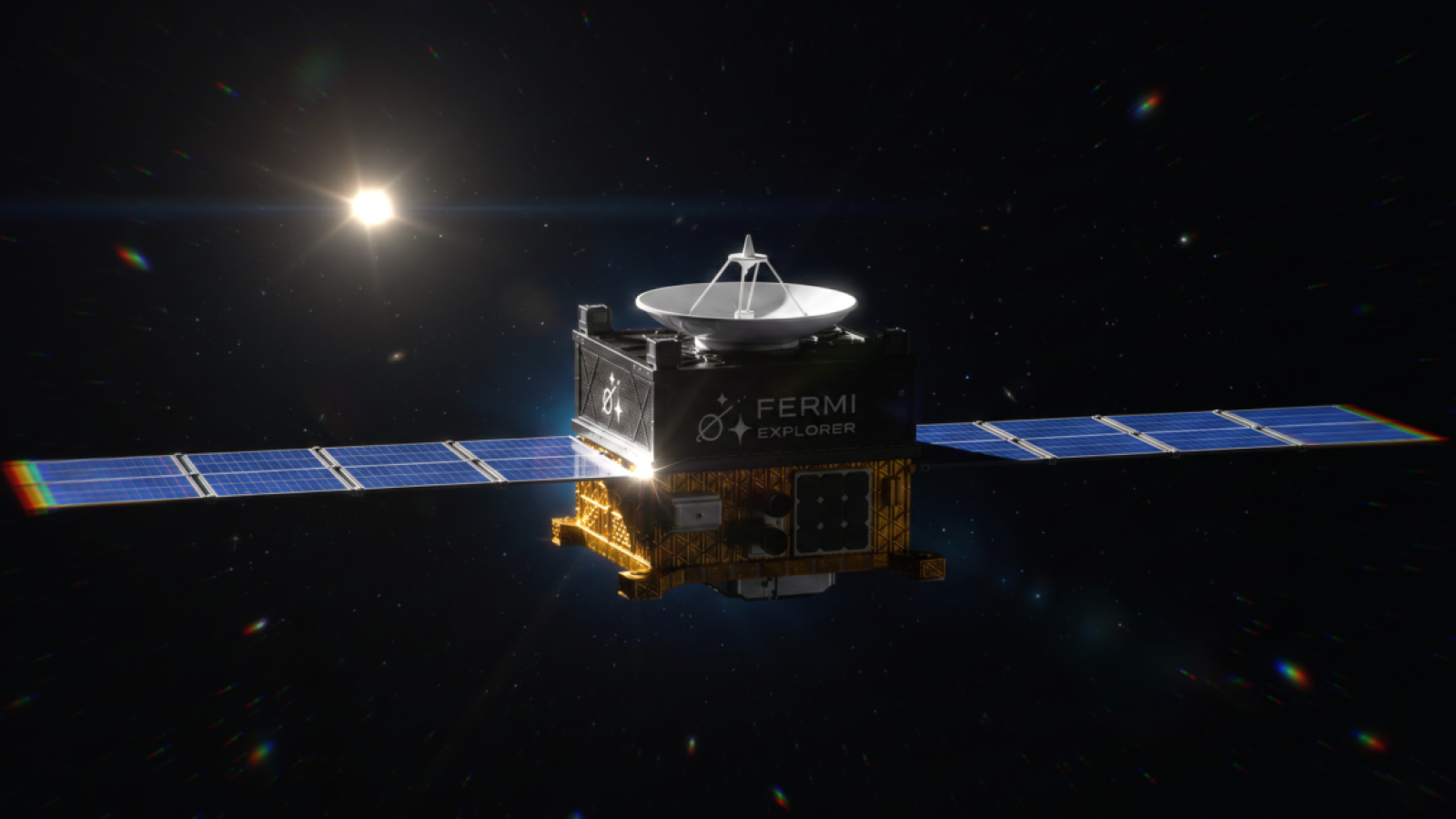
A private group of entrepreneurs wants to launch a mission to Alpha Centauri, the closest star system to our Sun, using existing technology at the lowest possible cost. The effort, called the Fermi Explorer, was announced Tuesday, with a goal of building and launching a small spacecraft to investigate one of the biggest questions in science: Why haven’t we found evidence of alien civilizations?
That question lies at the heart of the Fermi paradox. By some estimates, several trillion planets exist within the Local Group of galaxies, our nearest galactic neighbors, including the Milky Way. Many of those worlds sit within the habitable zones of their stars. If life is common across the Universe, humans should have collected credible evidence of extraterrestrial civilizations by now. Researchers who study the paradox suspect some “filter” may limit or entirely prevent advanced civilizations from sending probes or life-bearing spacecraft to nearby stars.
Who Is Behind the Fermi Explorer
The mission’s driving force is Philip Johnston, a mathematician and physicist from the United Kingdom. Johnston has gained attention in the space community as a leading advocate for orbital data centers. In 2024, he co-founded Starcloud to develop such data centers, and the company is now valued at EUR 2 billion.
Even while scaling up Starcloud and raising hundreds of millions of dollars, Johnston set out to design an interstellar mission. He and a handful of other entrepreneurs aim to raise EUR 13 million to build a small spacecraft carrying a 1-kilogram payload, then launch it toward Alpha Centauri so it arrives in fewer than 80,000 years.
The reasoning is tied directly to the Fermi paradox. Johnston concluded that such a mission would eliminate two possible “filters” from the list: the idea that species will not send spacecraft beyond their home star, and the idea that interstellar travel is simply too difficult to attempt.
Rather than asking NASA to fund a EUR 1 billion effort or developing new propulsion, as the Breakthrough Starshot concept proposed a decade ago, the team wants to use off-the-shelf technology to do something cheap and fast, with a launch targeted for 2029.
The Technical Challenge
The main obstacle is speed. The probe is essentially a large tank of xenon gas paired with solar panels for solar-electric propulsion, plus a few small scientific payloads. Solar-electric propulsion is highly efficient, but once a spacecraft travels beyond Jupiter, the available solar energy drops so low that it becomes effectively useless for a craft the size of the Fermi Explorer.
Johnston consulted many experts, including trajectory specialists at NASA’s Jet Propulsion Laboratory, without finding a workable solution. The breakthrough came when he connected with Alex Wissner-Gross, a physicist who founded the AI company Physical Superintelligence. The team fed the mission parameters into an AI system, which produced an 81-page technical feasibility assessment outlining a novel mission profile. That profile involves lingering near the Sun to build up energy before departing toward Alpha Centauri.
Source
Image: arstechnica.com