

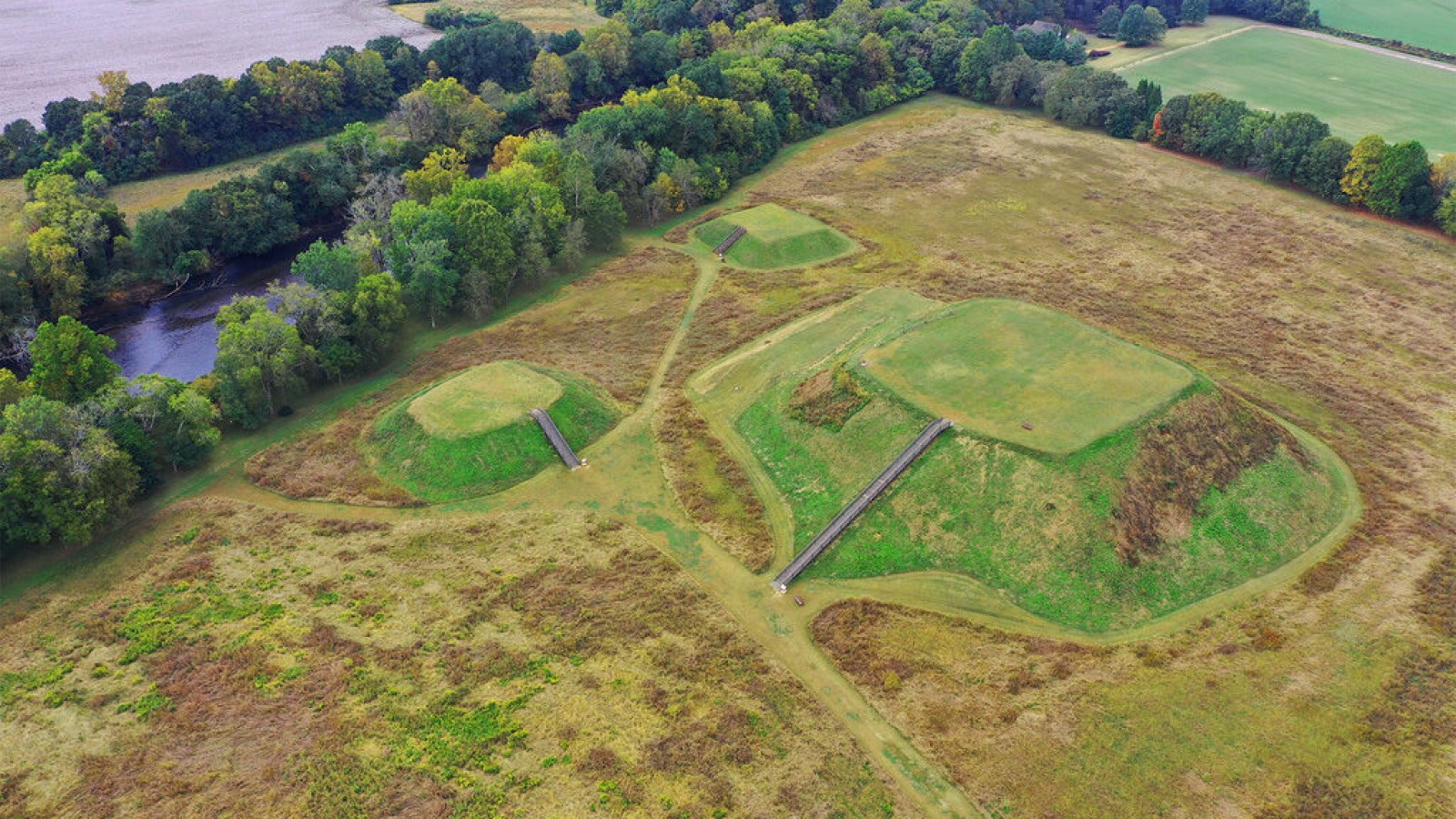
Cacao from Central America reached feasts in what is now northern Georgia roughly a thousand years ago, according to new analysis of ancient pottery. Chemical residue and ancient DNA recovered from potsherds show that the Indigenous people who built the city of Etowah, just north of present-day Atlanta, maintained trade connections spanning thousands of miles.
The pottery fragments were discarded after an 11th-century feast at Etowah, a major center of the Mississippian culture. Traces of cacao, the raw ingredient of chocolate, indicate that the community had trade links reaching at least 3,000 kilometers to Central America. Because cacao trees grow only in the tropics, the nearest source would have been a journey of that distance from the woodlands of the eastern United States.
What the Pottery Revealed
University of South Carolina archaeologist Adam King and colleagues found fragments of ancient DNA from Theobroma cacao on the inner surfaces of potsherds from feasts at Etowah. The fruit of the cacao tree contains beans that, once dried and roasted, produce chocolate. The presence of that DNA points to continent-spanning trade networks maintained by the Mississippian people.
The feast that the team studied predates Etowah’s peak by about two centuries, dating to the construction of the site’s first large platform mound. After excavating a large volume of dirt for the mound, people filled a pit with refuse from community feasts, including a great deal of broken pottery. Because the dishes were not washed before being discarded, researchers could later analyze the microscopic residue of ancient drinks that had soaked into the ceramic.
Chemical Clues and a Surprise Finding
Mass spectrometry revealed that the containers had once held something rich in theobromine, theophylline, caffeine, and paraxanthine. These compounds are hallmarks of cacao, but they also occur in yaupon holly, a plant that grows throughout the eastern United States and has long been used by Indigenous people to brew tea. Based on the chemical markers alone, there was little reason to suspect imported cacao rather than local yaupon.
King and colleagues searched anyway, and they found cacao DNA. The result, first reported in a 2017 study of the residue, is the first evidence that Etowah and the broader Mississippian culture had trade connections extending to the Maya world.
By 1350 CE, Etowah was ringed by wooden palisades and guard towers surrounding a group of giant earthen mounds. The largest stood six stories high and covered three acres, with log temples on top overlooking wide plazas used for ball games, ceremonies, and open-air markets. Because the analyzed potsherds date to the building of the first platform mound, the findings show that Etowah operated long-range trade networks even in its earliest days.
Source
Image: arstechnica.com