
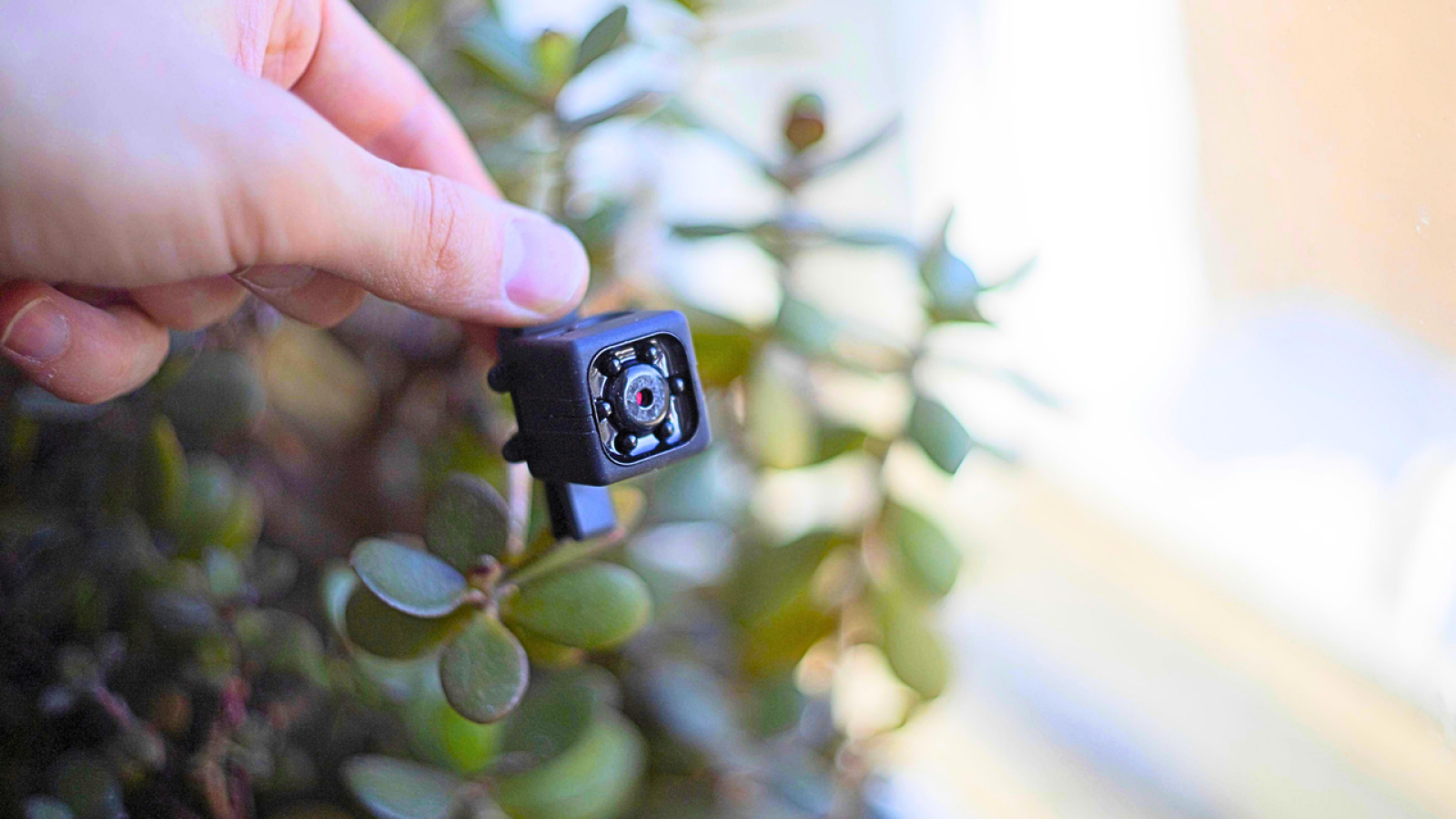
SweepLED, a EUR 6 clip-on device paired with an AI app, can identify hidden cameras with nearly 94% accuracy, according to the research team behind it. Developed by scientists at KAIST (formerly the Korea Advanced Institute of Science and Technology), the project brought together collaborators from the National University of Singapore (NUS) and Singapore Management University (SMU). The effort was led by Professor Han Jun of KAIST’s School of Computing.
The system combines a low-cost LED light grid that magnetically snaps onto the back of a smartphone with an AI-powered app that analyzes captured images. Priced at roughly EUR 6 (about KRW 10,000), the accessory offers a cheaper and more reliable alternative to the manual techniques people typically rely on today.
How SweepLED Finds Hidden Lenses
There are several common ways to search for hidden cameras with a smartphone. These include shining a flashlight around a room to catch tiny reflections from small lenses, using a phone camera to detect infrared emissions, or running camera apps that perform reflection analysis. The first two approaches require slow, manual scanning that can easily miss something small, while reflection apps are prone to false positives.
To address those weaknesses, the team turned to artificial intelligence. The LED grid continuously shifts direction, causing reflections on nearby surfaces to move or disappear. Because most cameras—including concealed ones—share a distinctive structure of lens, aperture, and sensor, they produce a recognizable reflection pattern that SweepLED can detect. In real-world testing across 30 objects, some containing embedded cameras, the device reached 93.9% detection accuracy, a significant improvement over tedious manual checks.
A Growing Privacy Problem
Hidden cameras placed in restrooms, changing rooms, rental properties, and hotel rooms have become a rising concern worldwide, and especially across East Asia. The issue grew so severe in South Korea that women staged protests over it in 2018. A tool like this offers a faster and easier way for individuals to protect themselves against voyeurs compared with inspecting a space by hand.
The gadget has limits, however. It cannot guard against the more than 40,000 security cameras worldwide that stream footage without any protection, nor against the spread of smart glasses that quietly record video and capture photos without the awareness of those nearby. Beyond privacy, such wearables raise security concerns as well, which is why the U.S. Air Force has banned their use on all of its bases.
Source
Image: tomshardware.com