
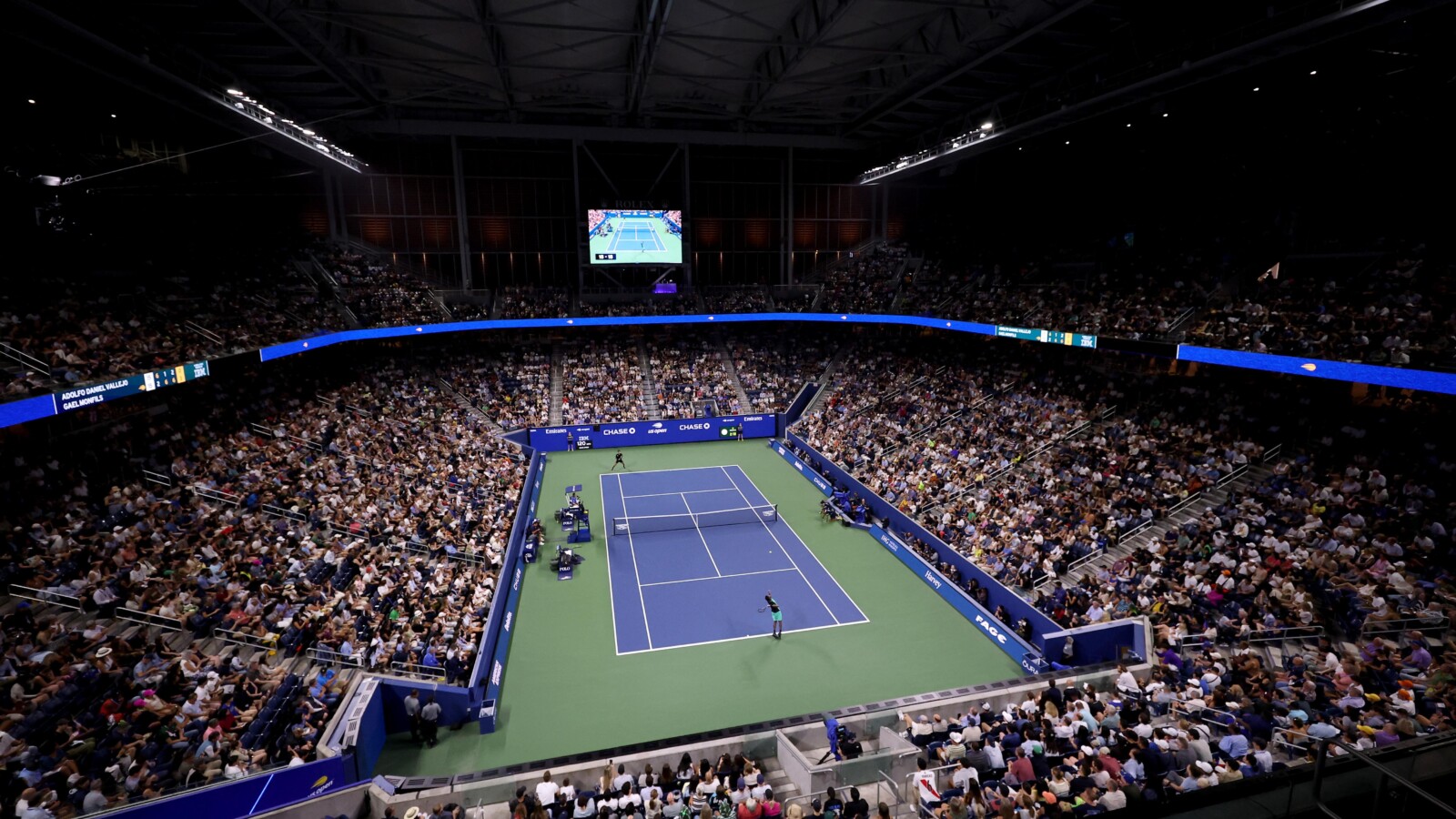
Content creators at the US Open became a flashpoint this week after a group of influencers packed into a luxury suite disrupted Naomi Osaka’s match against Anastasia Zakharova. The distraction grew serious enough that the umpire paused play and repeatedly asked the group, equipped with ring lights, to quiet down.
Elsewhere at the USTA Billie Jean King National Tennis Center, other creators were seen asking US Open staffers to take full-flash photos of them while Osaka and Zakharova were still competing on court.
Credentialing Questions at the US Open
The United States Tennis Association (USTA) expanded its creator program significantly this year. Media operations director Jeanmarie Daly said last month that the tournament was nearly doubling the number of content creators approved for credentials, with close to 100 influencers on hand compared with 54 the previous year.
However, USTA spokesperson Brendan McIntyre stated that the influencers who disrupted the Osaka and Zakharova match were not credentialed by the organization. McIntyre said media credentials were also not issued to lifestyle influencers Meg Radice and Audrey Jongens, whose access was revoked after they posted images of their badges to Instagram. According to McIntyre, the pair “were improperly submitted for credentials on a staff list provided by a food vendor.”
The Business Behind Creator Access
Whether invited directly by the USTA or not, these creators were sharing the experience with their followers and effectively helping advertise the event to audiences who might not otherwise be watching. Influencers have become central to the marketing industry, with US creator ad spend reaching EUR 32 billion in 2025 and projected to hit EUR 38 billion by the end of 2026.
Companies increasingly rely on content creators to promote products, and the US Open situation illustrates how that reliance can produce unwanted outcomes. Videos of the disruptions went viral across social media, prompting a broader conversation about whether influencers are the right guests for exclusive functions such as awards shows and film premieres.
A key point in that discussion is that creators are typically invited to these events because a brand decided the exposure was worthwhile. Behavior like taking up excessive public space is something the companies that hire them are expected to anticipate. Some brands have reportedly moved to get ahead of any backlash by sending out reminders on proper tennis etiquette.
Before a rule change in 2024, the US Open enforced stricter policies requiring attendees to remain in their seats during play.
Source
Image: theverge.com