
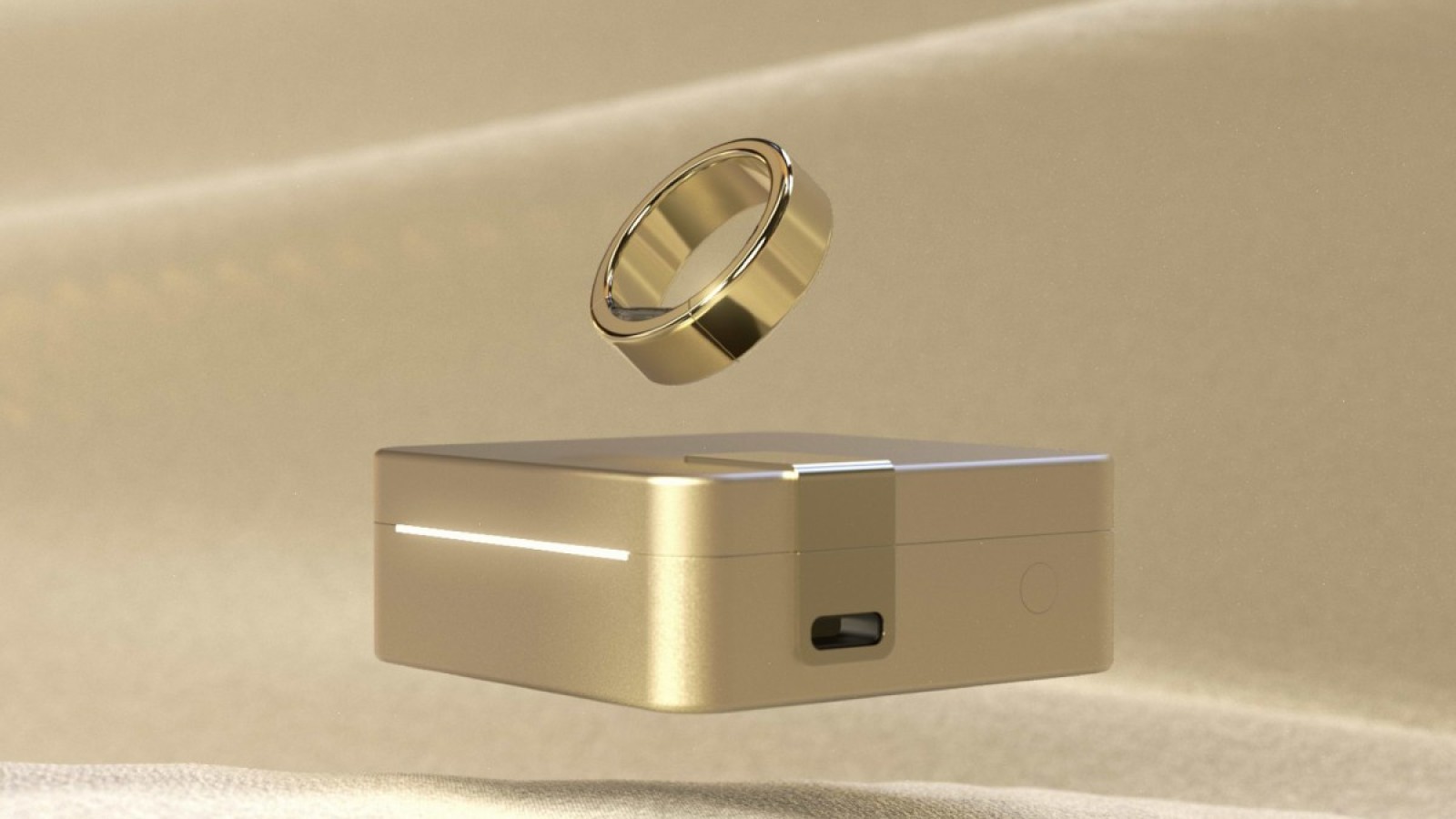
Ultrahuman, an Indian startup known for its smart rings, has secured EUR 60 million in fresh funding, with support from Qualcomm‘s venture arm. The company plans to move beyond sleep and health tracking to build a ring capable of running software directly on the device, eventually powering everything from AI interactions to games.
The round values the Bengaluru-based company at EUR 314 million, roughly triple its EUR 103 million valuation in 2023. The financing consists of EUR 56 million in primary equity and EUR 4 million in debt, according to founder and CEO Mohit Kumar.
Qualcomm Ventures took part alongside U.S. diagnostics company Labcorp, Alpha Wave, Blume Ventures, Nexus Venture Partners, and Alteria Capital.
A Ring That Works Like a Computer
Ultrahuman is collaborating with Qualcomm on a new ring built around the American chipmaker’s silicon. The startup currently relies on chips from Nordic Semiconductor and intends to keep using them alongside Qualcomm’s technology. The additional computing power will let more software and algorithms run directly on the device, reducing dependence on a phone or the cloud.
“All ring devices today are like trackers,” Kumar said. “You put on the ring, it measures your heart rate, your movement, your sleep.” The company’s aim is to make the ring function more like a computer, where programs and algorithms operate on the device itself.
That shift could unlock uses far beyond health and sleep monitoring. According to Kumar, developers could eventually write their own programs for the device, and the company is exploring ways for the ring to serve as a pointer or mouse, a game controller, a car key, and an interface for interacting with AI.
“The future of AI is personal, ambient, and always on,” said Quinn Li, global head of Qualcomm Ventures, describing Ultrahuman as a builder of a new generation of “personal AI devices.”
New Features Arriving Before the New Hardware
Although the Qualcomm-powered ring is planned for later, Ultrahuman is already testing the concept on existing products. Kumar said some of the new capabilities will reach the current Ring Air and Ring Pro through a software update by the end of September. Those features include the ability to use the ring as a game controller and to interact with AI applications, along with support for third-party developers to build new functions.
The strategy centers on the ring’s position on a user’s finger. Unlike a smartwatch, which Kumar compared to “a phone on the wrist,” a ring could act as a precise pointing and interaction tool while also carrying physiological context such as heart rate, temperature, and movement.
“A game controller never reads your heart rate and your temperature, but this one does,” Kumar said. He described games that could respond not only to a player’s movements but also to signals like heart rate and body temperature, turning the ring into both a controller and a source of physiological data.
Ultrahuman’s existing business continues to grow even as the company works to broaden what its rings can do.
Source
Image: techcrunch.com