
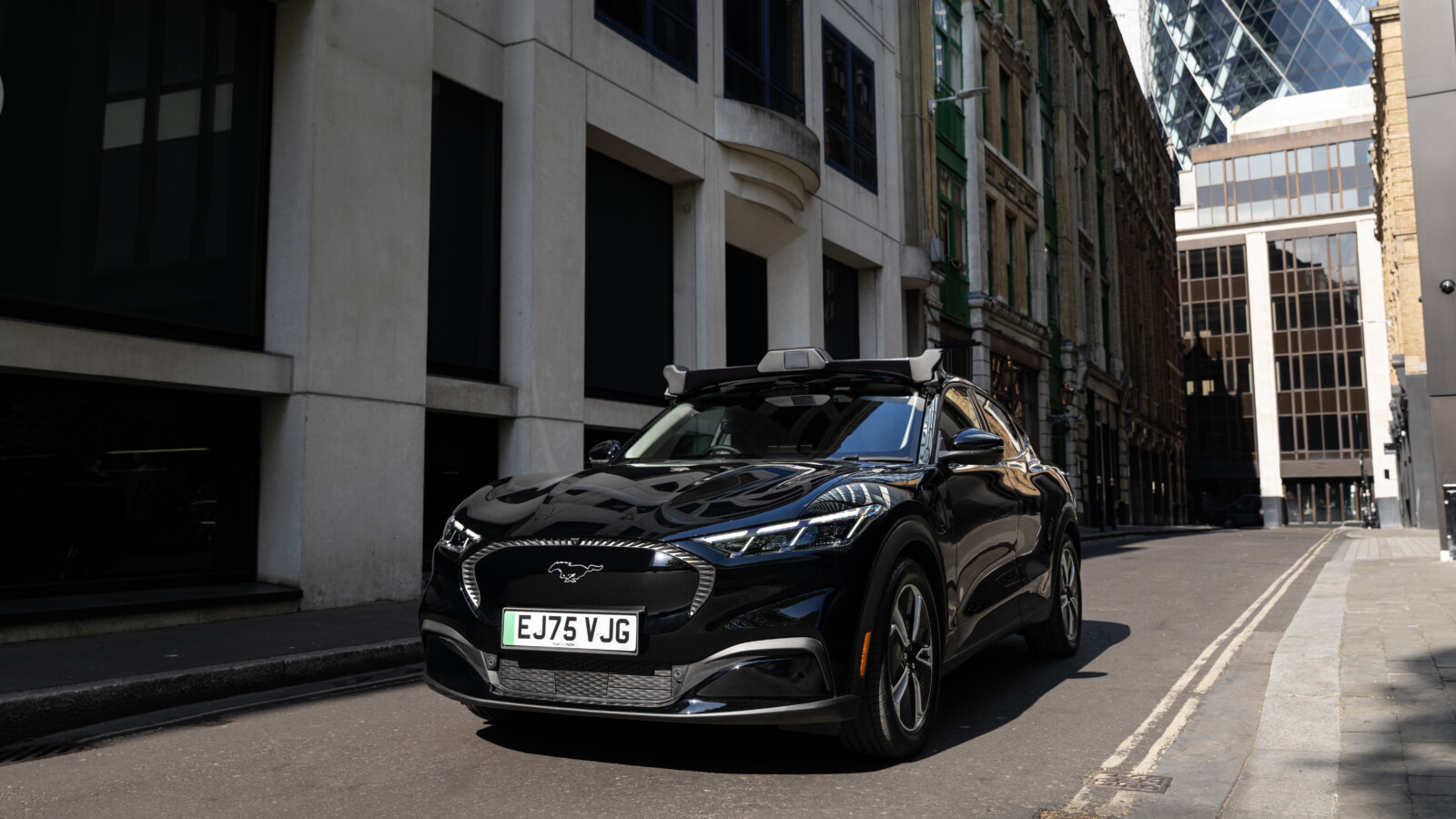
London’s first public robotaxi service is now operating, giving UK riders the ability to hail a self-driving vehicle directly through the Uber app. The service is the result of a partnership between Uber and autonomous driving company Wayve. For now, a safety operator will remain in the driver’s seat during rides.
At launch, trips are being offered in the all-electric Ford Mustang Mach-E. Each vehicle is equipped with cameras and radar, giving Wayve’s AI Driver what the companies describe as “full 360-degree visibility around the car at all times.” Over time, the service is expected to extend to additional vehicle models fitted with Wayve’s driverless technology. The two companies also plan to introduce self-driving trips using the Nissan Leaf in Tokyo later this year.
How Wayve’s Approach Differs From Rivals
Wayve is among a small group of autonomous vehicle companies working to reshape urban transportation worldwide. Its competitors include Waymo, Zoox, Nuro, Avride and May Mobility, each of which holds partnerships with Lyft, Uber or both. Waymo intends to launch its own robotaxi service in London this year, pending regulatory approval.
Rather than depending on high-definition maps and hand-coded rules for perception and navigation, Wayve says it relies on foundational AI models. This method allows its AI Driver to learn from real-world environments and apply those skills to unexpected situations, even without prior exposure to them. According to the company, the technology can adapt to new roads, vehicles, weather conditions and cities “with unprecedented speed and efficiency.”
The rollout coincides with a significant change at Uber. The company said Wednesday that it plans to cut roughly 10% of its workforce. In a message to employees that was later published in a newsroom post, CEO Dara Khosrowshahi described the move as “simplifying team structures” by removing several management roles. Uber said it intends to increase investment in ride-hailing, delivery and robotaxi operations.
The Road Ahead for Driverless Cars in London
Founded in 2017, Wayve began operating on London’s public roads in 2020, around the same time Uber ended its own self-driving efforts in favor of partnering with more established firms. Uber and Wayve announced their collaboration in 2024, agreeing to bring Wayve-powered vehicles to the Uber network. The following year, they outlined plans to begin self-driving trials on public streets in London.
As driverless cars move into more cities, they encounter challenges tied to local cultures, road layouts and regulations. London may present especially difficult conditions, with its narrow, one-way routes and assertive pedestrians. The city’s long-standing black-cab culture has persisted even as ride-hailing apps changed how residents travel. Autonomous vehicles could now bring another major shift to the city’s transportation landscape, potentially drawing resistance from an industry that has already faced one wave of technology-driven disruption.