

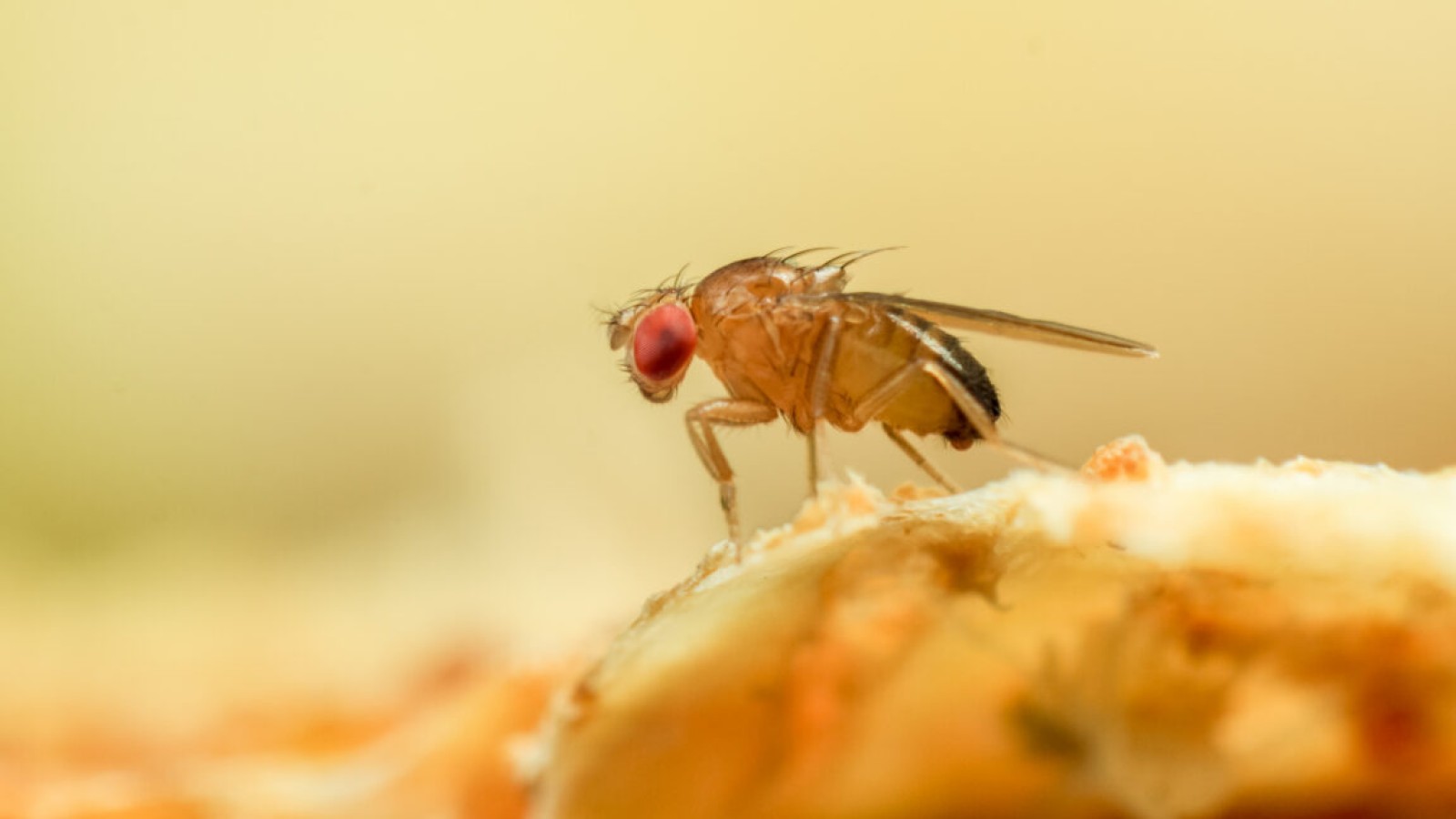
A new algorithm modeled on the brain of the humble fruit fly could solve one of the biggest weaknesses in today’s electronic smell sensors: the tendency to forget an old odor the moment they learn a new one. Developed by Kevin Max and Yang Shen at the Okinawa Institute of Science and Technology, the algorithm—called Spi-Fly—is detailed in a paper published in the journal Neuromorphic Computing and Engineering.
Fruit flies rarely get credit for intelligence, yet Drosophila manage a remarkable feat with a brain smaller than a poppy seed. Using roughly 140,000 neurons, they can distinguish an enormous range of smells in a fraction of a second and retain those scent memories for a long time. That performance far outpaces current electronic noses, which are typically expensive, limited in what they can detect, and prone to losing one odor as soon as they are trained on another.
Why Smell Is So Difficult to Digitize
Smell is unusually complex from a mechanical standpoint. Vision and hearing each reduce to a single physical dimension—wavelength—making them relatively straightforward to study and plot. Odor molecules cannot be reduced to any single dimension. Biology instead relies on hundreds of receptor proteins, each shaped to bind specific molecular features and firing in combinations that the brain must decode.
That system is so complex that scientists did not identify the receptor gene family behind it until 1991, when Linda Buck and Richard Axel completed the work that earned them a Nobel Prize in 2004.
Electronic noses already exist on the market. Companies such as Alpha MOS, Aryballe, and Odotech sell them for food-quality control, environmental monitoring, and security screening. Their central weakness is an inability to generalize. A sensor tuned to detect spoiled olive oil cannot simply be pointed at explosives at an airport checkpoint. Adapting one for a new task usually requires retraining its software almost from scratch.
Two technical bottlenecks drive that limitation. These systems typically require large volumes of hand-labeled examples before they can reliably tell odors apart. And teaching them a new smell tends to overwrite what they already knew, a problem researchers call catastrophic forgetting.
How Sparse Coding Gives the Fly Its Edge
Fruit flies and many other insects avoid this problem despite their tiny brains. According to the paper’s authors, the key is a mechanism known as sparse coding, in which the fly’s brain effectively assigns a unique barcode to every smell.
The fly’s olfactory system relies on roughly 2,000 specialized cells called Kenyon cells, which receive sparse, randomly wired signals relayed from the fly’s odor receptors. Those Kenyon cells all report to a single relay point known as the anterior paired lateral neuron, or APL—actually a symmetrical pair, one per brain hemisphere. The APLs respond by firing strong, global inhibition back at every Kenyon cell at once.
By mimicking this efficient, memory-preserving architecture, Spi-Fly aims to b
Source
Image: arstechnica.com