
The 2027 Range Rover Electric has officially debuted, giving the luxury SUV lineup its first factory-built battery-electric variant. It now sits alongside the internal combustion and plug-in hybrid Range Rover models, marking a significant step in Jaguar Land Rover’s long-planned move away from combustion engines.
That transition has faced delays over the years, with the automaker citing challenges tied to the pandemic, supply chain disruptions, and global instability. Even so, the electrification effort continues, and the new EV represents its most prominent result to date.
Until now, owning a fully electric Range Rover meant turning to expensive restomod conversions. Those builds retained the driving characteristics and drawbacks of classic vehicles, and they carried steep price tags. At a starting price of EUR 119,068, the new Range Rover Electric costs roughly half as much as many of those conversions while offering modern airbags, advanced driver assistance systems, current crash protection standards, and full manufacturer support and warranty coverage.
Demand appears strong. Jaguar Land Rover reports 80,000 registered hand-raisers, with half from North America. Around 70 percent of those interested are new to the brand, and about 20 percent already own an EV. Only a portion of that interest is expected to convert into actual sales.
Design Stays True to the Range Rover Identity
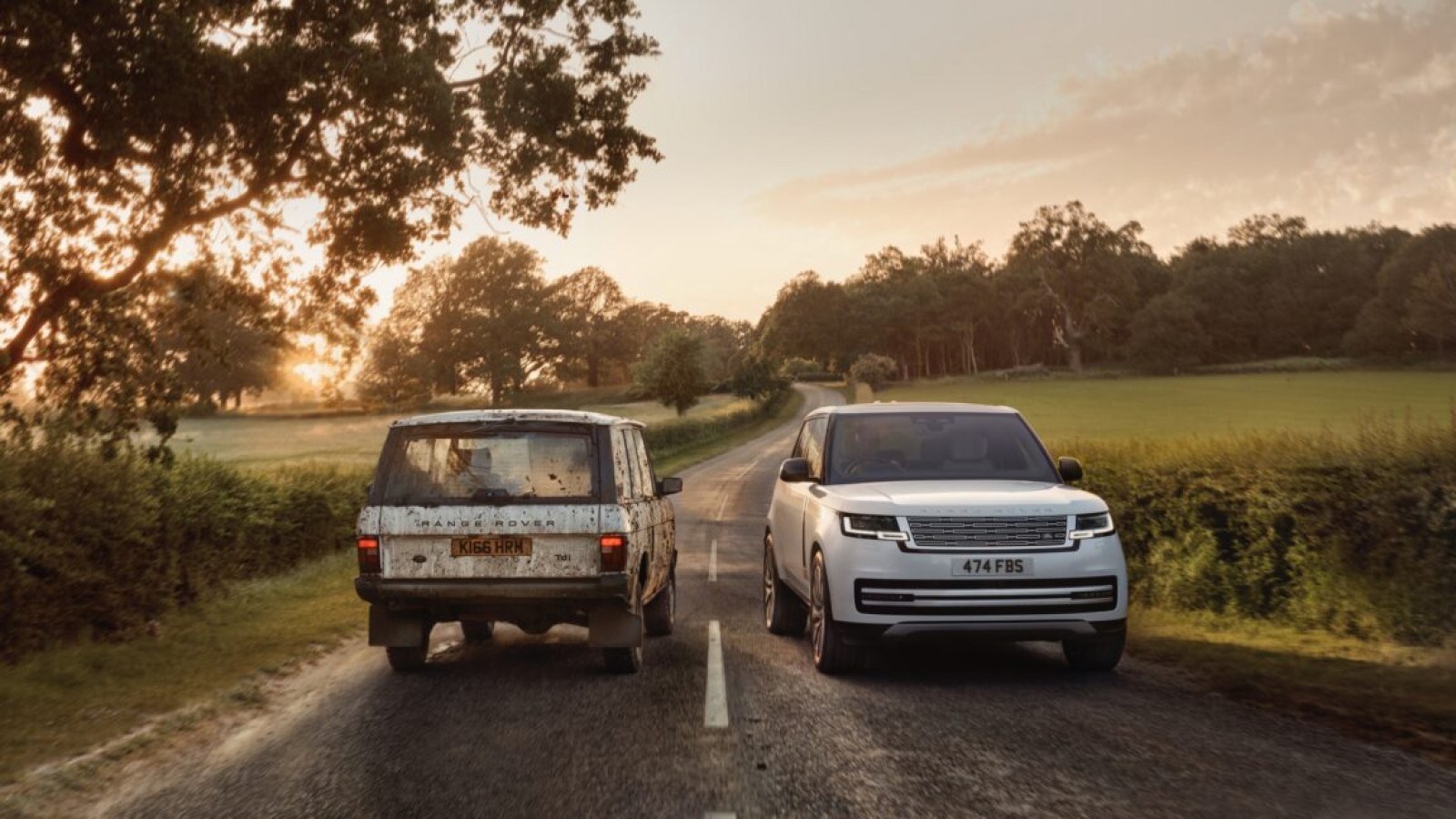
The goal was to build a Range Rover first and an EV second, and the styling reflects that priority. The electric version looks nearly identical to its siblings, distinguished mainly by a smoother, more aerodynamic front grille and more efficient wheel designs. Together, those changes slightly reduce the vehicle’s drag coefficient.
The absence of tailpipes is the clearest visual clue that this is the electric model. Underneath, a flat underbody further improves aerodynamic performance, though most owners will never see it.
Powertrain and Battery Details
The Range Rover Electric uses JLR’s MLA architecture, engineered more than a decade ago to accommodate multiple powertrain types. Despite carrying a large battery, the EV weighs only 165 lbs (75 kg) more than the V8 version. Removing the front, center, and rear differentials along with their driveshafts offsets nearly all the added weight from the battery and drive units.
The front and rear drive units are identical permanent-magnet synchronous motors, each producing 349 hp (260 kW). A front induction motor was evaluated but dropped over heat management concerns. Combined output reaches 542 hp (404 kW) and 627 lb-ft (850 Nm).
These motors are 24 percent more efficient than those in the I-Pace, with response times of 50 milliseconds, far quicker than a conventional drivetrain. Each motor uses 144 copper hairpins with 0.008-inch (0.2 mm) laminations and a 0.03-inch (0.7 mm) air gap between rotor and stator. The drive units rely on silicon-carbide inverters capable of responding in under a millisecond.
The battery pack and drive units mount directly to the chassis, and the pack features a smooth underfloor design that contributes to the
Source
Image: arstechnica.com