
An orangutan breeding program spanning multiple accredited US zoos has produced eight infants since the start of 2025, an extraordinary total for a critically endangered primate. The births are far from accidental. They reflect decades of research and a carefully engineered conservation strategy designed to build a genetic safety net one delivery at a time.
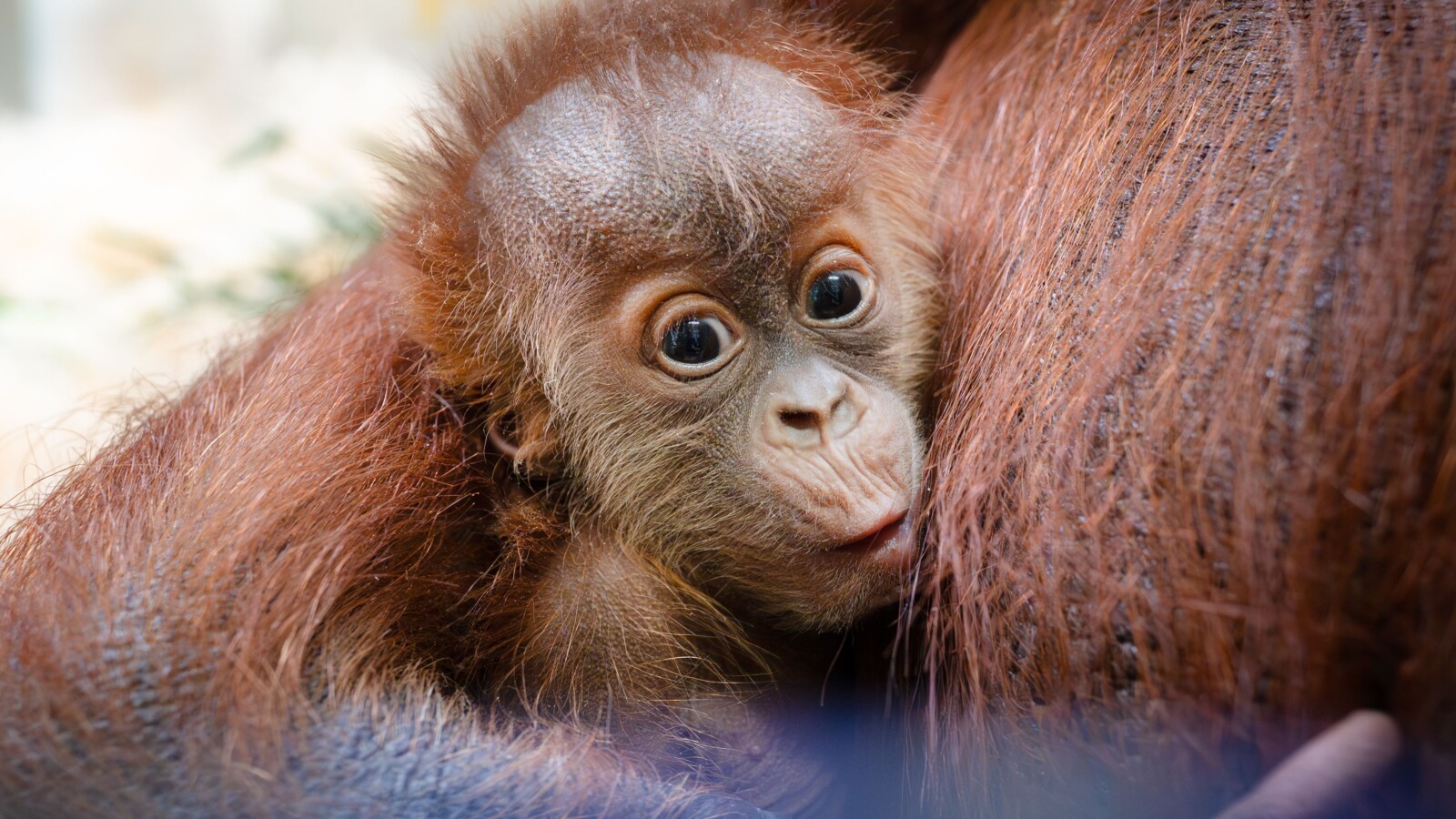
One of the newest arrivals is Ruhana, nicknamed “Ru,” born at the Memphis Zoo. In her case, an ob-gyn performed a Cesarean section while a neonatalist cared for the newborn, an approach that underscores just how closely orangutan care can resemble human medicine.
“It might seem like it was all a coincidence that everyone was born at the same time, but it was very carefully planned,” said Angie Selzer, a senior animal care specialist at the Fort Wayne Zoo in Indiana and coordinator of the Orangutan Species Survival Plan (SSP).
How the Species Survival Plan Guides Each Birth
The SSP has been issuing breeding recommendations since 1985. Every two years, the program develops a breeding and transfer plan for animals housed at institutions accredited by the Association of Zoos and Aquariums (AZA). Geneticists rely on a “studbook” that catalogs the pedigree of every orangutan in the network.
“We want to maintain a healthy and sustainable population that mimics the natural history of wild orangutans while ensuring successful mother-rearing of offspring,” Selzer said. Recommendations weigh several variables, including underrepresented genetic lines, individual personalities, and group dynamics, with the goal of pairing animals that are as unrelated as possible.
The wave of births began in February 2025, when the Indianapolis Zoo welcomed a healthy male named Edi. Weila followed at the Hogle Zoo in Utah in June, and Bintang arrived at the Los Angeles Zoo. In December, the Memphis Zoo welcomed Ruhana. Peterson, associate primates curator at the Memphis Zoo, described being present for that moment as a “remarkable experience.” The trend has continued into 2026, with female infants born at the Cameron Park Zoo in Waco, Texas, the Sedgwick County Zoo in Wichita, Kansas, and the Fort Wayne Zoo in Indiana. The Denver Zoo recently welcomed a male named Rambutan.
Why Orangutan Care Mirrors Human Medicine
Humans share more than 90 percent of their DNA with orangutans, a similarity reflected in how these animals reproduce. Orangutans in the program routinely receive human birth control and human prenatal vitamins, are trained to urinate on human pregnancy tests, and carry pregnancies for nearly nine months. After humans, their offspring have the longest childhood of any mammal. Although C-sections remain uncommon, some zoos keep ob-gyns on call for their orangutans and other primates.
“Looking at their eyes and their hands, it’s like a mirror,” said Matthew Lenyo, assistant curator of predators at the Denver Zoo. “It’s humbling.”