
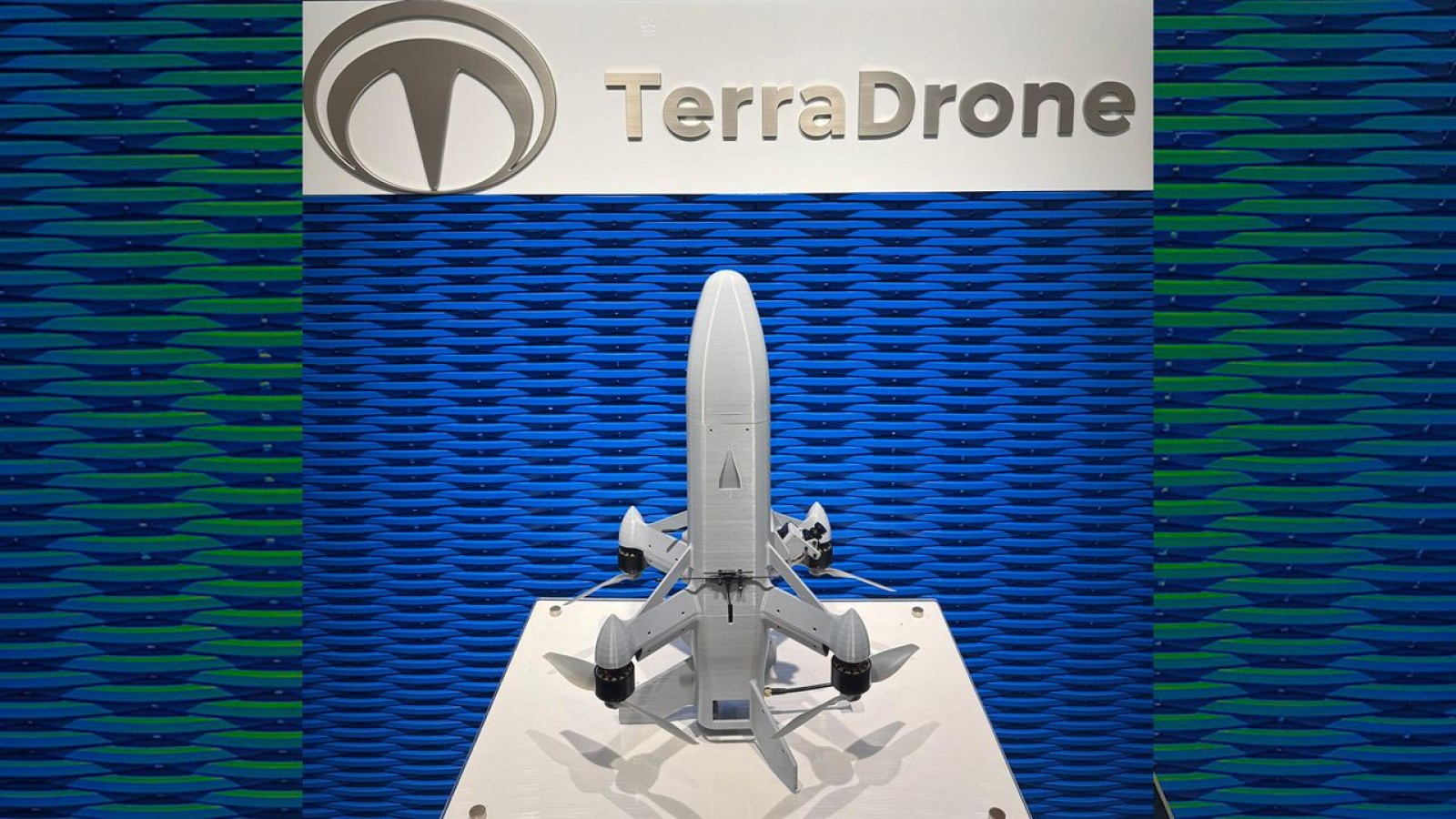
Japan’s military has cleared the way for mass procurement of the Terra B1, a rocket-powered drone interceptor built with 3D printers. The system is designed to counter one-way attack platforms and other airborne threats, and the first units are expected to roll off domestic production lines this month.
The Terra B1 is based on Terra Drone’s proven A1 model, which Ukraine began fielding earlier this year. During evaluation, the interceptor impressed Japan’s Maritime Self-Defense Force enough to secure a mass-procurement agreement, positioning the country to pursue a low-cost, high-effectiveness approach to drone defense.
How the Terra B1 Won Japan’s Contract
The Acquisition, Technology, and Logistics Agency (ATLA) approved the deal with Terra Drone. According to the company, the Terra B1 entered mass production in Japan after passing trials, standing out among proposals from 38 separate firms.
To be selected, the B1 had to meet a range of technical benchmarks. Terra Drone listed criteria including effective range, flight duration, flight distance, maximum and cruising speed, guidance method, the number of aircraft that can be controlled simultaneously, launch and recovery methods, integration with other systems, safety measures, and operational track record. The interceptor is intended to counter well-known threats such as the Shahed family of drones and anti-radar loitering munitions like the IAI Harpy.
Why Low-Cost Interceptors Are in Demand
The push for cheap and effective anti-drone systems became clear during the conflict between the U.S. and Iran earlier this year. Gulf states viewed as U.S. allies were repeatedly targeted by Iranian airborne threats, yet their existing air-defense missiles were not built to counter that type of attack. Systems such as the Patriot are too costly and too limited in supply to intercept drones on a one-to-one basis, making sustained defense impractical. That gap accelerated the purchase of battle-proven Ukrainian anti-drone technology.
Japan is now taking a similar path. The addition of 3D printing is meant to help the Self-Defense Forces acquire more effective countermeasure equipment faster. Following the Maritime Self-Defense Force’s initial deployment, Japan’s Air Self-Defense Force and Ground Self-Defense Force may also explore customized versions of the Terra B1 tailored to their own requirements.
The Terra B1 is not the only example of drone and additive-manufacturing technologies converging. Drones, drone parts, and maintenance and repair essentials were recently 3D printed aboard the USS Essex, produced inside a compact containerized factory as the ship sailed to take part in RIMPAC 2026 near Hawaii. The first Terra B1 interceptors are due off Japanese production lines this month.
Source
Image: tomshardware.com