

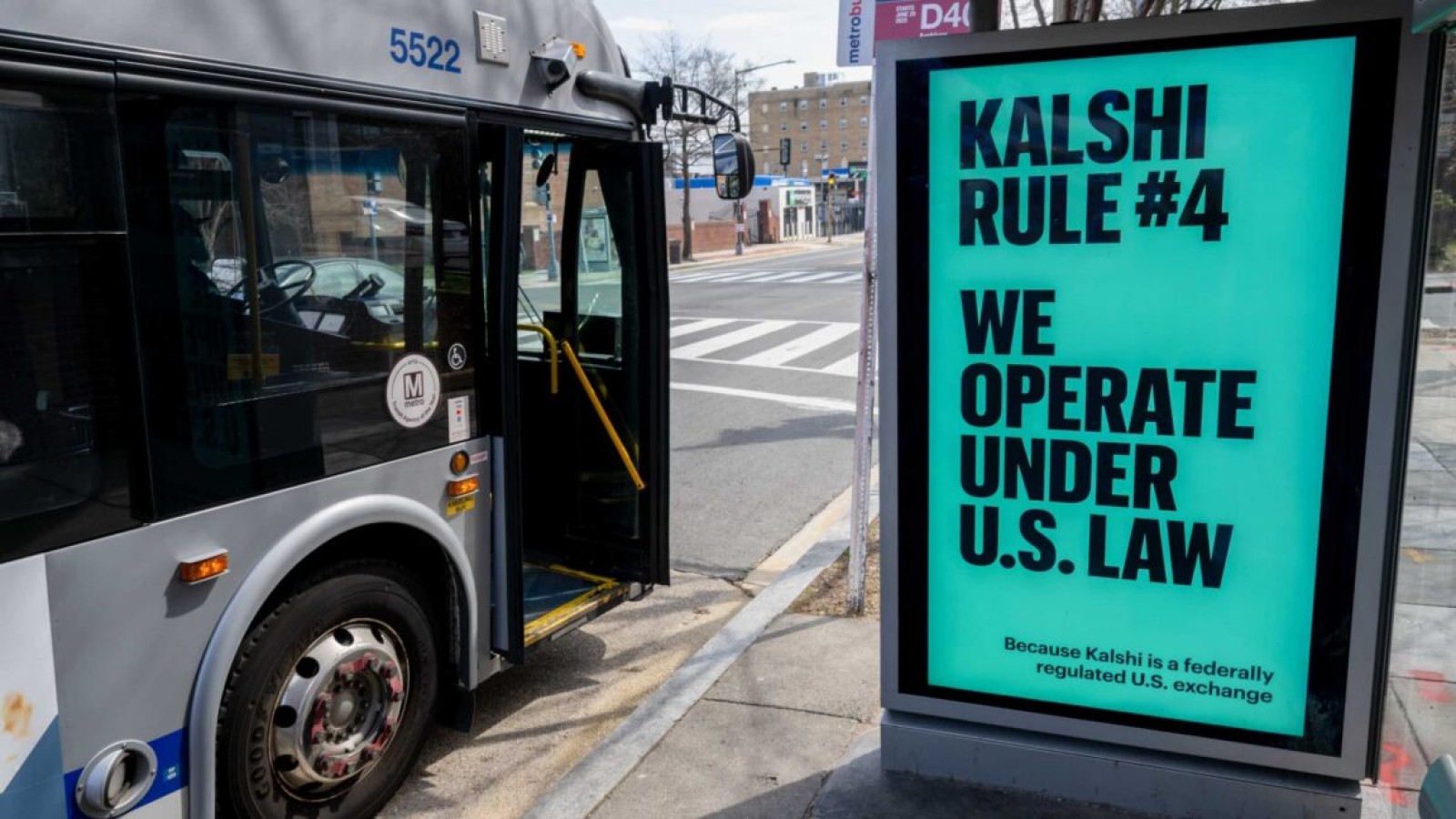
Kalshi suffered a significant legal defeat as a federal appeals court ruled that Nevada can block the prediction market platform from offering sports bets within the state. A three-judge panel from the US Court of Appeals for the 9th Circuit, all appointed during the Trump administration, unanimously ruled against Kalshi, even as the current administration seeks to shield prediction markets from state-level oversight.
The decision affirmed a district court order allowing Nevada to enforce its gaming laws against Kalshi’s sports-related event contracts. The Nevada Gaming Control Board said the ruling “emphatically reject[ed] the view that the federal Commodity Exchange Act preempts application of Nevada’s gaming laws to sports-event contracts offered by Kalshi, Crypto.com, and Robinhood.” Nevada Governor Joe Lombardo, a Republican, stated that “prediction markets offering sports-event contracts constitute gambling and must comply with Nevada’s gaming laws and regulatory framework.”
The Legal Question: Are Sports Bets “Swaps”?
At the center of the case is whether a sports bet placed on a prediction market qualifies as a swap, a financial instrument regulated exclusively by the Commodity Futures Trading Commission (CFTC). Kalshi had argued that it operates as a designated contract market under the Commodity Exchange Act (CEA), offering legal sports event contracts that fall solely under CFTC authority. Under that reasoning, state gaming rules like Nevada’s would not apply.
Judge Ryan Nelson noted that Kalshi markets itself as “the first app for legal sports betting in all 50 states.” After activity on the platform surged, the Nevada Gaming Control Board issued a cease-and-desist letter, prompting Kalshi to seek injunctive relief.
The CEA grants the CFTC exclusive jurisdiction over swaps, defined as “any agreement, contract, or transaction… that provides for any purchase, sale, payment, or delivery… that is dependent on the occurrence, nonoccurrence, or the extent of the occurrence of an event or contingency associated with a potential financial, economic, or commercial consequence.” The CFTC has pursued lawsuits against states attempting to regulate or ban prediction markets, arguing it holds sole jurisdiction.
A Circuit Split That May Reach the Supreme Court
Nelson wrote that Kalshi’s sports event contracts amount to sports gambling regardless of the label attached to them. Quoting Shakespeare’s Romeo and Juliet—”that which we call a rose by any other name would smell as sweet”—the judge concluded that “placing sports bets, even when called by another name, is still gambling.”
The panel acknowledged that the broadest reading of the legal definition of a swap “might cover the sports event contracts here and thus preempt Nevada law.” However, the judges found that Kalshi’s expansive interpretation conflicts with the larger statutory framework and lacks any limiting principle.
The 9th Circuit ruling directly conflicts with a 3rd Circuit decision involving New Jersey, which found that sports wag
Source
Image: arstechnica.com