
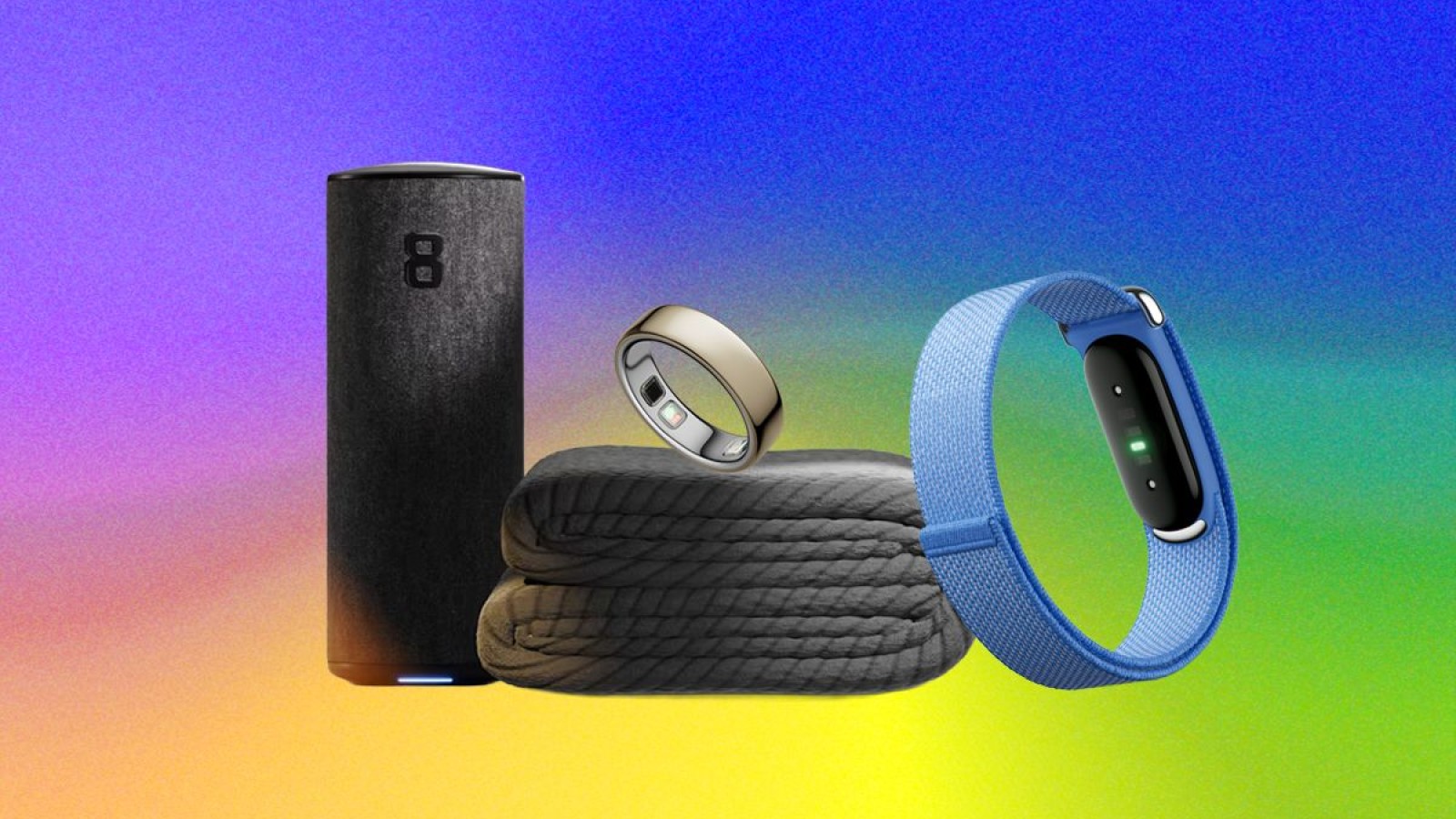
A sleep tracker can help you understand your rest patterns, but as this technology grows more advanced, there’s a legitimate worry that it may become too prescriptive. The goal is for these devices to stay supportive rather than directive, encouraging better sleep quality without adding pressure, perfectionism, or unnecessary anxiety.
To identify the top options for most people, we consulted experts and tested a wide range of wearables, including smart rings, smartwatches, headbands, and non-wearable devices. After years of monitoring sleep, these are the standouts. As of September 2026, the lineup now includes the Google Fitbit Air and the Oura Ring 5, along with details about Oura’s recent class-action lawsuit. The Google Pixel Watch 5 has been added to the honorable mentions, and prices and links have been refreshed.
Best Overall: Oura Ring
Among all the fitness trackers tested, the Oura Ring delivered one of the most accurate sleep assessments. The ring packs a multisensor suite: an 18-path multi-wavelength photoplethysmography (PPG) system to monitor blood oxygen levels (SpO2), heart rate, HRV, and respiratory rate; a negative temperature coefficient (NTC) thermistor for body temperature; and a 3D accelerometer that captures movement, including sleep stages and nighttime restlessness.
It logs total sleep, time in bed, and sleep efficiency each night through a time graph, then displays trends on a weekly or monthly basis. Auto-detected naps also factor into your sleep score, a valuable addition. The Oura ranks as the most comfortable device to wear to bed, and its app is easy to navigate, showing your sleep score alongside personalized tips for optimizing your bedtime.
Keep in mind that Oura requires a EUR 5-per-month membership to unlock the more advanced health metrics. Without it, you can only see your sleep, readiness, and activity scores plus recorded meditations. Still, the subscription remains relatively affordable compared with the competition.
Best Screenless Band: Google Fitbit Air
For those who prefer a wristband, the Google Fitbit Air is a screenless tracker that’s very comfortable to wear overnight. According to Google, the Air is 15 percent more accurate than its predecessor, with better sleep-stage detection, improved nap tracking, and a new restlessness bar.
The Air handles gaps in data particularly well. On one night when the device slipped off, the app produced a poor sleep score the next morning based on just three hours of recorded data. After the sleep window was manually corrected, the Air did not retroactively generate a new score or fill in the missing metrics with its proprietary algorithm. Instead, it acknowledged that it lacked enough information, a refreshing approach in a market full of AI-generated guesses.
The app presents data in a digestible way, avoiding an overload of graphs, charts, or wellness jargon. Its AI Health Coach sends morning check-ins with sleep recaps, so you don’t have to interpret the numbers yourself. You can also ask the coach to turn those insights into actionable recommendations. The Google Fitbit Air joined the 2026 lineup as