

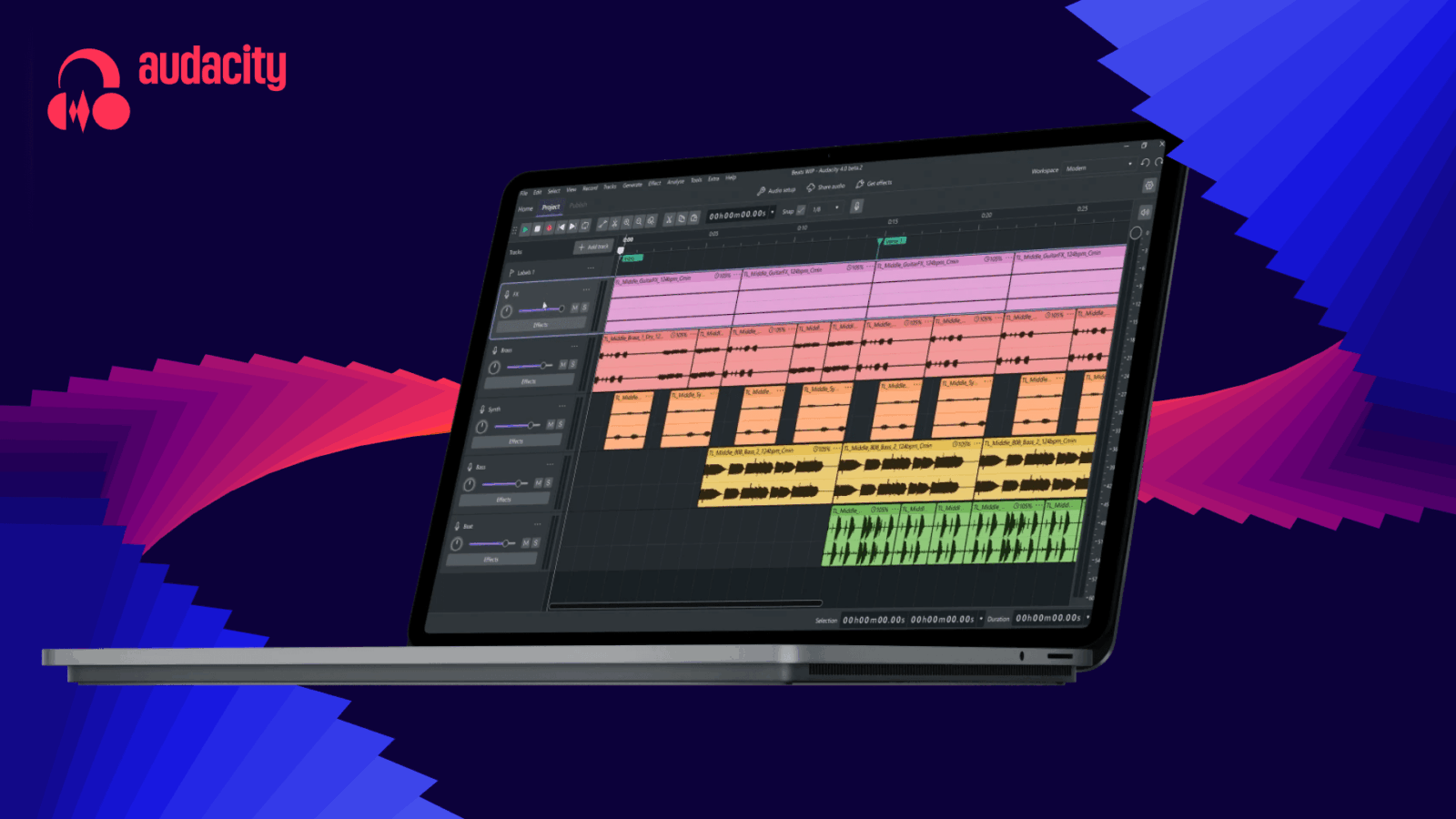
Audacity 4 marks the most significant overhaul yet for the long-running audio editor, transforming a capable but dated tool into a modern application. The self-described “world’s most popular audio editing and recording app” has been rebuilt with a streamlined workflow, a fresh interface, and features that push it closer to a full digital audio workstation.
The update spent considerable time in development and drew some early attention last year when a redesigned logo circulated online. The final icon differs from that initial version, but the more meaningful changes are found throughout the software itself.
Non-Destructive Editing Leads the Changes
The headline addition is a non-destructive editing workflow. Users can trim a clip and later restore the audio by dragging the edge of the clip back out, making edits fully reversible. Clips can now overlap as well, so you can paste in audio even when space is limited and adjust the arrangement afterward, or drag audio freely along the timeline.
This resolves a longstanding limitation. In earlier versions, attempting to drag a clip past another on the timeline would stop the movement entirely, forcing users to cut and paste audio to reposition it around existing content. Audacity 4 also lets you split clips, making it simpler to chop up and rearrange recordings.
A Modern Interface and Refreshed Tools
The developers updated clip envelopes and the built-in effects, and added a home screen with reorganized project management. The application received a substantial visual redesign that aligns it more closely with other products from Muse, including Muse Score and Audio.com. The new look includes customizable themes.
Audacity has been a fixture in many creators’ toolkits since it first launched in 2000. Over the years, it kept a consistent design and layout while new features were added on top, occasionally in awkward ways. The refresh in Audacity 4 moves the software much closer to a modern digital audio workstation (DAW), pairing its established capabilities with a more approachable and flexible editing experience.
Source
Image: theverge.com