
Anthropic is extending agentic AI beyond the screen with a new framework called the Model Hardware Standard (MHS), a set of standardized drivers designed to let AI agents interface with and control physical devices. Until now, automated AI systems have largely been confined to text, images, code, and other actions that occur inside a computer. MHS aims to change that by giving AI a common way to talk to real-world instruments.
Currently offered as a “research preview,” MHS is being positioned primarily as a tool for scientists. Building the custom software integrations required to make different pieces of experimental equipment work together can take weeks or months. Anthropic says MHS provides a common interface and a shared data format, allowing devices to communicate across a network without a bespoke “translator” program sitting in between. According to the company, that standardization can compress lengthy setup work down to “hours or minutes.”
How the Model Hardware Standard Works
Anthropic says the idea grew out of watching neuroscientist Arco Bast run a memory-formation experiment at the HHMI Janelia Research Campus in Ashburn, Virginia. Anthropic Technical Staffer Alek Kemeny observed Bast coordinating rotating laser beams, microscopes, cameras, and other components through a single interface, prompting the thought that the same approach could let AI run science experiments.
A common machine interface language does not require an AI model to function. Anthropic notes that MHS devices can be controlled directly in real time through command-line prompts and API code files. Pairing MHS with an AI model through the Model Context Protocol, however, lets researchers interact with equipment using natural language. Models can then reason through each step of an experiment, update parameters in real time, and in some cases recover from hardware errors without human intervention.
Turning Claude Into a Lab Assistant
Anthropic offered several examples of what an MHS-connected model can do. A system like Claude could adjust a laser, verify the results with a separate camera, and repeat the process to automatically calibrate the setup. It could also focus a microscope, analyze the output, decide which area needs closer inspection, and reposition the instrument to continue the experiment.
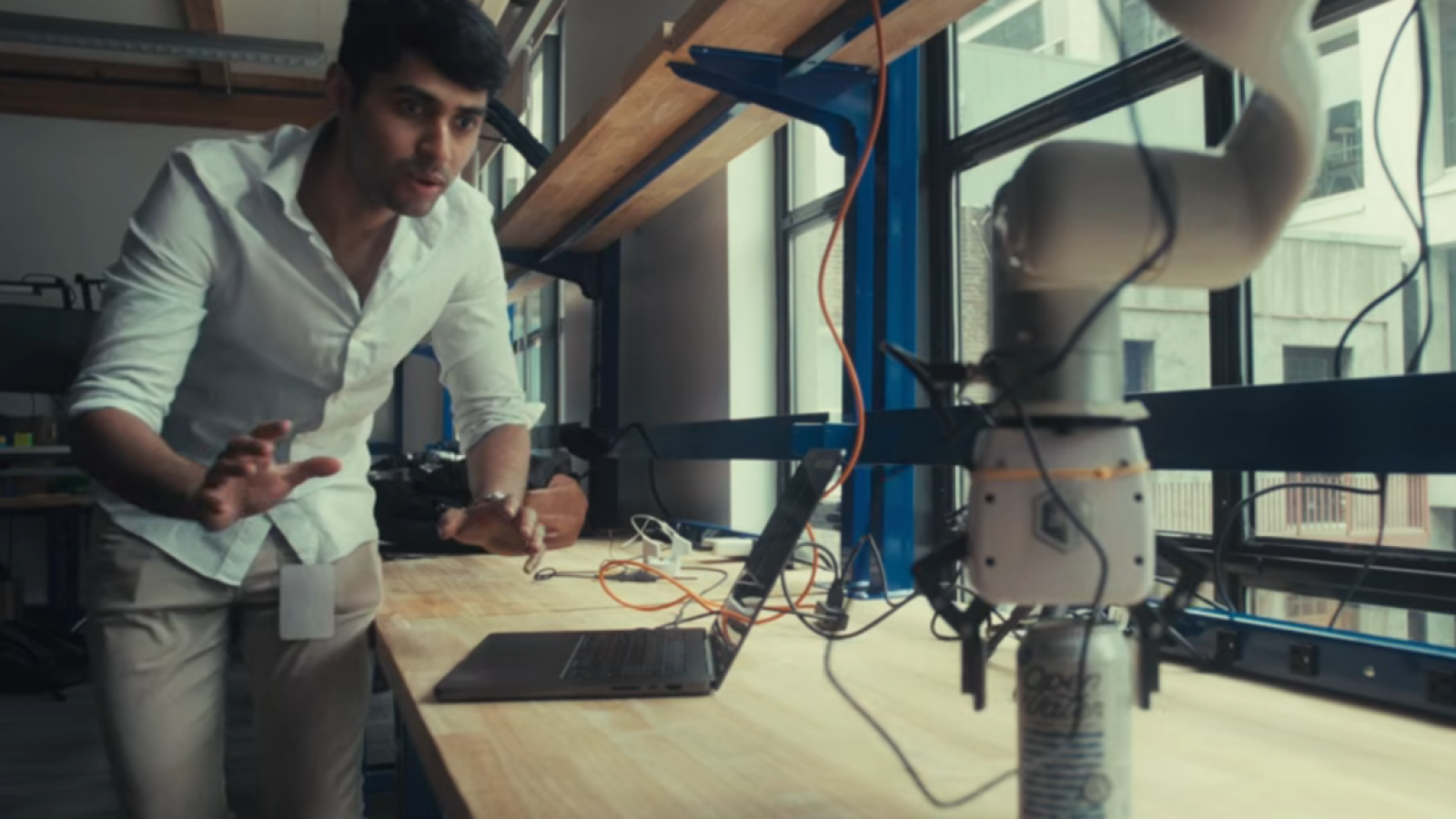
In one demonstration, Anthropic showed Claude reasoning through how to make a robotic arm pick up an aluminum can, even though the model had not been specifically trained on the required steps. Rather than working through every action individually each time, Anthropic says MHS-enabled models can sequence steps across multiple instruments by writing API scripts and adjusting them as conditions change.
The MHS research preview marks Anthropic’s first standardized effort to connect AI agents directly to arbitrary physical hardware.
Source
Image: arstechnica.com