
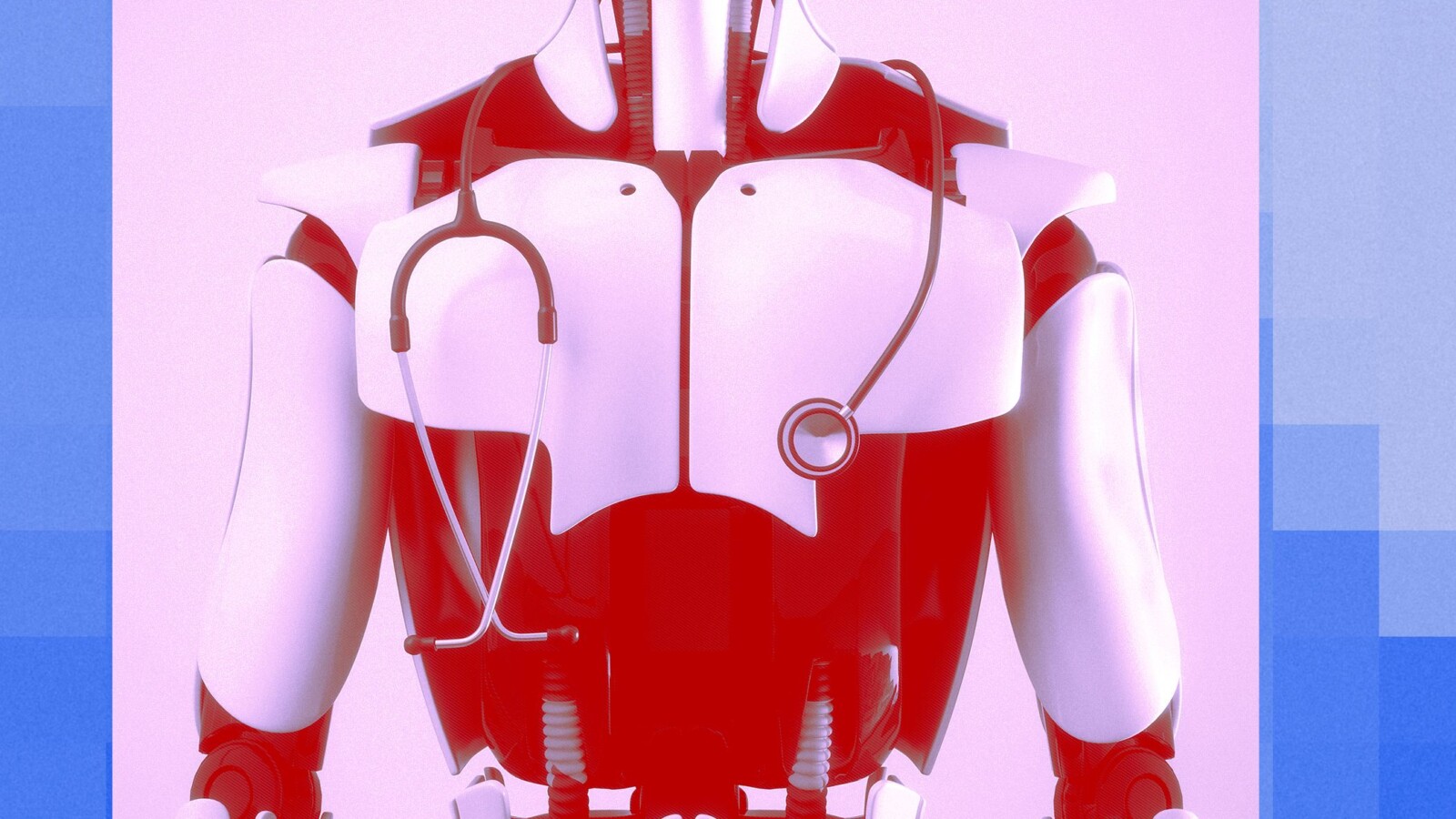
AI in medicine may be approaching a threshold where autonomous systems outperform physicians at core clinical work, according to a new paper reviewing published research on the subject. The authors reviewed studies released since January 1, 2024, and concluded that medicine is nearing a transition point at which AI alone will surpass both physicians and physician-AI hybrids across five fundamental tasks.
Those tasks are taking medical histories, establishing a diagnosis, identifying which tests are needed, prescribing treatment, and managing chronic diseases. The paper goes further, arguing that clinicians should step aside in certain scenarios because, in the authors’ words, “humans in the loop degrade AI performance.”
A Skeptic Changes His Mind
Lead author Ezekiel Emanuel, chair of the Department of Medical Ethics and Health Policy at the University of Pennsylvania and a well-known oncologist, said he spent years dismissing the notion that AI could handle core medical functions. He recalled crossing paths with venture capitalist Vinod Khosla at conferences in the 2010s, where Khosla predicted AI would perform 85 percent of what doctors do by 2035. Khosla had long promoted the idea, writing a 2012 TechCrunch piece titled “Do We Need Doctors or Algorithms?” and a 101-page treatise in 2016. Emanuel’s response at the time was blunt: he considered it impossible, saying what doctors do is too complicated.
His view shifted about a year ago after Robert Wachter, head of medicine at UCSF, shared galleys of his book A Giant Leap. Wachter described a future in which top-tier care would be a collaboration between AI and doctors, while most patients in “economy class” would rely largely on AI alone. Emanuel began to reconsider Khosla’s argument, and it raised a pointed question for him: if AI takes over, what remains for doctors to do?
Collaboration, Disclosures, and Pushback
To test the premise, Emanuel invited Khosla to collaborate, and Khosla suggested including his son Neal Khosla, who runs Curai Health, an online company that uses AI to treat patients while employing doctors to prescribe medication and manage more complex cases. That conflict of interest is disclosed in the paper, along with Vinod Khosla’s relevant investments and Emanuel’s grants and consultancies.
Reviewing the AI-medicine studies they could find from January 2024 to the present, the coauthors concluded that in many cases a “superior autonomous AI” will likely surpass humans using AI by 2030. They describe that forecast as “unsettling but seems probable.”
The conclusions have drawn objections. John Whyte, CEO of the American Medical Association, pointed to what he saw as the paper’s shortcomings, noting that some surveyed studies are simulations rather than blind experiments and that not all of them support the article’s conclusions. He also cited a February 2026 Nature article, which found that in real-life cases most patients were unable to converse effectively with large language models to access their expertise. Whyte objected to removing humans from the clinical loop while acknowledging that the AMA sees potential in the technology.