

AI data centers dominated discussions at the G20 Innovation Ministerial summit this week, where US Commerce Secretary Howard Lutnick pressed global leaders to embrace the infrastructure needed to expand artificial intelligence. Speaking alongside Anthropic co-founder and chief compute officer Tom Brown, Lutnick made a simple case: growing AI requires building more data centers.
The logic is straightforward on the surface. Data centers provide the computing power tech companies rely on to train new AI models. But the premise is increasingly contested, as these sprawling server farms face mounting opposition tied to environmental impact, rising energy costs and heavy resource consumption.
The Rapid Expansion of Data Centers Across the US
Over the past several years, construction of these facilities has accelerated nationwide. According to Cleanview’s data center tracker, roughly 3,400 sites are already operational, with another 2,000 planned. Each facility demands enormous amounts of electricity to power AI compute, clean water to cool the chips and substantial land to build on.
Tech firms argue that data centers generate jobs and expand local tax revenue. Residents living near these projects tell a different story, pointing to noise, air pollution and higher utility bills. The resistance cuts across political lines, with Democrats, Republicans and independents alike opposing new construction in their communities.
That widespread pushback helps explain why the US government is now launching an effort to convince other world leaders to promote AI data center development abroad.
Protests Reach the G20’s Doorstep
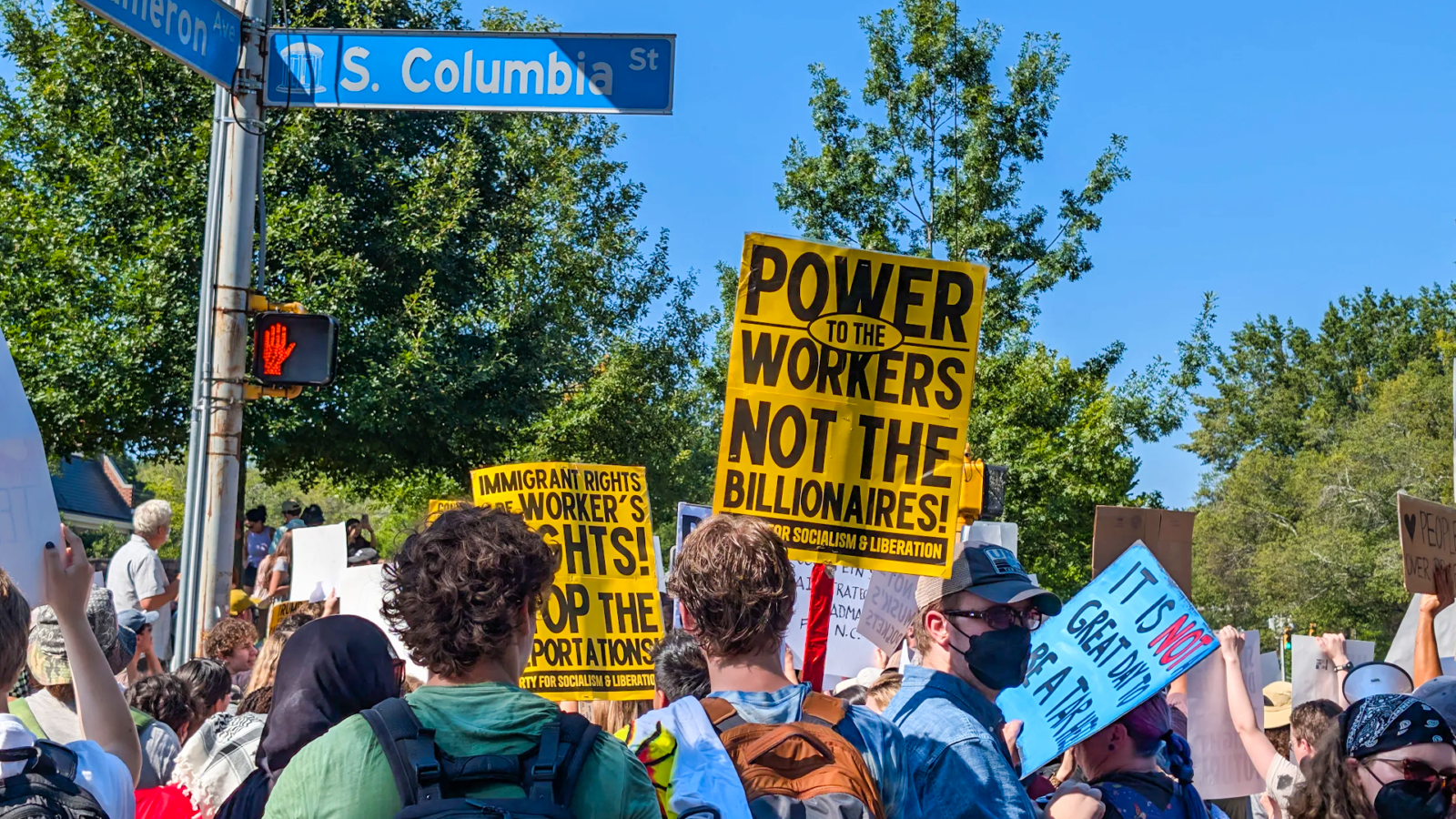
The anti-Big Tech backlash arrived directly at the summit, hosted this year at the University of North Carolina at Chapel Hill. About 100 students and local residents gathered to protest the in-person and virtual appearances of OpenAI CEO Sam Altman, Elon Musk and Howard Lutnick outside The Carolina Inn, where the forum is being held.
“We as students and community members are showing up because we do not think that tech billionaires should feel comfortable and have a place on our campus,” said Amy, a student and member of UNC’s Sunrise organization, which advocates for social and economic justice. Amy, who declined to give her last name, said students have also been protesting the installation of more than 20 Flock surveillance cameras across campus.
Demonstrators chanted “Hey ho, hey ho, Sam Altman has got to go.” Some signs referenced Lutnick’s ties to Jeffrey Epstein, while others called on tech companies to prioritize people over profits.
The Government’s Growth-First Message
Pro-AI messaging often carries a warning: those who resist will be left behind. President Trump reinforced that theme in a post on Truth Social this week, claiming that communities blocking data centers would end up “backwards and poor.” No evidence supports that assertion.
Throughout the summit, the administration has emphasized growth unburdened by new regulation. Lutnick and other officials maintained that data center expansion is essential to keeping the US at the forefront of AI development.