
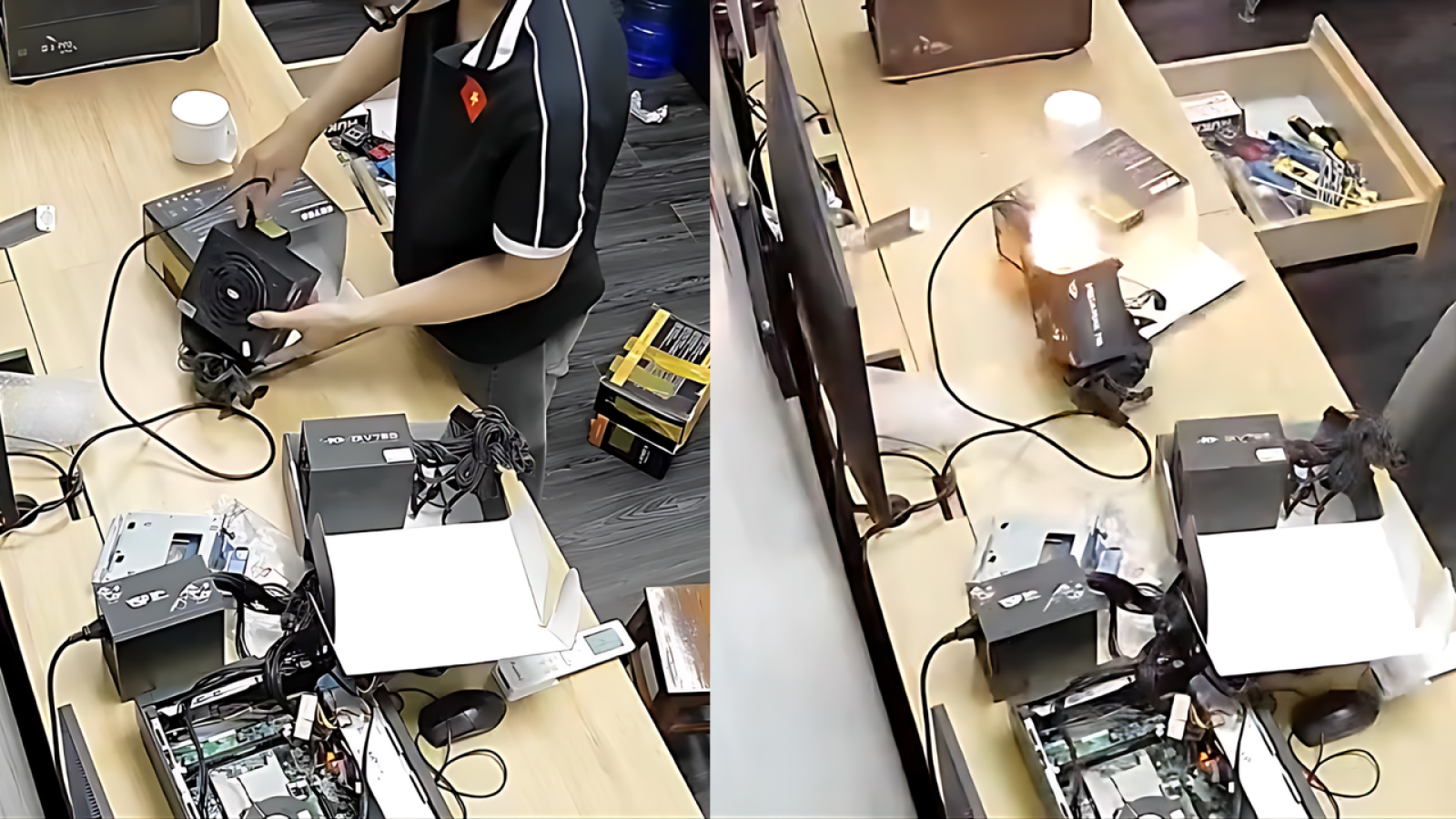
A questionable PC power supply caught fire the instant it was plugged into a wall socket, according to CCTV footage that has gone viral. The incident occurred at a service center in Vietnam, where a technician narrowly avoided disaster by quickly cutting the unit off from the wall. No one was injured.
The power supply is the lifeblood of any PC, regulating the electricity that feeds the entire system and shaping how well it performs. In this case, the unit in question failed the moment it received power, sparking dramatically before erupting into flames and smoke.
What the Footage Shows
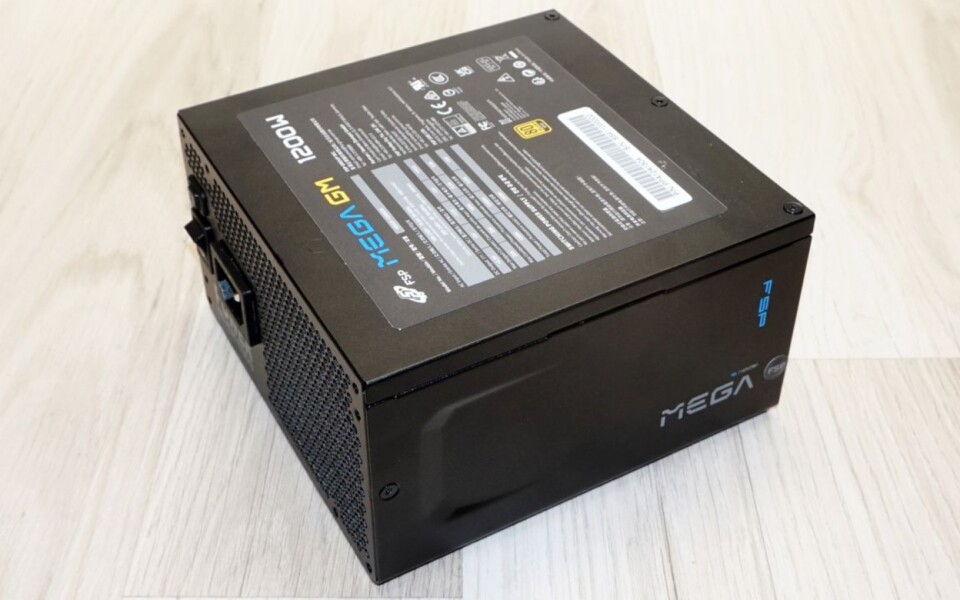
The component involved was a VSP MEGA MAX VS750D, and it did not appear to be new. The technician pulled it out of a box without any packaging material, and the original poster later confirmed the unit had arrived for an RMA request submitted by a customer.
With the power cord already prepared, the technician plugged the connector into the PSU. Sparks immediately flew, and the unit caught fire. After a brief startle, the worker yanked the cord out, picked up the burning unit, and blew out the flames as smoke poured from the enclosure. The technician was also barefoot on wooden flooring during the incident.
Why the PSU May Have Failed
The VSP unit carries an 80+ White rating and sits at Tier E in the PSU tier list, placing it among the lowest-quality options available. Commenters speculated that the PCB was not properly isolated inside the metal case, causing an internal short. A short on the 12V rail alone can draw up to 1,800W (150A) without tripping a circuit breaker.
However, the fire started before the technician could even switch on the unit. The 12V rail would normally remain dead without a motherboard signaling the system to turn on, or without someone shorting the 24-pin connector directly. Voltage mismatch is also unlikely, since the model features Active PFC with auto-sensing input, and Vietnam already runs on 220V mains power.
Because of this, the failure is more likely tied to a bridge rectifier unable to properly convert AC to DC, or a MOSFET failing to chop voltage into pulses for the transformer to step down to the 12V, 5V, and 3V rails. Either fault would create an internal short, which explains the sparks that appeared before the flames.
Power supplies are generally shielded from electrostatic discharge because they are fully enclosed in a metal case, so ESD was not a factor here. The photo of the aftermath shows the unit heavily scorched, underscoring the poor build quality that reviewers had already flagged.
Source
Image: tomshardware.com