
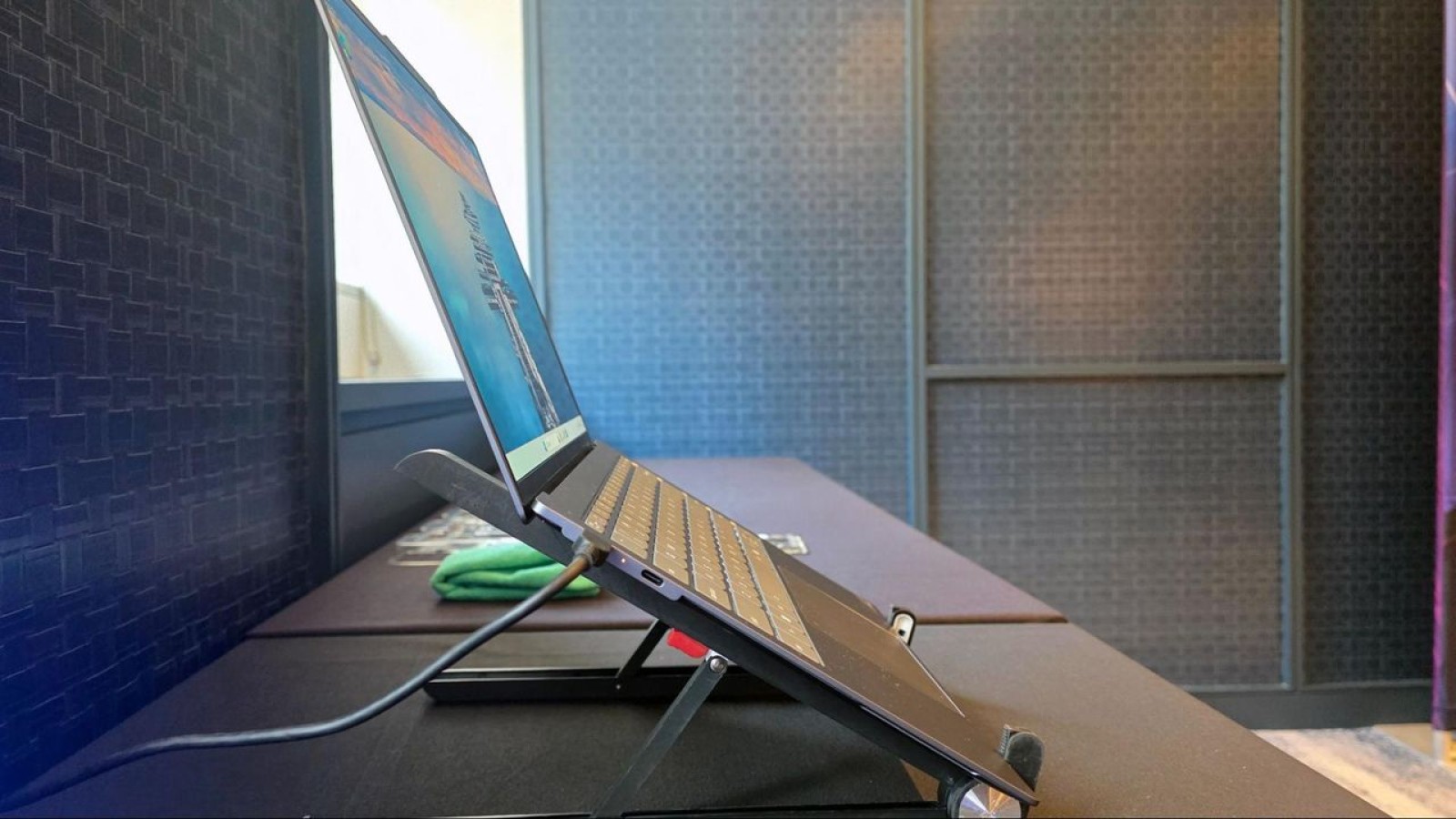
Lenovo unveiled two forward-looking laptop concepts at IFA in Berlin, and both prioritize productivity and portability while feeling closer to shipping products than many prior prototypes. The headline design, Project AeroBlade, is a 14-inch machine that Lenovo says was re-engineered around mobility, with every component chosen to reduce weight and bulk.
The most notable change is the cooling system. Instead of traditional fans, the AeroBlade uses Frore Systems’ AirJet solid-state cooling, which relies on piezoelectric membranes that vibrate at ultrasonic frequencies beyond human hearing. Lenovo packs four AirJet Mini modules into the concept, three more than the single module Intel demonstrated in its Wildcat Lake reference design earlier in the year. That configuration should deliver stronger sustained performance than earlier passively cooled PCs.
Each AirJet Mini module is rated to dissipate 7.5 watts of heat, giving the AeroBlade a total of 30 watts of active heat dissipation. That pairs well with the Intel Lunar Lake silicon inside, which carries a 17-30W TDP. Intel’s newer Wildcat Lake chips are rated at 15-35W and would likely work well with a comparable solid-state setup.
A 1.8-Pound Laptop Built for Portability
A compact motherboard and a magnesium-aluminum frame allow the AeroBlade to measure just 0.39 inches (10 mm) thick and weigh under 1.83 pounds (830 grams). The trade-off for that slim profile is connectivity limited to USB-C and Thunderbolt 4, though Lenovo includes three of those ports. The concept also features an OLED display and Wi-Fi 7.
Lenovo is using Intel’s Lunar Lake platform in this prototype. If the design ever reaches production, it would ship with a more current processor, potentially from Intel’s Wildcat or Panther Lake lineups.
Project Swan Puts a 17-Inch Rollable Screen in a 14-Inch Chassis
Project Swan marks Lenovo’s return to rollable-display laptops, with a concept that feels more mainstream and achievable than earlier efforts. Built into a largely conventional 14-inch ThinkBook chassis, the screen expands at the press of a button from a 14-inch panel into a 17-inch, 16:9 display with a 2850 x 1672 resolution. The numbers do not perfectly match a 16:9 ratio, suggesting a small portion of the rollable OLED panel stays off the visible screen in this concept.
The rollable mechanism adds size and weight. Project Swan tips the scales at 3.53 pounds (1.6 kg) and measures 0.7 inches (17.9 mm) thick, making it neither the thinnest nor the lightest 14-inch laptop. The added bulk sits in the lid, which houses the rollable display mechanism and bezels that extend outward on the sides. As with similar devices, the motor mechanism is louder than users might expect.
Both concepts appeared at IFA in
Source
Image: tomshardware.com