
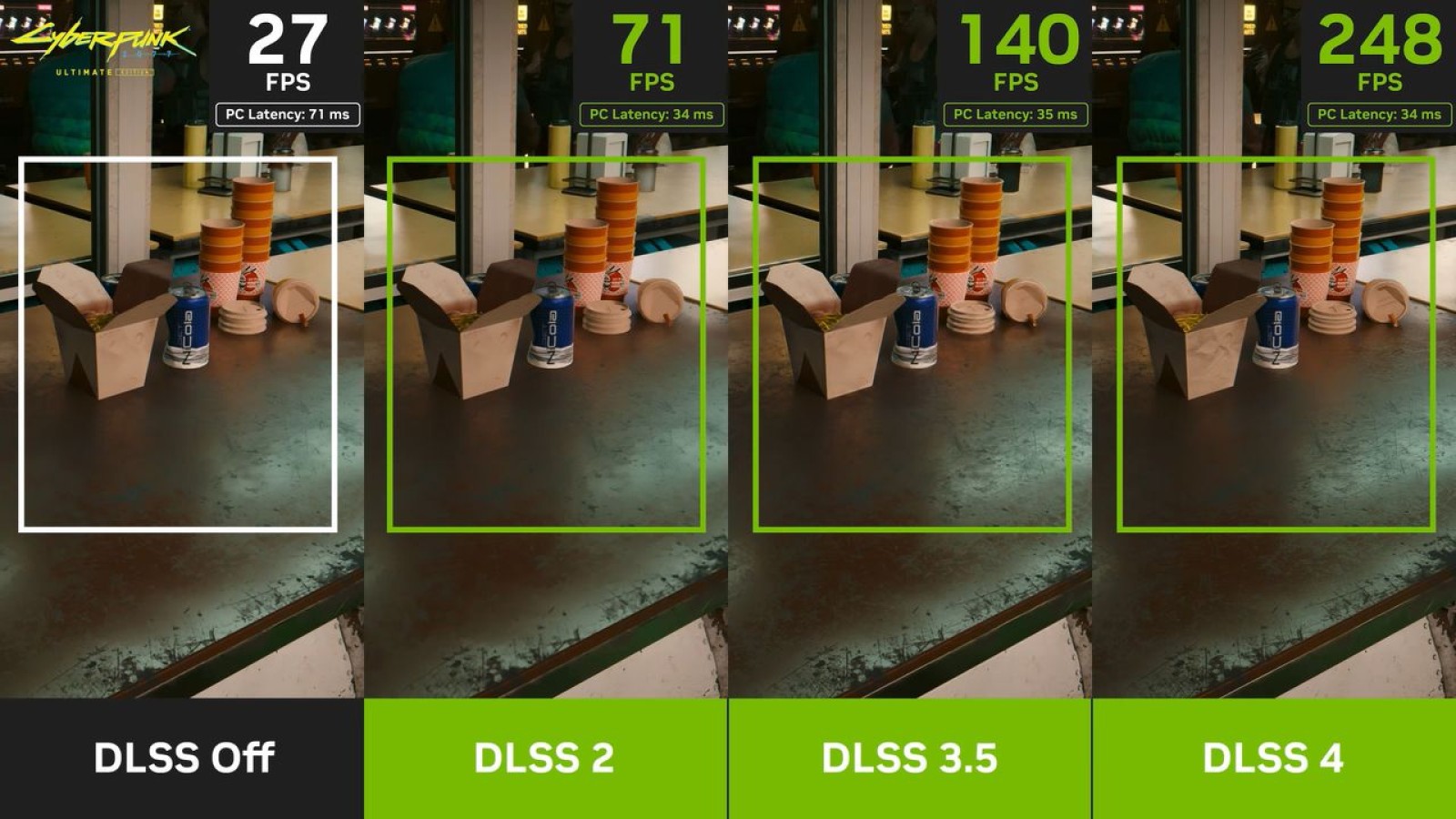
DLSS Multi-Frame Generation is once again running on Nvidia’s RTX 40 series graphics cards, even after a recent Nvidia App update appeared designed to block it. The feature was officially reserved for the newer RTX 50 “Blackwell” GPUs, but modders have spent months finding ways to bring it to Ada Lovelace hardware. When Nvidia pushed an over-the-air update through the Nvidia App that seemed aimed at shutting down those efforts, workarounds surfaced within hours.
At the Blackwell launch, Nvidia stated that Multi-Frame Generation could not run on RTX 40 series cards because those GPUs used a hardware optical flow generator that could not produce multiple interpolated frames per rendered frame. Blackwell instead introduced a software-based optical flow method executed directly on the GPU shader cores, removing the need for a dedicated hardware unit. That design raised an obvious question among enthusiasts: why not run the same software method on Ada Lovelace GPUs and skip their hardware optical flow units entirely? Nvidia did not enable this path, leading many to assume it was technically impossible.
How the Community Restored the Feature
As it turns out, it is possible. Nvidia’s software includes several roadblocks, but the openness of the PC platform allows users to modify software running on their own hardware. At least three distinct mods have emerged to unlock Multi-Frame Generation across multiple games. The effort began with a Cyberpunk 2077 mod from a creator known as “dashdogy,” which relied on game-specific modding frameworks. That technique was later adapted into a broader ReShade plugin that works with nearly any title.
Early testing has been positive. One modder demonstrated the feature on an RTX 4060, running Resident Evil 9 and Forza Horizon 6, and reported that it worked well aside from an expected increase in latency. Reports across X and Reddit describe the mods delivering surprisingly smooth frame pacing.
Questioning the Hardware Dependency
Nvidia had previously stated that Blackwell’s specialized hardware flip metering was mandatory for proper frame pacing with multi-frame generation. However, dashdogy noted that his mod backports “Blackwell-specific frame timing instructions to allow Ada to place the frames in the correct positions.” That approach suggests the hardware dependency behind Multi-Frame Generation was significantly overstated.
Earlier attempts to enable multi-frame generation on Ada Lovelace relied on GPU spoofing or hybrid solutions, such as combining standard 2x DLSS Frame Generation with AMD’s FSR 3 or Lossless Scaling’s software frame generation. Those methods were noticeably clunkier than the current mods. Since the initial release, the mod has already received two additional updates, both addressing major bugs.
Source
Image: tomshardware.com