
DLSS 5 arrived earlier than expected after a version of the model leaked alongside NBA2K27 and was quickly modded into a wide range of games. Following initial builds that relied on ReShade to run the model, the community packaged DLSS 5 into an Optiscaler bundle that makes adding it to most titles nearly effortless. That progress made it possible to gauge how the technology performs ahead of its official release.
Rather than debate the visual or philosophical merits of applying the model to any particular game, the focus here is on the performance cost of running DLSS 5 and the power draw it introduces. Regardless of how you feel about the way it changes a game’s appearance, that impact can be weighed against the frame rate you give up to achieve it.
How the Tests Were Set Up
A few caveats apply. The Optiscaler injection method may not reflect how the model behaves once developers integrate it through Nvidia’s Streamline framework, which could offer lower overhead and better performance. Even so, Nvidia’s technical paper states that the model takes 8 ms to execute on a 4K frame, which lines up almost exactly with the metrics observed from Optiscaler in action. That suggests an official implementation would not stray far from the measured results.
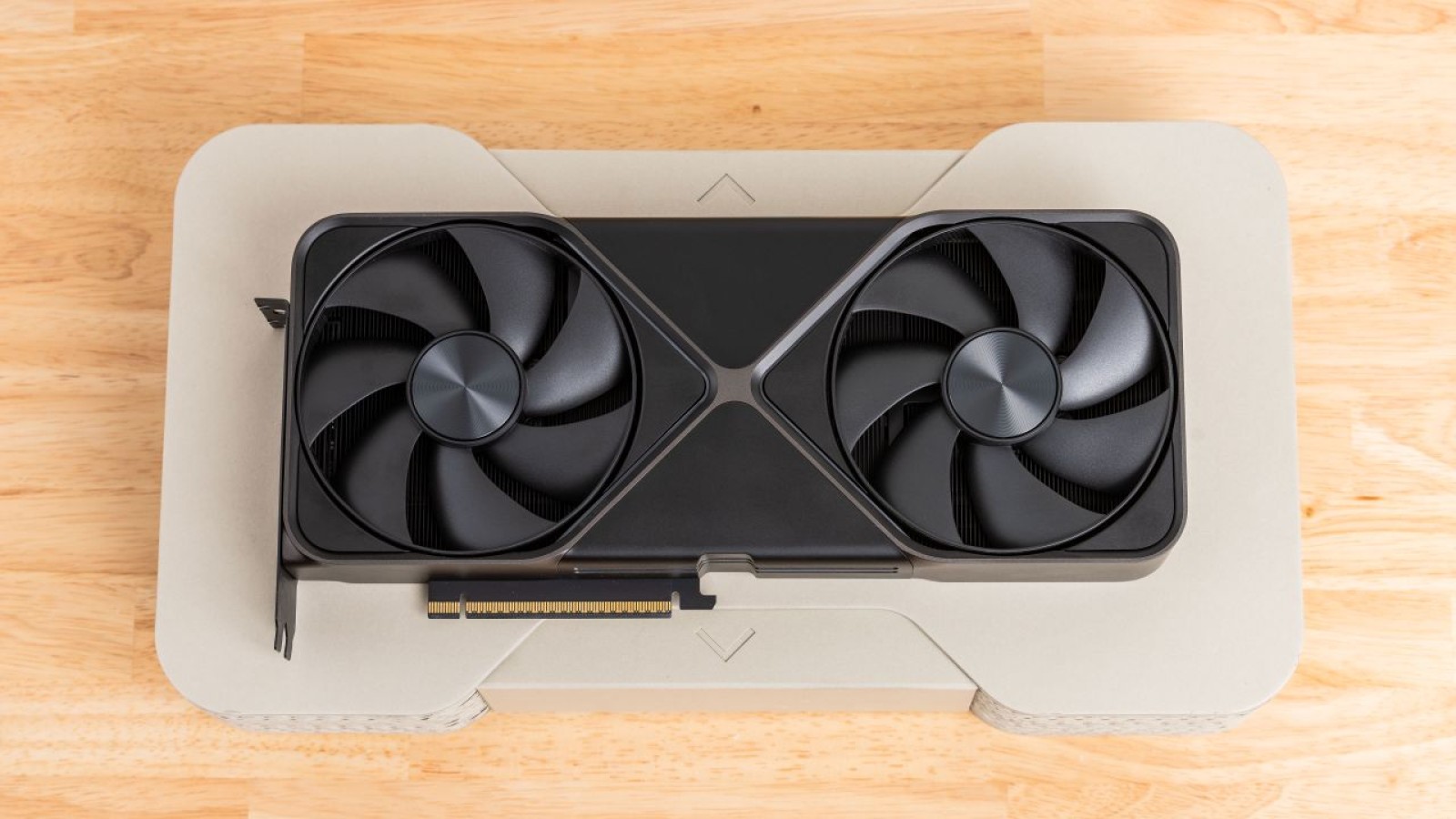
Testing centered on the RTX 5090 Founders Edition to capture the largest performance drop one might expect from this community version. MSI’s RTX 5090 Lightning Z was also included, notable for its dual 12V-2×6 connector setup and a 1000W power limit unlocked through its Extreme vBIOS. Given the apparent arithmetic intensity of the model, the goal was to see whether it would tap the extra headroom from that twin-plug design.
Settings and Cyberpunk 2077 Results
The test games ran at a 4K output target fed by DLSS Performance upscaling, meaning a 1920×1080 input, without frame generation. Maximum raster and ray-tracing quality were used, or path tracing in the case of Cyberpunk 2077, along with DLSS Ray Reconstruction where available. Multi Frame Generation was left off to keep a clean baseline.
Cyberpunk 2077 was the starting point. Optiscaler installed easily, and neural rendering delivered the expected improvements in facial detail and lighting realism once activated. In exchange for those enhancements, the RTX 5090 Founders Edition took a 42% performance hit from the model. The Lightning Z saw a slightly smaller 39% drop, and because its baseline performance runs higher than the Founders Edition, the MSI card maintained an advantage under load.
Nvidia’s technical paper measures the model at 8 ms per 4K frame, matching the overhead recorded through the community Optiscaler package.
Source
Image: tomshardware.com