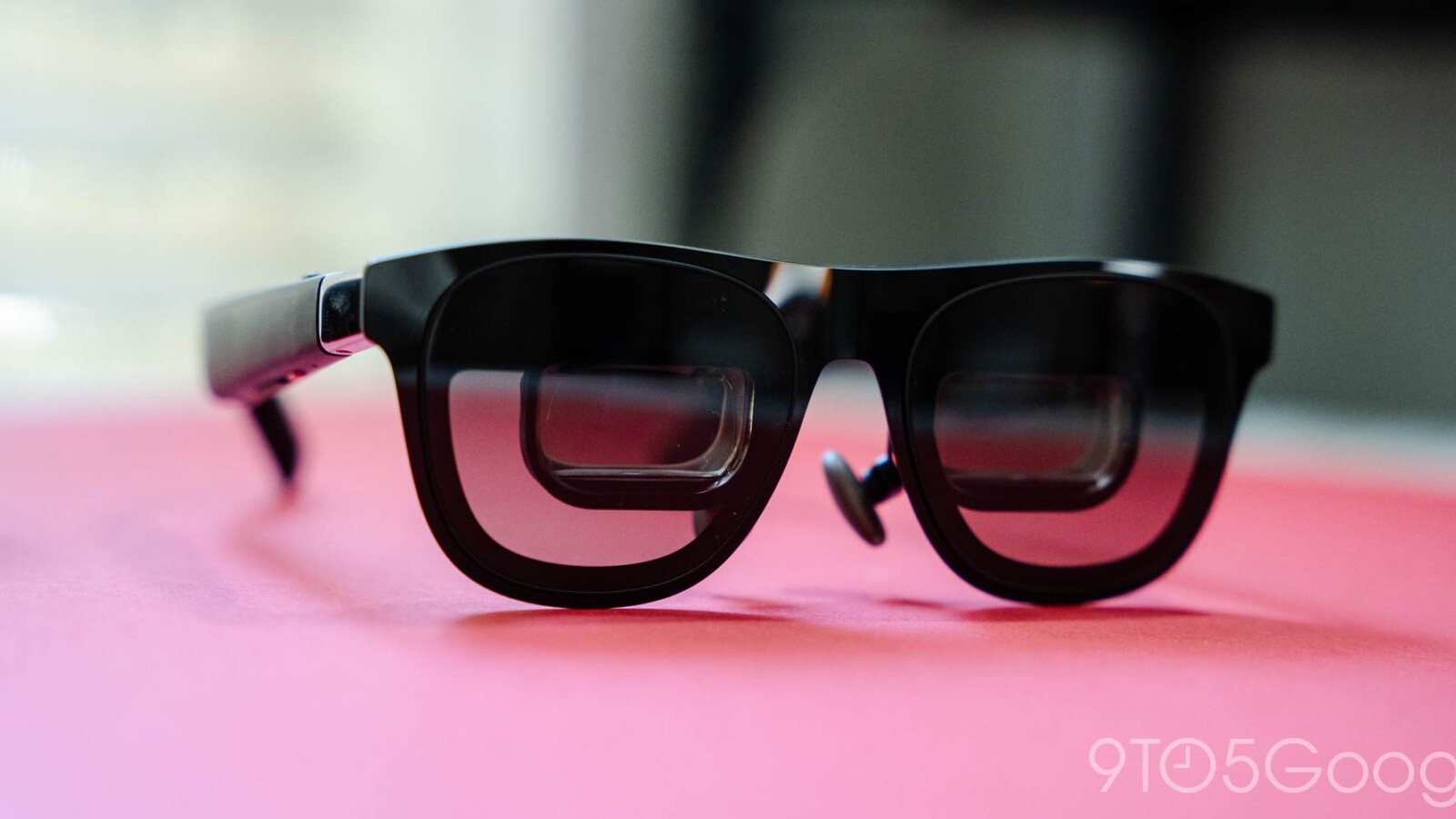
XREAL One Pro may be the hardware that finally makes Android XR click for skeptical viewers. Ahead of the company’s first Android XR glasses, hands-on time with the One Pro suggests two things: this hardware could help Android XR shine, and XREAL stands to benefit significantly from the platform.
For anyone unfamiliar with the brand, XREAL builds glasses that place a virtual screen in front of your eyes. The concept sounds niche, but the company’s decision to adopt Android XR makes the technology worth a closer look.
How XREAL One Pro Works
The setup is straightforward. Plug the XREAL One Pro into a device such as a Galaxy Z Fold 7, a MacBook, or a Redmagic Astra 2 tablet, and whatever you’re doing appears on a customizable 157-inch display floating in front of you. The glasses stick out from the face a bit and don’t look entirely ordinary, but they remain far less bulky than a full VR headset and pack easily into a bag with a cable running down to the source device.
A standout use case emerged quickly: air travel. A large screen that floats ahead and tracks your movement beats a seatback display, and the glasses stay comfortable across a multi-hour flight. Transporting them is also far simpler than hauling a headset.
Picture Quality and Current Limits
Image quality is strong once the settings are dialed in. Movies look great, and mirroring a MacBook creates a full-size canvas for work without worrying about the passenger ahead reclining. XREAL’s 3DoF tracking performs well on the ground but tends to drift during flights, especially in turbulence.
Not everything runs smoothly. Connected to the Redmagic tablet, certain video apps including Fandango at Home and Google TV hit problems, though Google TV worked fine on the Fold over DeX. The 3D conversion mode never functioned on the Redmagic tablet but held up well on the Fold.
You can also adjust how much of the real world remains visible, with no cameras required.
Where Android XR Fits In
The One Pro builds on whatever device you connect to it. On-board controls and software are limited, and the glasses can’t do much without a secondary device. XREAL offers add-ons for gesture controls and sells an Android phone that adds a user interface to the glasses. The forthcoming XREAL Aura with Android XR is positioned to complete the experience by adding native capability the current hardware lacks.
Source
Image: 9to5google.com