

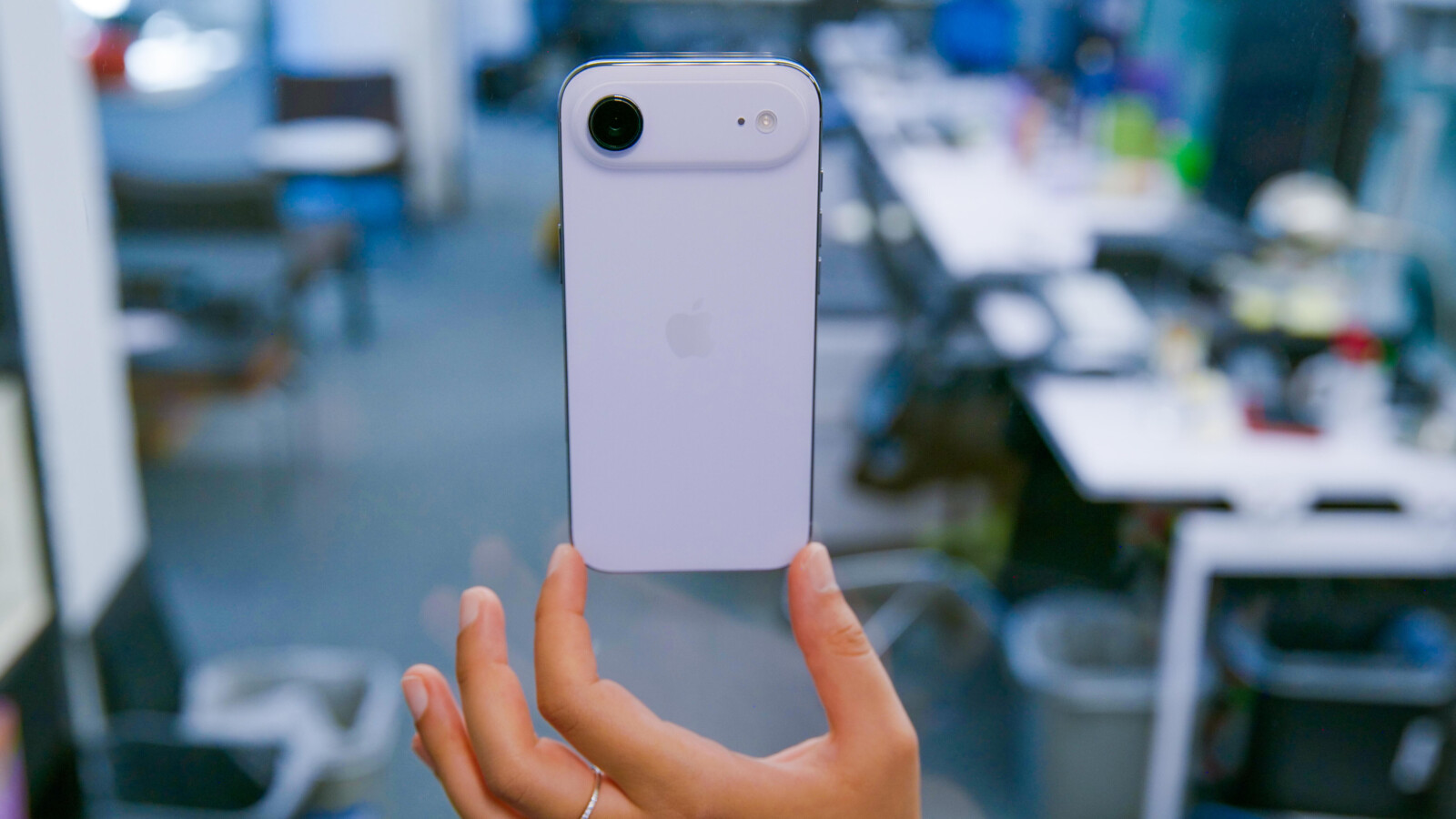
The iPhone Air arrived last fall to significant fanfare, even as reported sales fell short of expectations. Yet the device may matter far more as a preview of what comes next: a foldable iPhone. Beyond its merits as a standalone phone, the Air appears to be a stepping stone toward a bigger, bendable device.
At just 5.6mm thick and 165 grams, the EUR 858 iPhone Air left a strong impression from its debut at Apple Park last September. It proved durable in everyday use while remaining almost weightless in a pocket or bag. Those qualities align closely with what a foldable phone demands, a category long criticized for being bulky, fragile and hard to handle.
Recent devices such as the Samsung Galaxy Z Fold 8 series, the Honor Magic V6 and the Motorola Razr Fold have shown that slim design and versatility can coexist. Apple may now be positioned to follow suit.
A Transitional Step Toward the iPhone Ultra
Industry analysts see the Air as a foundation rather than a failure. “The first iPhone Air may eventually be viewed as a transitional step rather than a failed product category,” said Rishi Padhi, research principal at Gartner. He noted that it proved Apple could build a thinner iPhone, identified the minimum features consumers will not give up, and established a component and design path for a foldable iPhone.
That foldable model, speculatively called the iPhone Ultra, could debut at Apple’s Sept. 9 event in Cupertino, California. A second-generation iPhone Air may follow early the following year. Apple’s expected entry into the foldable market could lift the entire segment, with IDC projecting global shipments to grow more than 12% this year, driven by Apple’s new offering. A survey found that 75% of US adults aren’t interested in a foldable iPhone, though that sentiment could shift once Apple reveals its approach.
A Premium Middle Ground With Trade-Offs
The iPhone Air replaced the iPhone Plus, a device that offered a larger screen than the base model but little else to set it apart. The Air stood out for clearer reasons: it was strikingly thin and remarkably light, making it a natural centerpiece of Apple’s marketing. It gave buyers who wanted more than the standard model, but didn’t need every Pro feature, a fresh middle-ground option.
“Consumers who want a premium iPhone had traditionally opted for the Pro, but did not always need some of the Pro features,” Padhi said. “The Air, in many ways, was Apple’s goal to address that gap in the market.”
Its slim build carries compromises. The Air includes a single rear 48-megapixel wide-angle camera and one speaker at the top. The thinner frame leaves less room for a battery, which can require charging before day’s end, followed by modest 20-watt charging. Samsung’s slim Galaxy S25 Edge launched a few months earlier at EUR 945.