

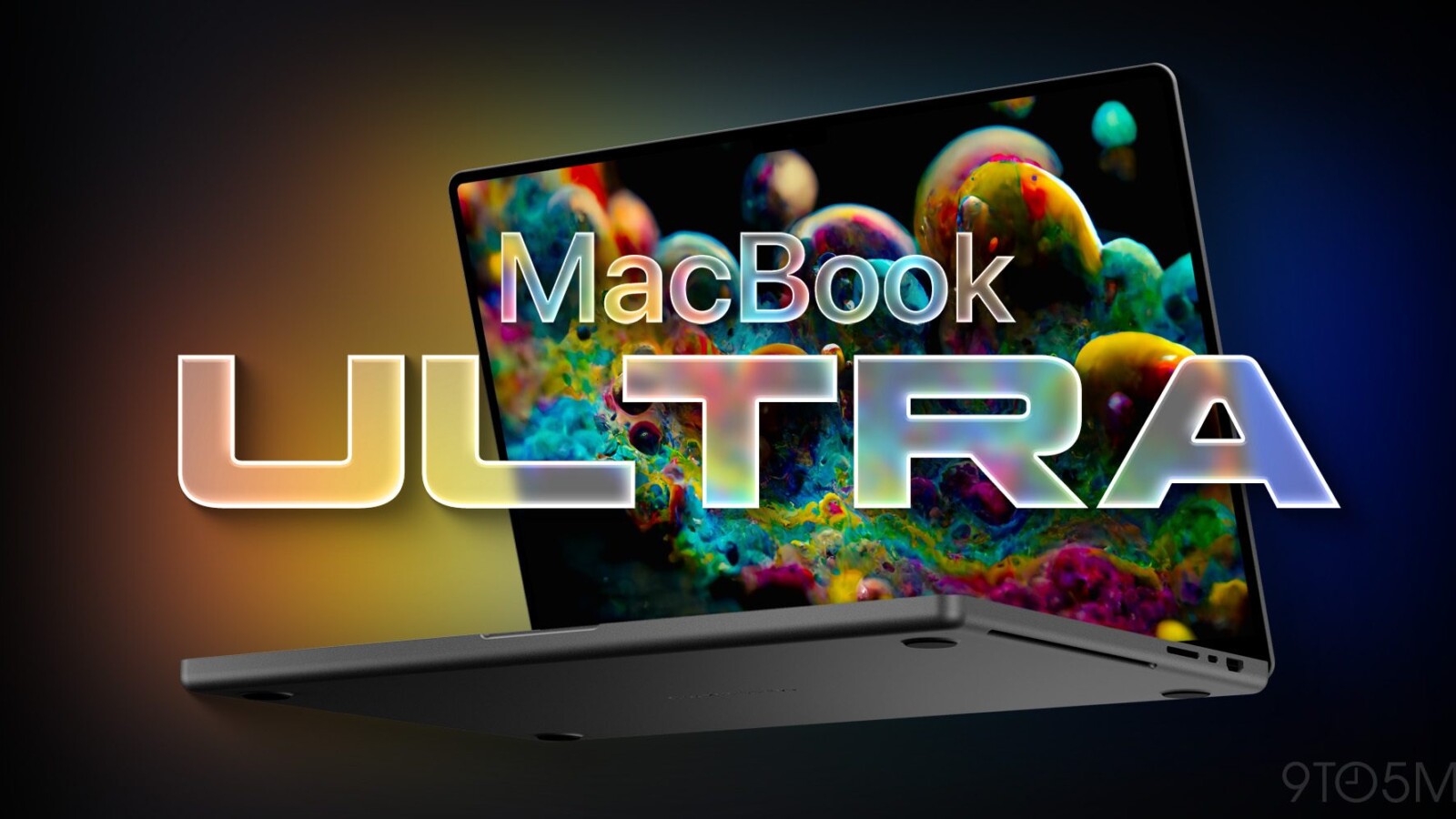
The MacBook Ultra could carry a steeper price tag than many buyers anticipate, according to fresh supply chain information about Apple’s upcoming Mac lineup. Apple is expected to introduce a major MacBook Pro redesign as soon as October 2026, bringing OLED technology, the first-ever touchscreen on a Mac, a slimmer chassis, Dynamic Island, and additional upgrades.
Early speculation suggested the redesigned machine would carry the MacBook Ultra name, but the branding picture remained murky. The confusion deepened after reports indicated Apple would extend certain design elements from the Ultra to a base MacBook Pro powered by the M7 chip, casting doubt on whether the Ultra label would stick at all.
Why the Ultra Name Now Makes Sense
New information from research firm Omdia points to Apple keeping its current miniLED display panels in production through 2028. That detail carries two important implications for the product strategy.
First, if the existing miniLED MacBook Pro remains available alongside the redesigned model, the newer machine will likely command a meaningful price premium. Second, the continued split between miniLED and OLED hardware makes a distinct MacBook Ultra branding far more plausible, allowing Apple to separate the two product tiers clearly.
Maintaining older display technology in production is a familiar Apple approach, often used to keep entry-level starting prices lower while positioning newer designs at the top of the range.
How the MacBook Lineup Could Shape Up
Based on the reported roadmap, Apple’s Mac notebook family could grow larger than ever over the next year.
For fall 2026, the lineup may include the MacBook Neo with the A18 Pro chip, the MacBook Air in 13-inch and 15-inch sizes with the M5, a 14-inch miniLED MacBook Pro with the M6, and 14-inch and 16-inch miniLED MacBook Pro models with M5 Pro and M5 Max chips. Sitting at the top would be the OLED MacBook Ultra in 14-inch and 16-inch configurations with M5 Pro and M5 Max silicon.
By spring 2027, the roadmap points to a MacBook Neo with the A19 Pro, refreshed MacBook Air models with the M6, a 14-inch OLED MacBook Pro with the M7, and continued miniLED MacBook Pro options with M5 Pro and M5 Max chips. The OLED MacBook Ultra would remain the flagship offering in both screen sizes.
Expected Pricing
Under this scenario, the miniLED MacBook Pro could hold a starting price near EUR 2,150, while the redesigned OLED model would sit higher, potentially starting around EUR 2,580.
Keeping the older MacBook Pro in the lineup would likely be a temporary measure, consistent with Apple’s past strategy of preserving lower entry points while transitioning customers toward newer designs. Omdia’s projection has miniLED panel production continuing through 2028.
Source
Image: 9to5mac.com