
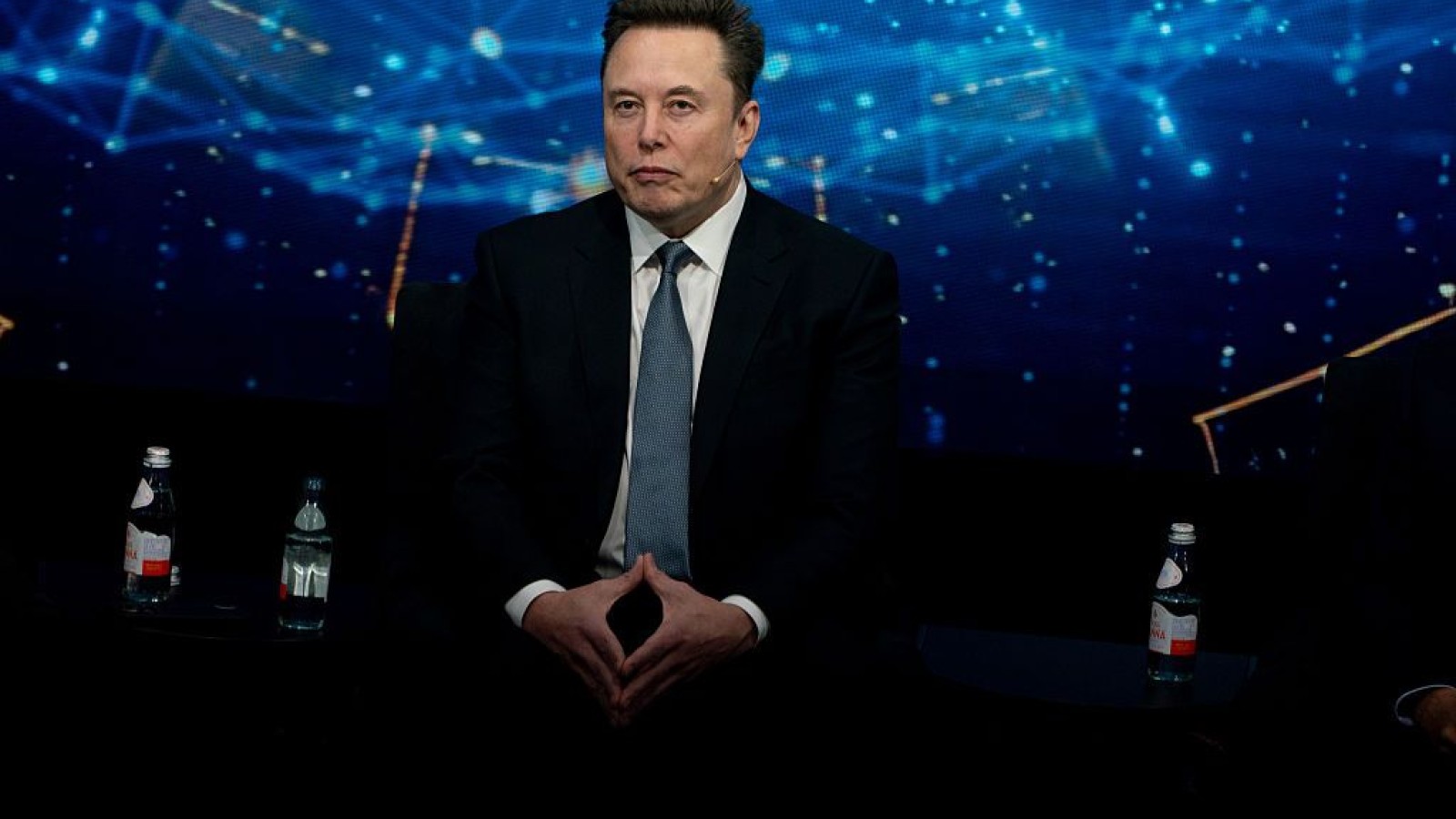
Elon Musk says SpaceX will manufacture one of the hardest-to-produce components in a natural gas turbine, a move aimed at easing a major bottleneck slowing the buildout of AI infrastructure in the United States. On Saturday, Musk confirmed the purpose of a secretive foundry SpaceX has been constructing in Bastrop, Texas.
The confirmation came as reporting closed in on the project. Job listings tied to the site explicitly referenced a “blades and vanes foundry,” while a due diligence specialist who tracks AI infrastructure sites had documented that SpaceX purchased roughly 830 acres near its existing Starlink factory in Bastrop between March and June of last year.
Why SpaceX Is Casting Turbine Blades
Writing on X, Musk explained the reasoning. “SpaceX and Tesla are each building 100GW/year of solar production capacity as fast as possible,” he wrote, “but natural gas will still be needed to supplement and bootstrap solar for several years. The limiting factor for nat gas turbine production is casting the blades & vanes. By doing in-house casting at SpaceX, we can accelerate nat gas turbines coming online by up to 18 months, which is a profound game-changer.”
The push traces back to one of the AI industry’s biggest constraints. GPU shortages remain a problem, with Nvidia’s newest Blackwell chips still carrying lead times of several months. But a second limitation has emerged: the physical power grid. The International Energy Agency projects that global data center electricity use will roughly double by 2030, and turbine maker GE Vernova says it is essentially sold out of production capacity through 2030, largely because of AI demand.
The Casting Bottleneck Explained
That shortage has pushed hyperscalers to build private gas-fired plants next to their data centers rather than wait on the grid. Amazon, Google, Meta, OpenAI, and Microsoft have all adopted the strategy, betting on natural gas to bring facilities online faster after years of prioritizing wind and solar.
The specific challenge lies in the casting process. The blades inside a gas turbine’s hottest section operate at roughly 3,000 to 3,600 degrees Fahrenheit, about 800 degrees above the melting point of the metal alloy they are made from. That is only possible thanks to internal cooling channels, thermal-barrier coatings, and the precise way each blade is cast. Just four companies worldwide have mastered the technique at industrial scale, and all of them are currently at capacity.
Each blade must be cast as a single, unbroken crystal, grown slowly inside a vacuum furnace to avoid the microscopic seams that cause ordinary cast metal to crack under stress. The process is difficult even for the smaller blades in jet engines. The blades used in power-plant turbines are considerably larger, making defect-free production at that scale even harder.
If SpaceX succeeds, a Musk-controlled entity would hold a manufacturing capability that every other AI infrastructure builder currently depends on a small group of suppliers to provide. The foundry sits near SpaceX’s existing Starlink factory in Bastrop, Texas.
Source
Image: techcrunch.com