
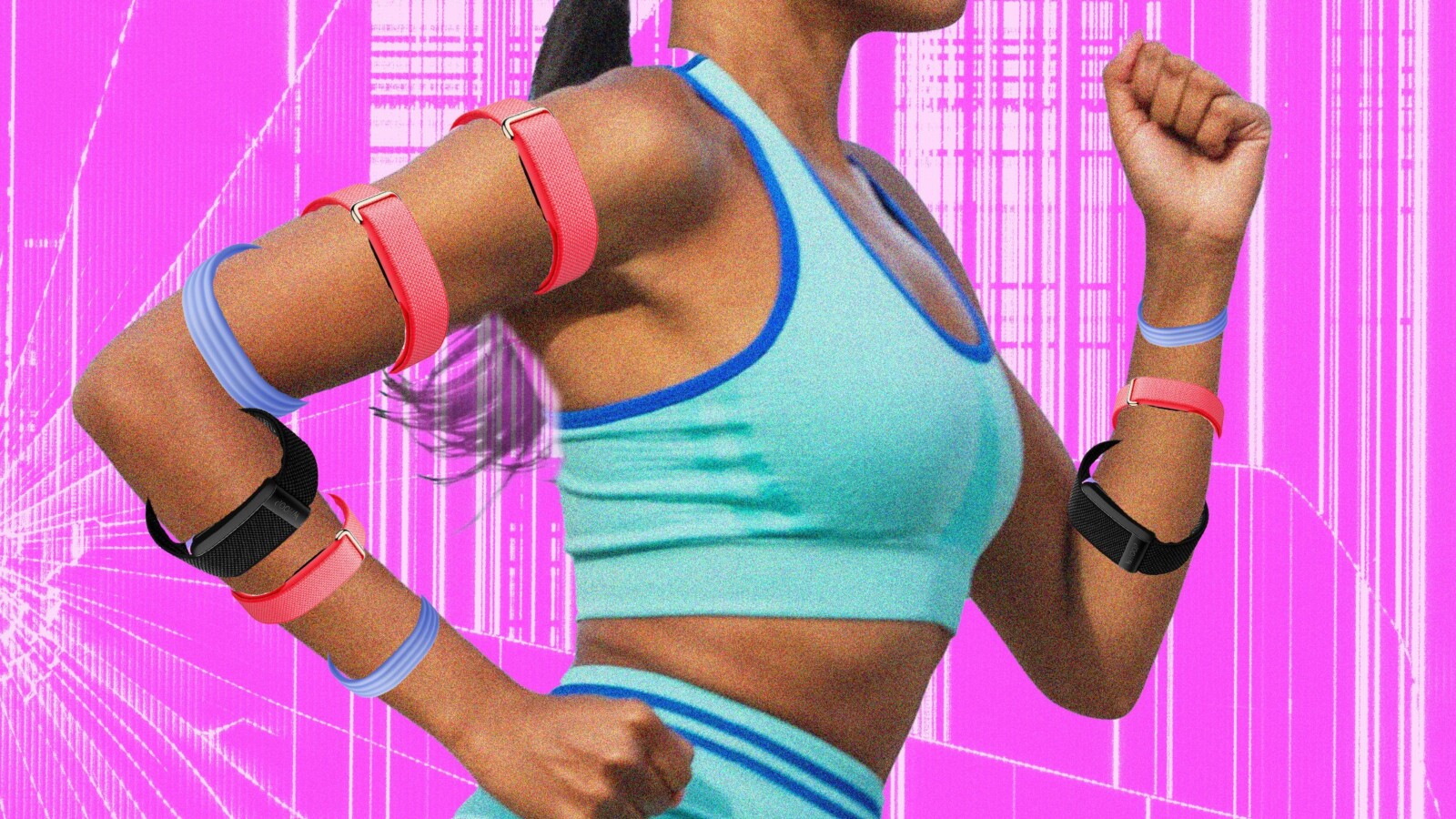
Screen-free wearables are quickly emerging as one of the most talked-about categories in fitness tech, and their appeal comes from an unusual promise: once you buy one, it asks for less of your attention rather than more. The lineup already includes the Garmin Cirqa, Google Fitbit Air, Polar Loop, the Amazfit Helio Strap, and the Whoop series, the device that pioneered the concept. According to Bloomberg, Apple is also weighing its own version.
The reasoning behind the shift is straightforward. Many people have grown tired of attention-hoarding technology and social media, and increasingly suspect it is doing them little good. These new trackers position themselves as a deliberate break from that cycle.
A Callback to Early Fitness Trackers
This new generation echoes the first mainstream wave of wearables, which arrived with early Fitbits starting in 2009. The 2011 Fitbit Ultra, for example, clipped onto jeans and asked so little of the wearer that it was easy to forget entirely. The 2012 Fitbit Zip, with its cartoon-style screen, was designed to be checked only a couple of times a day at most.
By contrast, modern smartwatches from brands such as Garmin, Samsung, Fitbit, and Coros invite constant checking. Messages and emails buzz on small screens, prompting reflexive glances, while nightly and morning reports, sleep scores, and long-standing move alerts pull for attention throughout the day.
Design by Subtraction
Part of the pitch for new-breed wearables is that they represent the opposite of what watches have become. Fitness watches are more smartwatch-like than ever, with OLED screens now common even on health trackers and some running devices offering access to AI assistants. Yet smartwatches have never fully delivered on the promise of a life-changing app, and entire wearable app ecosystems have faded over the years.
The Fitbit Air and its rivals take a different route. They are largely a case of design subtraction: a standard fitness tracker with a heart rate sensor, battery, accelerometer, Bluetooth transmitter, and other sensors depending on the model, but with the display removed. The goal is to reset expectations for the entire category.
The more notable question is why this is happening now, in 2026. Whoop has built screen-free wearables since its first proper release in 2015, but how it defines itself has evolved along with the broader market. Today, a Whoop band is aimed at nearly anyone able to pay its EUR 171 annual subscription, positioning the device as a system to help users improve how they sleep and train.