

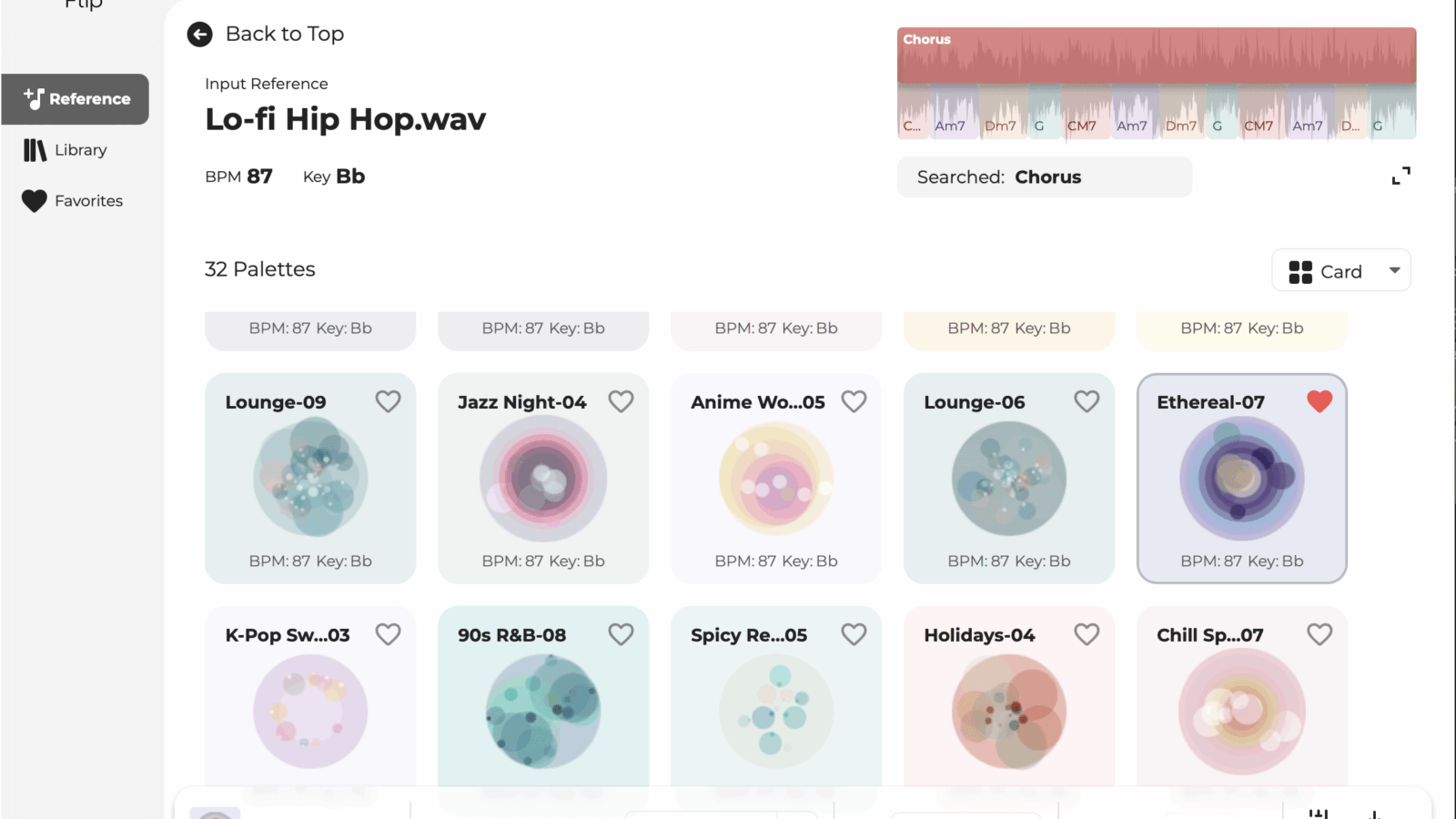
Roland Melody Flip marks the storied instrument maker’s entry into generative AI music, but it takes a very different approach from tools like Suno or Udio. Rather than producing a complete song at the push of a button, Melody Flip is built to assist producers inside their existing workflow, generating musical building blocks instead of finished tracks.
The tool arrives as a plug-in for your digital audio workstation (DAW), slotting directly into the software many musicians already use. That positioning signals Roland’s intent to serve working producers who want AI-assisted ideas without giving up creative control over the final arrangement.
What Roland Melody Flip Does
Melody Flip ships with roughly 250 “Palettes,” which are themed collections of musical ideas organized by genre. Producers can start from a blank canvas and prompt the tool to generate any combination of melody, chord progression, bassline, or drums. Each element can be requested individually or together, giving users flexibility depending on where they are in a project.
The plug-in also supports a reference-based approach. Feed Melody Flip an existing track, and it will build on the melodic ideas from that source material. This lets producers use a song they like as a starting point and develop new variations around its core themes.
How It Differs From Suno and Udio
The key distinction is what Melody Flip does not do. Unlike Suno or Udio, it does not output fully polished songs complete with vocals and full arrangements. There is no single-click path from prompt to finished record. Instead, the emphasis is on supplying raw musical components that producers then shape themselves.
That approach keeps the human at the center of the creative process. By focusing on melodies, chords, basslines, and drums rather than complete compositions, Roland positions Melody Flip as a production aid rather than an automated songwriting service.
The genre-sorted Palettes give the tool a structured library to draw from, helping users narrow ideas to a specific style before generating. Whether working from scratch or from a reference track, the workflow is designed to plug into the tools producers already rely on, keeping the generated material inside the DAW environment where it can be edited, arranged, and mixed.
With Melody Flip, Roland joins the growing field of companies applying generative AI to music, but its DAW plug-in format and component-based output set it apart from the fully automated song generators that have dominated recent attention.
Source
Image: theverge.com