
The HTC Vive Eagle is now available globally, giving U.S. shoppers a fresh alternative to Meta’s smart glasses. Priced at EUR 431, the camera-equipped AI glasses were previously sold only in Asia and now come in a range of colors and styles. Their standout feature is a battery-boosting accessory that could set them apart in a crowded category.
Interest in AI glasses continues to grow as Google and Samsung prepare their own versions of the concept. The Vive Eagle enters that field with a Ray-Ban-style design, matching camera placement, and an LED indicator that flashes during recording.
Snap-On Power Boost Battery
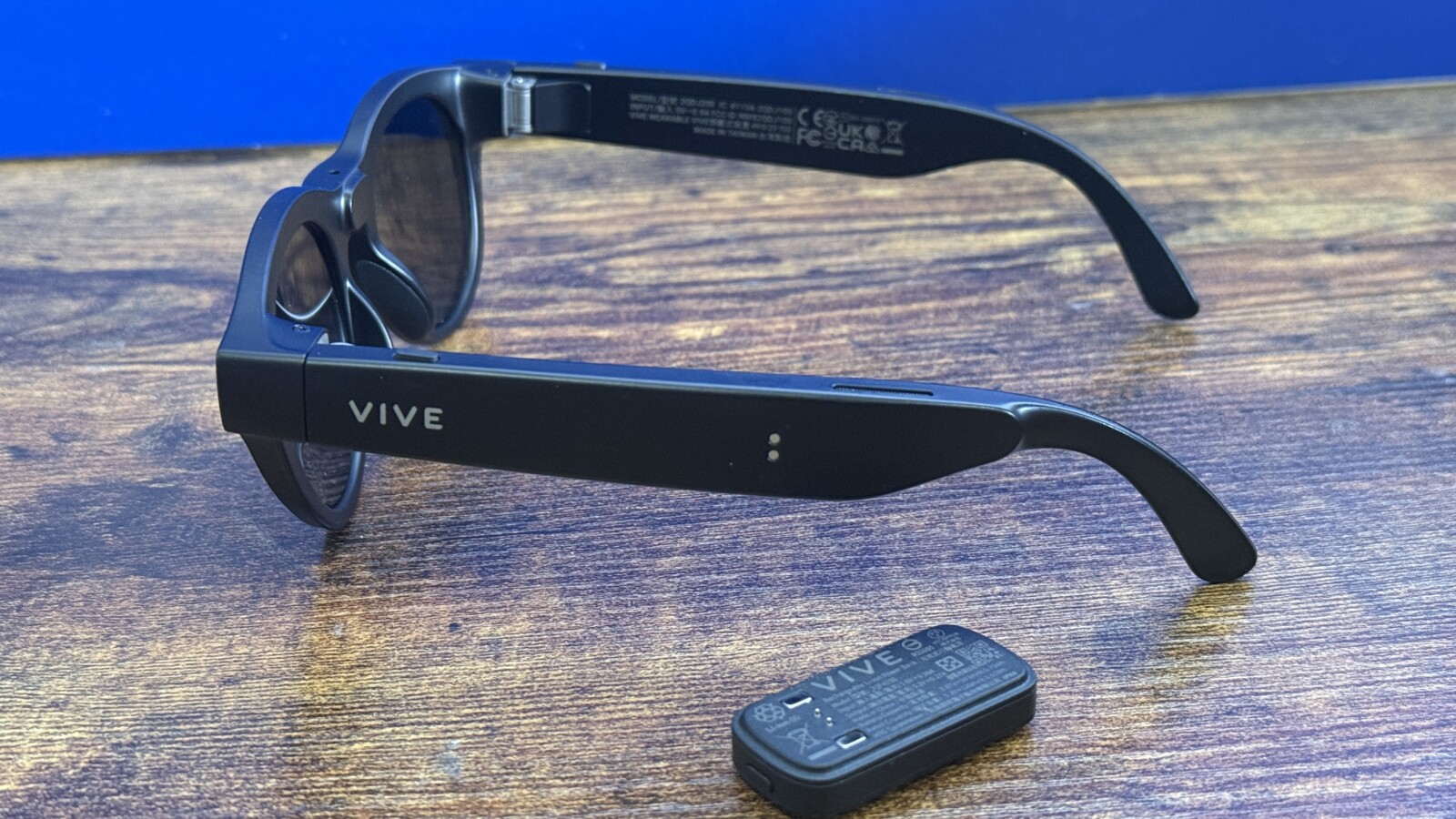
The most notable feature is the separately sold Power Boost battery pack. The EUR 42 magnetic accessory measures about the width of a thumb and half its length, and it snaps onto charging pins on one arm of the glasses. This delivers an instant top-up once the built-in battery runs low, which happens after roughly four to five hours of use.
By comparison, Meta’s glasses last four to eight hours per charge but must be removed and placed in their case to recharge. With the Vive Eagle, users can keep the glasses on while swapping or recharging the external pack, allowing near-continuous use of the AI features and photo or video capture. The tradeoff is that the magnetically attached pack could be knocked off by accident.
Camera, Audio and AI Performance
The Vive Eagle captures 12MP wide-angle photos and videos that fall short of smartphone quality. Music playback comes across as boomy, while microphone quality for phone calls is comparable to Meta’s glasses. Overall, the audio and call performance sound roughly equivalent between the two products.
AI features are powered by Google Gemini or OpenAI models, and users can select their preferred option in the companion app. However, HTC builds its own chatbot on top of these models rather than connecting to personal Gemini or ChatGPT accounts. Setup requires an HTC Vive account to link the glasses and app. The Vive Eagle also supports live translation in 90 languages, though the phone app must be nearby and recently opened, as with other AI glasses.
Build Quality and Privacy
The frames feel sturdy, if thick and generic in appearance. On privacy, recording is blocked if the LED light indicator on the frame is covered, a safeguard Meta recently added through an update. Photos and videos are stored locally on the connected phone and are not sent to HTC’s cloud.
The HTC Vive Eagle is on sale now in the United States for EUR 431, with the optional Power Boost battery pack available separately for EUR 42.