

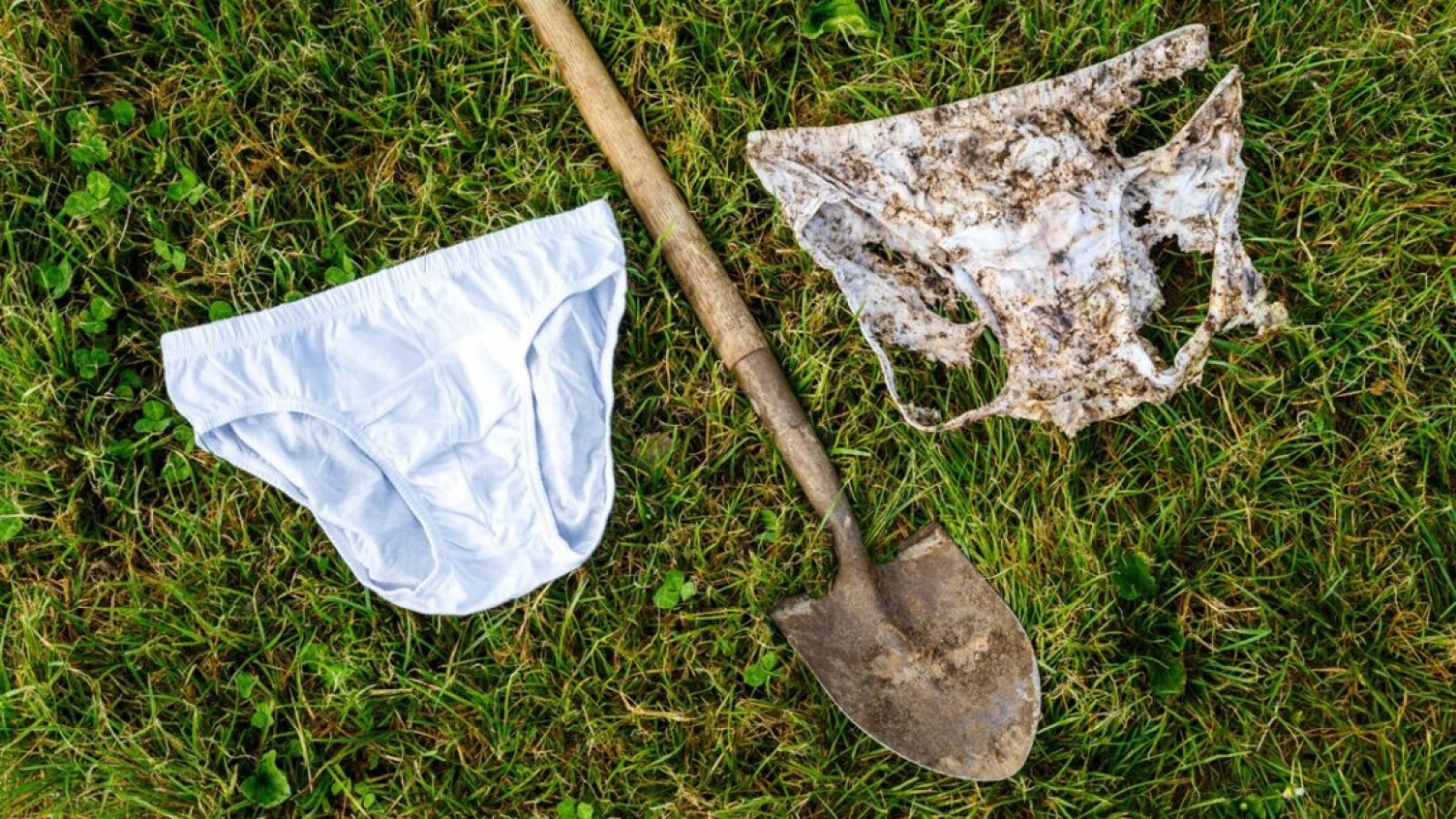
A citizen science project called “Proof by Underpants” asked 1,000 volunteers across 25 countries to bury cotton underwear for two months to measure soil health. The unusual experiment, detailed in the journal Plants People Planet, offers a playful yet scientific way to map how living soil breaks down organic material.
Soil health underpins agriculture, food security, and the broader global ecosystem, yet it has been declining worldwide, according to the researchers. One of the clearest indicators of healthy soil is its decomposition rate: how quickly complex organic matter such as leaves, wood, and other material is broken down into simpler compounds, releasing CO2 and nutrients along the way.
Large-scale national studies comparing decomposition across different land use types have been rare. Smaller research efforts, however, have shown that how humans use a plot of land can significantly influence the biological diversity of its soil.
From the Teabag Index to the Underpants Index
Scientists often rely on commercially available teabags to gauge decomposition, a method known as the teabag index (TBI). But that approach demands careful handling and specialized equipment, including a fine-scale balance. Agroecologist Marcel van der Heijden of the University of Zurich and his colleagues wanted something more accessible.
Earlier research had demonstrated that cotton strips could also measure decomposition. That inspired the team to invite volunteers to bury cotton underpants, dig them up after two months, and record how much they had broken down. The more active the soil organisms, the faster the cotton decomposed, giving rise to what the team calls the underpants index.
How the Experiment Worked
The researchers recruited 1,000 volunteers from 25 countries, 240 of whom are credited as co-authors on the paper. Each participant received an activity pack containing two pairs of organic cotton men’s underpants, 12 teabags, and a sampling bag for soil collection, along with detailed instructions.
Volunteers selected a site, dug a hole, and buried the materials in fields, meadows, and gardens. More than 2,000 pairs of cotton underwear were placed in the ground and later retrieved in various stages of decay, ranging from slightly to heavily decomposed.
“Our results show that how soil is managed can significantly affect both soil life and soil quality,” van der Heijden said. “Healthy, biologically active soil is crucial for fertility, nutrient cycling and many other ecosystem services.”
The findings reinforce that land management practices directly shape how vigorously soil organisms work, with faster cotton breakdown signaling more biologically active and healthier ground. More than 2,000 buried garments across 25 countries formed the basis of the analysis.
Source
Image: arstechnica.com