
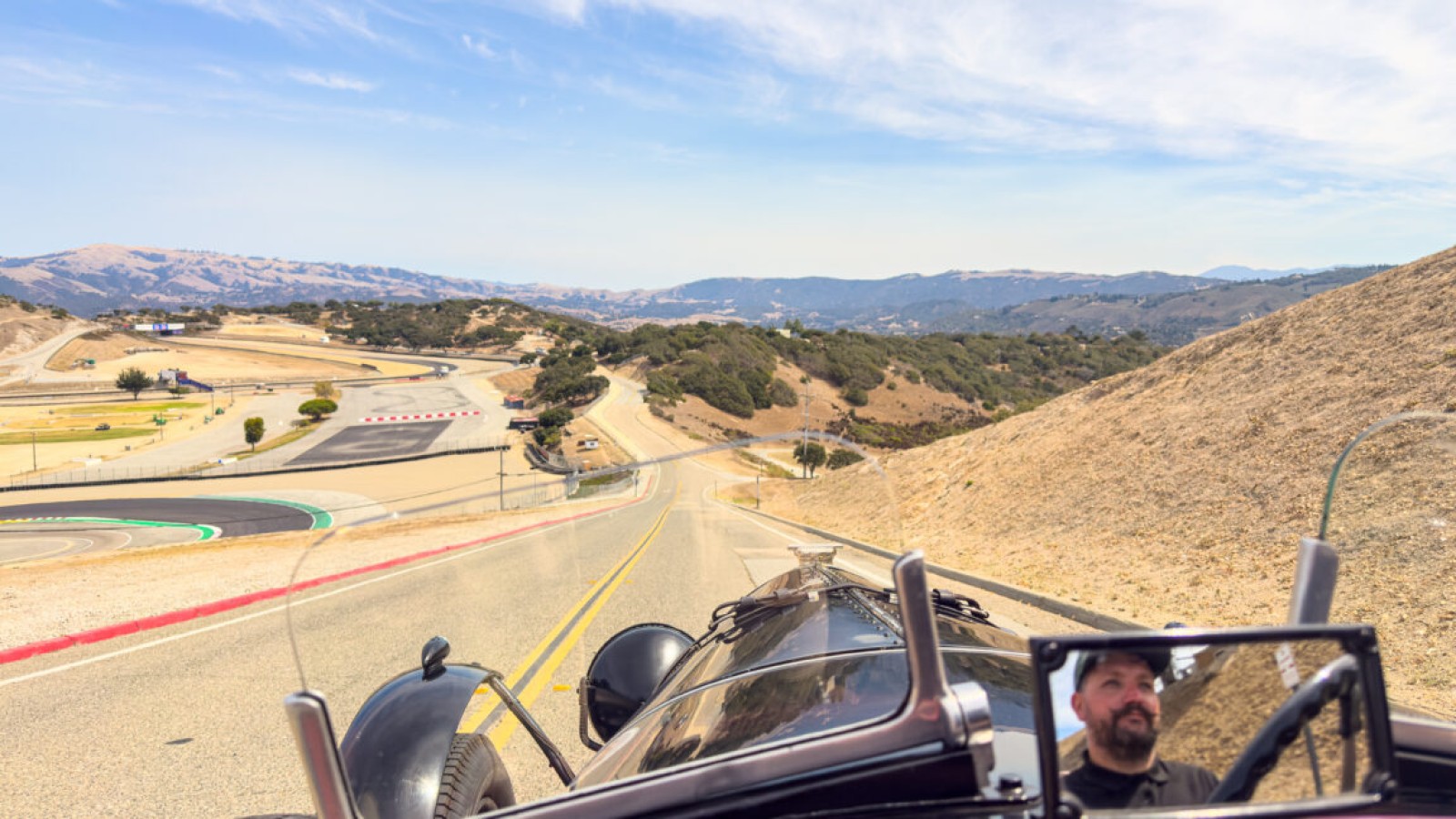
Long before the modern Bentley Supersports arrived as a rear-wheel-drive, hybrid-free driver’s car, the British marque built the very first model to carry the Super Sports name. To mark the launch of its latest performance flagship, Bentley brought a century-old example to Laguna Seca in Monterey, California, offering a rare look at what qualified as a supercar in the 1920s.
A Shortened 3 Litre Built for Speed
Bentley produced just 18 Super Sports models between 1925 and 1927. Each was based on the company’s standard 3 Litre car, with the wheelbase shortened by 9.5 inches (241 mm). That reduction trimmed weight and sharpened responsiveness, echoing the philosophy behind today’s lightest Bentley in 85 years. A more tapered radiator cut aerodynamic resistance, though the bodywork itself was left to whichever coachbuilder each owner chose.
The engine was far from ordinary. The 3.0-liter unit received new pistons, a lighter flywheel, higher compression, and revised carburetors. Combined with unique gearing, Bentley guaranteed every Super Sports could exceed 100 mph (160 km/h). For context, the Ford Model T of the same era struggled to reach 40 mph (64 km/h).
Meet Smoky, a Racing Survivor
The car on display, chassis YM 4037, is nicknamed Smoky. Built in 1926, it was the 12th of the 18 cars produced and wears two-seat bodywork from Jarvis of Wimbledon. Over the decades it has lived in New Zealand and South Africa, but it began life as a race car in England.
In 1932, its second owner, Bentley racing driver Kit Baker-Carr, upgraded the car with a 4.5-liter engine taken from the vehicle that won Le Mans in 1928. With that added power, Baker-Carr campaigned Smoky at Brooklands between 1935 and 1937, scoring seven wins and recording a fastest lap of nearly 117 mph (188 km/h).
A Ride From Another Era
From the passenger seat on the access roads around Laguna Seca, the experience underscored just how different early motoring was. The car offers none of the safety equipment expected today, as seat belts and roll bars had not yet been adopted. The three-speed transmission lever sits outside the body, an arrangement no modern regulator would permit. Aerodynamics ranked as a minor concern in the design, although the tail was still shaped for a degree of streamlining.
Bentley built 18 Super Sports models in total, and Smoky remains one of the surviving examples of the marque’s earliest performance car.
Source
Image: arstechnica.com