
DLSS 5, Nvidia’s next-generation neural rendering technology, is now running on aging Ampere hardware thanks to a community mod, though the performance results are rough. The tech first surfaced earlier this week through a pre-release version of the DLL bundled inside NBA 2K27, currently in early access. Enthusiasts quickly got it functioning on RTX 50-series cards, then patched the DLL for RTX 40-series GPUs. A follow-up effort in the RenoDX Discord server has now extended support to RTX 30-series graphics cards.
How DLSS 5 Behaves on Ampere
The overall community response has been mixed. While DLSS 5 technically works on Ampere GPUs, performance drops sharply in nearly every scenario. When users manage to reach acceptable frame rates, they typically do so by sacrificing base visual fidelity. To let DLSS 5 produce a more realistic image, in-game settings often have to be lowered to minimum, creating a constant trade-off to avoid diminishing returns.
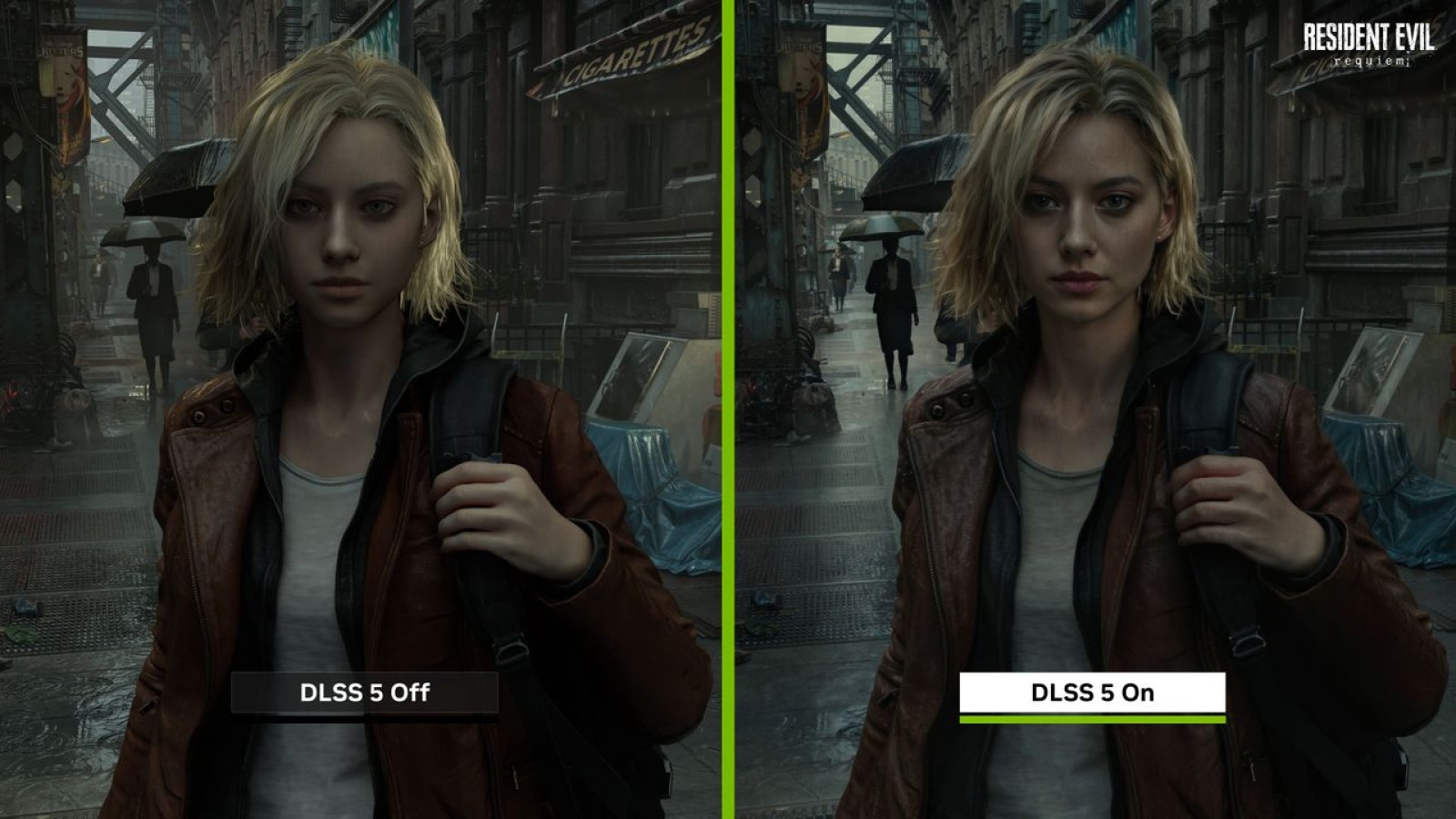
The end result is a more photorealistic image that looks noticeably different from native rendering. However, it comes with a severe latency penalty, since most of the frame pacing is now handled entirely by neural rendering. In worst-case situations, frametimes can increase by a factor of ten compared to standard rendering.
The Benchmark Numbers
Reported results vary widely. One user ran Grand Theft Auto V at roughly 20 to 30 FPS on an RTX 3080 Ti at 1440p. Another played Dying Light 2 at about 40 FPS on an RTX 3080, though the image was described as very noisy. Hogwarts Legacy reached 30 FPS on an RTX 3090, Mortal Shell 2 hit 34 FPS on an RTX 3080 Ti with visible shimmering, Ready or Not landed at 30 FPS on an RTX 3080, and Neverness to Everness ran at 29 to 30 FPS on an RTX 3080. NBA 2K27 even ran at 25 FPS on a mobile RTX 3070 using DLAA at 1080p.
Many other users were stuck in single-digit territory. The lowest figure observed was 2 FPS for Hogwarts Legacy on an RTX 3070. One person reported Deep Rock Galactic running at 4 FPS with DLSS 5 on an RTX 3080, down from more than 130 FPS without it. Another user recorded Cyberpunk 2077 at 7 FPS on an RTX 3080 Ti.
Fidelity Versus Frame Rate
One of the more telling results captured the entire situation. A user reached up to 41 FPS in Cyberpunk 2077 with DLSS 5, but only after dropping the resolution to 720p and switching to the ultra performance upscaling preset. The pattern is consistent: users trade away base fidelity to gain neural fidelity.
Reaction to the technology has been strong enough that several users indicated they were ready to sell their Ampere cards in favor of Blackwell GPUs. The jump from the RTX 30-series to
Source
Image: tomshardware.com