
Parallels Desktop 27 brings meaningful upgrades to Windows virtualization on Mac, headlined by a new Metal-based graphics driver, OpenGL 4.3 support for Windows virtual machines on Apple silicon, faster local AI workloads, and expanded enterprise tools for IT teams deploying Windows on macOS.
Virtualization on macOS has matured significantly in the Apple Silicon era, and this release pushes performance and compatibility further for both professionals and developers.
Graphics performance gains on Apple silicon
The standout feature in Parallels Desktop 27 is a new Metal-based graphics driver that delivers hardware-accelerated OpenGL 4.3 support to Windows virtual machines running on Apple silicon. Parallels says this capability is currently unique among Mac virtualization tools.
OpenGL 4.3 is the minimum graphics level required by many professional Windows applications. As a result, software such as ArcGIS Pro, ZWCAD, and Blender 4.3 can now run in a virtualized environment on macOS.
Parallels claims up to 160% faster OpenGL graphics performance on M3 and newer Macs, along with up to 35% faster 3D rendering in ArcGIS Pro. That improvement reportedly cuts overall workflow time by up to 24%. Better OpenGL support benefits anything that relies on that graphics stack, including PC games running inside a Windows VM.
Faster local AI development
Parallels Desktop 27 also adds support for Scalable Matrix Extension (SME2) instructions in Linux and Windows virtual machines on M4 and newer Macs. According to Parallels, this delivers up to 7x faster AI and machine learning matrix operations and up to 1.75x faster neural network inference.
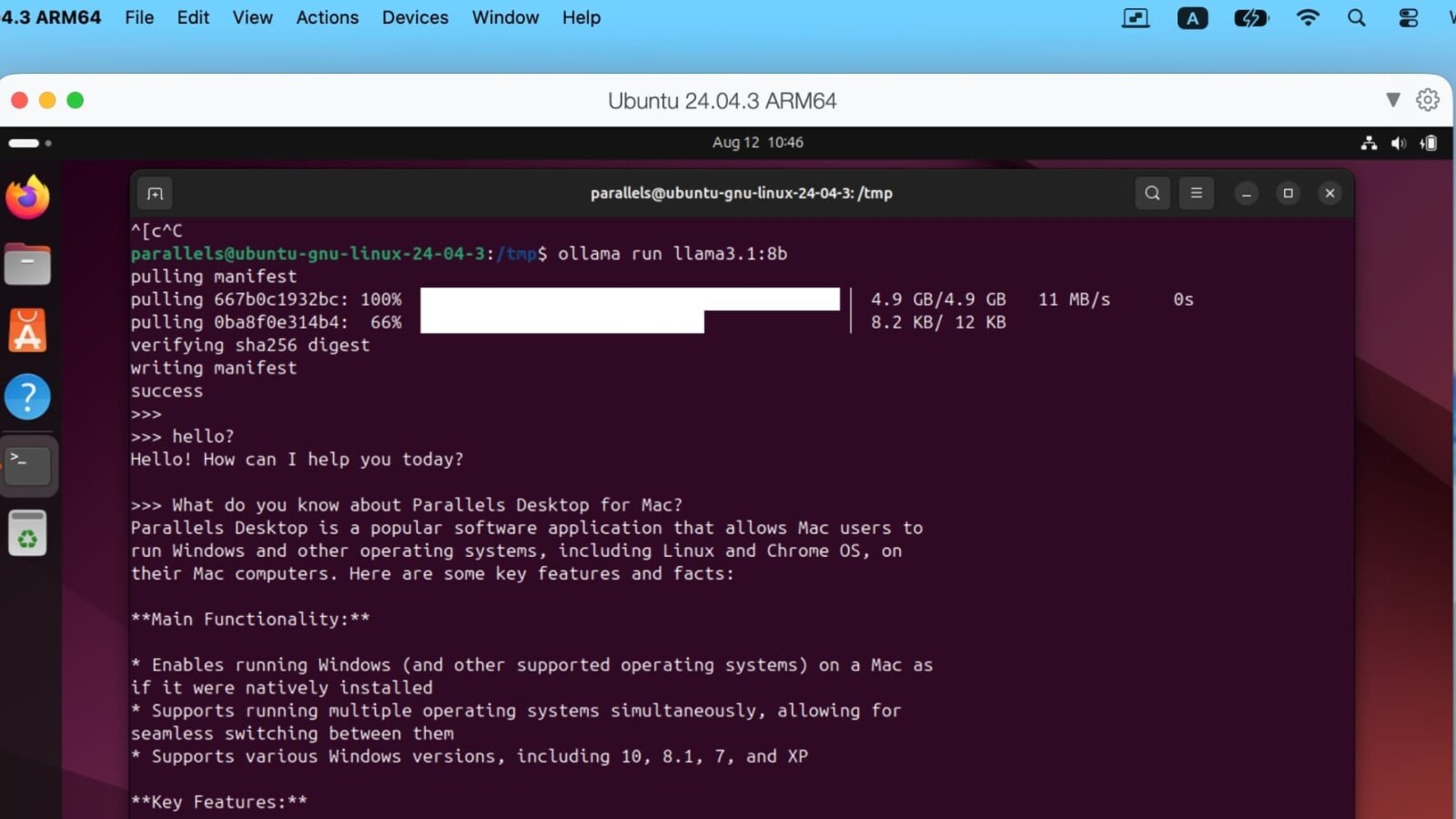
The result is improved performance for tools like Ollama and llama.cpp running inside a VM. For developers who want to build and test AI workloads locally rather than spending cloud credits on every prompt, the update is a practical improvement that reinforces the role of Apple silicon in AI development.
New enterprise and IT features
Parallels Desktop for Enterprise adds tools aimed at IT teams managing Windows on macOS. Administrators can now use the command-line interface to determine whether a copy was activated with a license key or through SSO, giving IT departments clearer visibility into activation methods across their deployments.
These enterprise capabilities are designed to help organizations deploy, manage, and protect Windows virtual machines on Apple hardware more efficiently. Combined with the graphics and AI improvements, Parallels Desktop 27 extends what is possible for engineering, development, and everyday productivity workloads on Mac.
Source
Image: 9to5mac.com