

SpaceX could turn coastal Louisiana into the heart of its Starship program, with plans to invest as much as EUR 86 billion in the region. The company aims to build factories and multiple launch pads dedicated to its super heavy lift rocket, a move that would dramatically reshape the state’s coastline.
Louisiana already has ties to the space industry through NASA’s aging Michoud Assembly Facility near New Orleans. The new SpaceX commitment would mark a major expansion of activity in the state, positioning it as a central hub for one of the most ambitious rocket programs in the world.
Europe Funds Launch Startups Through ESA Challenge
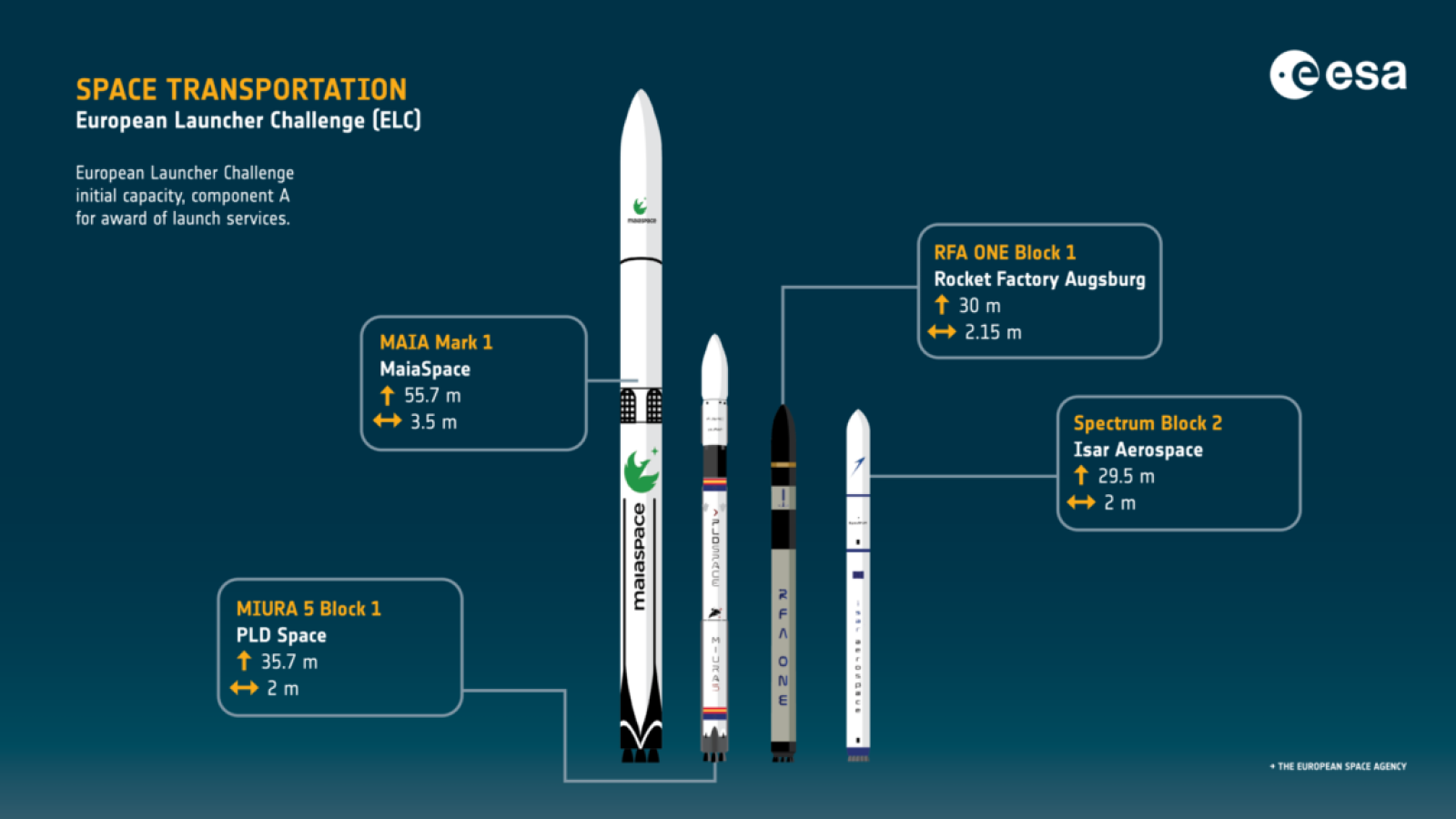
The European Space Agency signed contracts this week with several European launch startups to advance development of their vehicles. The initiative, called the European Launcher Challenge, is designed to broaden Europe’s launch service options and strengthen the continent’s independent access to space. For some companies, the funding represents a critical lifeline as they push toward operational flights.
Rocket Factory Augsburg, a German firm building the RFA One rocket, secured 186.9 million euros, funded mainly by Germany with a contribution from the United Kingdom. Spain’s PLD Space, developer of the Miura 5 rocket, received 158.9 million euros, backed primarily by Spain with support from Germany. Isar Aerospace, another German company working on the Spectrum launcher, was awarded 197.8 million euros, funded mainly by Germany with contributions from Austria and Norway. A separate contract process involving MaiaSpace is nearing completion.
India Faces a Broader Launch Capacity Gap
Analysis of India’s space program highlights what has been described as the country’s launch vehicle crisis. Despite the recent success of Skyroot and its Vikram-1 rocket, India’s growing shortfall in orbital launch capacity remains unresolved. The argument holds that even strong performance by Skyroot in the small-lift market would not, on its own, address the nation’s wider space access needs.
The country faces significant constraints in spaceports, suppliers, and particularly medium- and heavy-lift rockets. The first flight of Vikram-1 is framed as the minimum baseline for India’s requirements rather than a peak achievement, covering only a fraction of the demand.
In Japan, a radar-imaging startup has moved forward with launch plans of its own. Space One and Sarmony announced on August 25 that they signed a memorandum for launching Sarmony’s first demonstration satellite aboard Space One’s Kairos rocket.
Source
Image: arstechnica.com